
Does a Parking Ticket Affect Insurance?


No, a standard parking ticket does not affect your car insurance. Penalty Charge Notices issued by councils are civil penalties with no penalty points and no criminal record, so your insurer never sees them.
The only parking-related offences that affect insurance are those enforced by police with penalty points, such as parking on white zigzag lines near pedestrian crossings. These are rare and very different from the council-issued tickets most drivers receive.
Our breakdown of car insurance costs explains what insurers actually use to price premiums: claims history, penalty points, and driving convictions. Parking fines are not on that list.
No. A standard parking ticket is a civil matter between you and the council, and it never reaches your insurance record.
Compare car insurance quotes if you want to see what actually moves your price.
- Why does a parking ticket not affect your premium?
- Which parking offences do affect insurance?
- How much does a parking ticket cost?
- Can you challenge a parking ticket?
- Do you need to declare parking tickets to your insurer?
- How can you reduce your premium if you have penalty points?
- Frequently asked questions (FAQs)
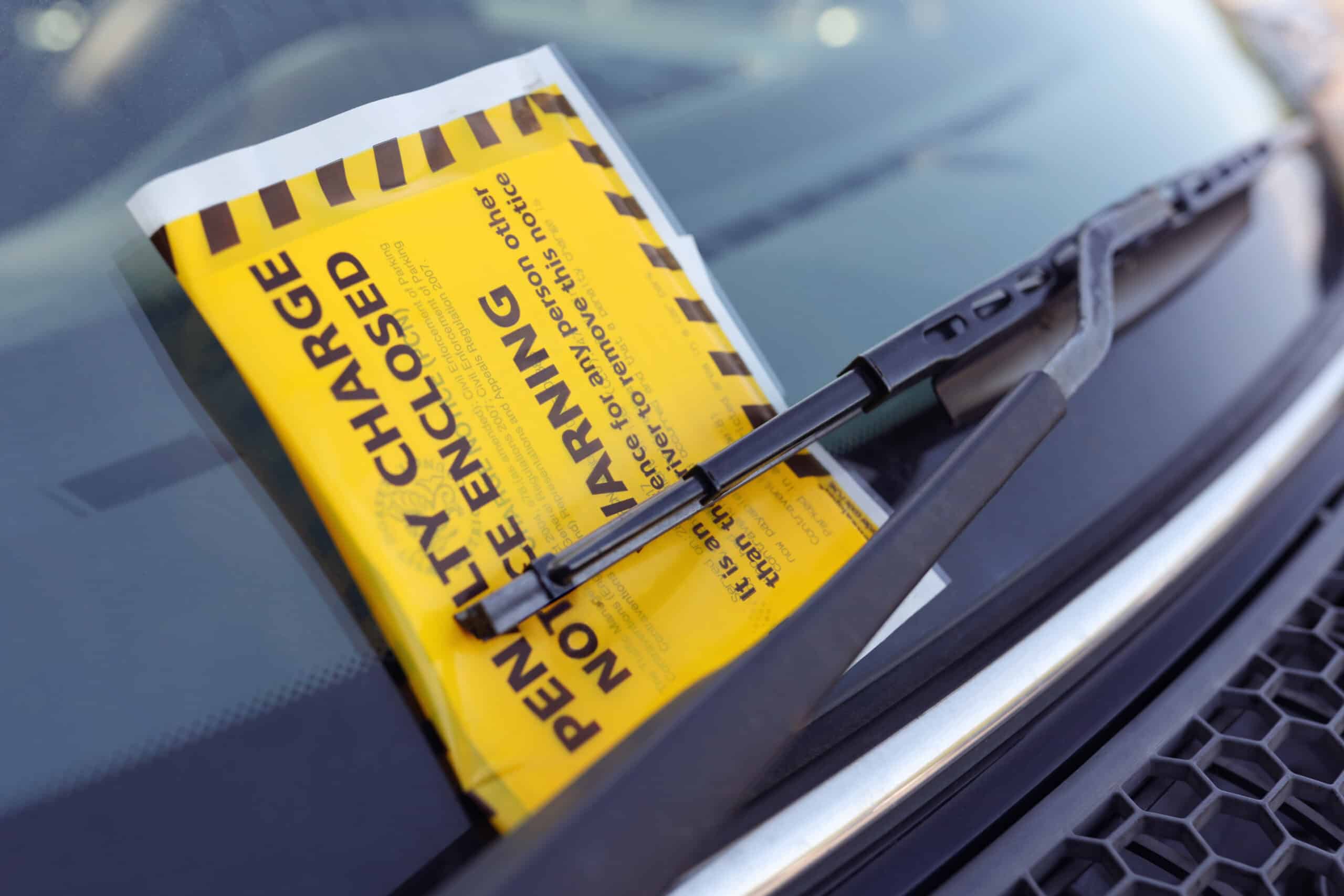
Why does a parking ticket not affect your premium?
Insurers assess driving risk based on your DVLA record, which shows licence endorsements, penalty points, and convictions. A Penalty Charge Notice generates none of these entries.
What is a penalty charge notice?
A PCN is a civil penalty issued by council enforcement officers or CCTV systems for breaching parking regulations. It carries a fine but no points, no criminal record, and no licence endorsement.
You could receive dozens of PCNs without any effect on your insurance. The only cost is the fine itself, which sits entirely outside the insurance system.
Do insurers ask about parking tickets?
No, because there is nothing to declare. Insurers ask about motoring convictions, penalty points, and claims, and a parking fine is none of these things.
Which parking offences do affect insurance?
Only offences enforced by police that carry penalty points affect your premium. The most common is parking on white zigzag lines near pedestrian crossings, which carries a £100 fine and three points.
What is the difference between a PCN and an FPN?
| Offence type | Issued by | Penalty | Affects insurance? |
| Expired meter or overstaying | Council | PCN fine only (£50-£160) | No |
| Single or double yellow line | Council | PCN fine only (£50-£160) | No |
| Disabled bay without badge | Council | PCN fine only (£50-£160) | No |
| Private car park (supermarket, hospital) | Private company | Parking Charge Notice (£40-£100) | No |
| White zigzag lines at crossing | Police | £100 fine + 3 points | Yes |
| Parking on motorway hard shoulder | Police | FPN + possible points | Yes |
How much do three penalty points increase your premium?
Three points typically add 5-15% to your premium, depending on your insurer and circumstances. The points stay on your licence for four years.
Drivers with driving convictions face higher increases, particularly if points are combined with other endorsements.
How much does a parking ticket cost?
Council PCN fines range from £50-£70 outside London and £110-£160 in London. Most councils offer a 50% discount if you pay within 14 days.
What happens if you do not pay?
After 14 days, you pay the full amount. After 28 days unpaid, a Charge Certificate adds 50% to the fine.
After 56 days, the council can register the debt at county court, adding court fees to the original penalty.
Even if the fine escalates to county court, it remains a civil debt with no insurance implications. A County Court Judgement affects your credit file, not your driving record.
Do private parking fines work differently?
Private parking charges are issued by companies like ParkingEye or APCOA under contract law. They are not council PCNs and carry no penalty points.
Private charges typically range from £40-£100. You can appeal through POPLA (for BPA members) or the IAS (for IPC members) if you believe the charge is unfair.
Can you challenge a parking ticket?
Yes, you can challenge a council parking ticket by making a formal representation within 28 days. If the council rejects your challenge, you can escalate to an independent tribunal.
What are valid grounds for a challenge?
Missing or unclear signage, worn road markings, loading or unloading within permitted times, and timing errors on the PCN itself are the most common successful grounds.
In England and Wales outside London, the Traffic Penalty Tribunal handles appeals. In London, appeals go to London Tribunals, and both services are free with binding decisions.
Do you need to declare parking tickets to your insurer?
No, because PCNs are not motoring convictions. Insurers do not ask about parking fines, and you have no obligation to mention them.
What if you received penalty points for a parking offence?
If you received an FPN with penalty points for parking on zigzag lines, you must declare the points like any other endorsement. It is the penalty points that matter, not the parking element.
Our tips to lower your premium cover strategies for drivers with points on their licence.
Does your insurer check your DVLA record?
Many insurers now use the DVLA’s MyLicence service to verify your driving record at quote stage. This check shows endorsements and convictions but not parking fines.
When comparing car insurance quotes, your parking history is invisible to every provider.
How can you reduce your premium if you have penalty points?
If you received penalty points from a police-enforced parking offence, the impact is similar to any other endorsement. A black box policy can offset the increase by rewarding safe driving behaviour with lower premiums at renewal.
What other strategies help?
Young drivers with points face the steepest increases because age and points compound each other. Shopping around is the single most effective step, because different insurers weight penalty points very differently.
A fully comprehensive policy is often cheaper than third-party only for drivers with points, because comprehensive attracts lower-risk drivers as a group.
Frequently Asked Questions (FAQs)
No, even a large number of PCNs have no effect on your insurance because they are civil penalties without penalty points. Only motoring convictions and endorsements matter to insurers.
No, private parking charges are civil disputes between you and the parking company. They carry no penalty points and have no insurance implications.
No, PCNs are civil penalties that do not appear on your DVLA driving record. Only endorsements and convictions from police-issued Fixed Penalty Notices appear on the record insurers check.
Three points typically increase premiums by 5-15%, depending on your insurer and circumstances. The points remain on your licence for four years and are visible to insurers throughout.
The fine increases by 50% via a Charge Certificate after 28 days, and if that goes unpaid for a further 14 days the council can register the debt at the Traffic Enforcement Centre. Your insurance is unaffected, but the financial consequences escalate.
No, insurers do not ask about parking fines because PCNs are not motoring convictions. You only need to declare penalty points if you received them for a police-enforced parking offence.