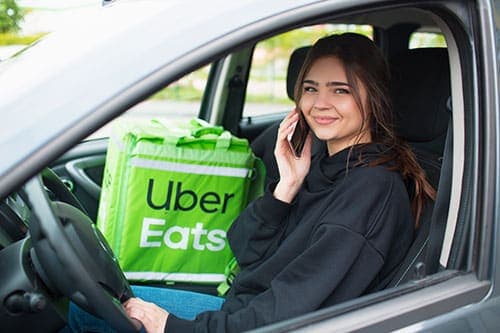
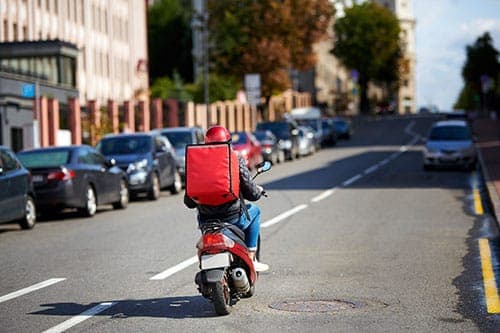
Food Delivery Insurance
Food Delivery Insurance Quotes
Get hire and reward cover to deliver food with your car or bike.

Partnered with Quotezone
We’re partnered with Quotezone. As an Introducer Appointed Representative of Seopa Ltd (FCA FRN: 313860), we receive a commission if you purchase insurance products via SimplyQuote.co.uk.
We do not provide advice or make recommendations. Your choice of provider is entirely your own.





Compare food delivery insurance quotes from trusted UK insurers, including:

What Is Food Delivery Insurance?
Food delivery insurance is a type of hire and reward cover that protects you while you're being paid to deliver food using your own vehicle.
Standard car or van insurance doesn't cover deliveries made for a fee. If you're working for platforms like Deliveroo, Uber Eats, or Just Eat, you need a policy with a hire and reward extension.
Without it, any claim you make while delivering could be rejected. The rules around what insurance you need to deliver food are strict, and driving without the right cover is a criminal offence.
How To Compare Food Delivery Insurance Quotes
You can compare quotes from trusted UK insurers in minutes using the online comparison tool.
Enter your details
Provide your vehicle type, postcode, delivery platform, and driving history. Include any claims or convictions from the past five years.
Choose your cover type
Select whether you need annual, monthly, or pay-as-you-go cover. The tool returns prices from multiple insurers side by side.
Check policy details
Don't just pick the cheapest quote. Check the excess, confirm the platforms you're covered to work for, and make sure breakdown assistance is included if you need it.
Choose and buy
Pick the policy that fits your budget and cover needs. All quotes come from FCA-regulated insurers, and cover can start the same day.
What Does Food Delivery Insurance Cover?
Food delivery insurance covers damage to your vehicle, injury to third parties, and liability while you're carrying out paid deliveries.
Third Party Only
The legal minimum, paying for damage you cause to other people, their vehicles, and their property while delivering. Your own vehicle isn't covered.
Third Party, Fire and Theft
Adds protection if your vehicle is stolen or damaged by fire. Still won't cover your own accident damage.
Comprehensive
Covers everything in the lower tiers plus damage to your own vehicle, even if the accident was your fault. Most food delivery drivers choose this because the price gap is often small.
| Cover Level | Third Party Damage | Fire & Theft | Own Vehicle Damage |
|---|---|---|---|
| Third Party Only | Yes | No | No |
| Third Party, Fire & Theft | Yes | Yes | No |
| Comprehensive | Yes | Yes | Yes |
What Types Of Food Delivery Insurance Are There?
There are three main policy types for food delivery drivers, each suited to different working patterns.
Annual Policies
A standard 12-month policy that covers you for food delivery work throughout the year. Best if you deliver regularly and want consistent protection.
Pay-As-You-Go Policies
Flexible cover you switch on and off by the hour. Pay-as-you-go food delivery insurance suits part-time drivers who only deliver a few shifts per week.
Social, Domestic and Pleasure with Hire and Reward
Some insurers offer a standard personal policy with a hire and reward bolt-on. This keeps your personal driving covered and adds delivery work on top.
What Add-Ons Can You Get?
Most food delivery insurance policies offer optional extras to widen your cover.
Breakdown cover
Roadside assistance, recovery, and onward travel if your vehicle breaks down mid-delivery. Worth adding if you rely on your car or scooter for income.
Legal expenses cover
Covers solicitor fees if you need to pursue an uninsured driver or challenge a disputed claim. Limits are typically £100,000.
Personal accident cover
Pays a lump sum if you're seriously injured while working. Useful for self-employed drivers with no employer sick pay.
Protected no-claims bonus
Lets you make a set number of claims without losing your discount. Delivery drivers face higher mileage, so protecting your bonus can save hundreds at renewal.
Public liability cover
If you leave your vehicle during deliveries, public liability insurance covers claims from members of the public. This is separate from your motor policy.
How Much Does Food Delivery Insurance Cost?
Most food delivery drivers pay between £1,200 and £3,000 per year for an annual policy, depending on their vehicle, location, and claims history.
What Affects Your Premium?
Your age, driving experience, vehicle type, and postcode all play a part. Drivers in high-traffic urban areas and younger drivers tend to pay more.
The number of hours you spend delivering matters too. A full-time driver covering 30,000 miles a year will pay more than someone doing weekend shifts.
Pay-As-You-Go vs Annual Cost
If you deliver fewer than 20 hours a week, pay-as-you-go can work out cheaper. At 20 hours per week and £0.80 per hour, you'd pay around £830 a year, which is less than most annual policies.
How To Save On Food Delivery Insurance
There are several practical ways to reduce your premium without cutting the cover you need.
Compare Quotes Every Year
Loyalty rarely pays, and the FCA found that long-standing customers were routinely charged more than new ones.
Comparing at renewal is the single biggest way to save.
Increase Your Voluntary Excess
Raising the amount you'd pay toward a claim signals lower risk to insurers. Even adding £100 to your voluntary excess can knock 5% to 10% off the premium.
Choose the Right Policy Type
Don't pay for annual cover if you only deliver part-time. Switching to pay-as-you-go for fewer than 15 hours a week could save you hundreds.
Secure Your Vehicle
Fitting an approved alarm, immobiliser, or tracker can qualify you for a discount. Parking off-street overnight also helps.
Build Your No-Claims Bonus
Each claim-free year adds to your discount. Five years of no claims can reduce your premium by up to 65%.
Register as Self-Employed
Most food delivery drivers are classed as self-employed by HMRC. Registering correctly and keeping accurate records can help at quote time because insurers prefer applicants with a clear employment status.
Which Platforms Need Food Delivery Insurance?
Every major UK food delivery platform requires drivers using a car, van, motorbike, or scooter to hold valid hire and reward insurance before they can start working.
Deliveroo
Deliveroo requires proof of hire and reward cover for car and motorised scooter riders before activating your account. You'll need to upload your insurance certificate during onboarding.
Uber Eats
Uber Eats checks your insurance status before approving you to deliver by car, motorbike, or scooter. Bicycle and e-bike couriers are exempt from the hire and reward requirement.
Just Eat
Just Eat requires hire and reward cover for self-employed couriers using motorised vehicles. If you're new to the platform, our guide on how to become a Just Eat delivery driver covers the full sign-up process.
Stuart and Other Logistics Partners
Third-party delivery partners like Stuart, which handles deliveries for retailers like Tesco and Sainsbury's, have the same hire and reward requirement. Check your contract terms before your first shift.
| Platform | Insurance Required | Proof Needed | Motorised Vehicles |
| Deliveroo | Hire and reward | Certificate upload | Car, motorbike, scooter |
| Uber Eats | Hire and reward | In-app verification | Car, motorbike, scooter |
| Just Eat | Hire and reward | Certificate upload | Car, motorbike, scooter |
| Stuart | Hire and reward | Onboarding check | Car, van, scooter |
Bicycle and e-bike couriers are not legally required to hold motor insurance. However, platforms like Deliveroo provide free public liability cover for cyclists, and separate cycling liability policies are available.
What Happens If You Deliver Without Insurance?
Delivering food without hire and reward insurance is illegal and can result in a fine, penalty points, and having your vehicle seized.
Legal Penalties
Under the Road Traffic Act 1988, driving without the correct insurance class is an offence. You could receive a fixed penalty of £300 and six points, or face an unlimited fine if the case goes to court.
Platform Consequences
All major platforms will deactivate your account if your insurance lapses or doesn't meet their requirements. Getting reactivated usually means resubmitting fresh proof of cover.
Claim Rejection
If you're involved in an accident while delivering on a personal policy, your insurer can void the claim entirely. You'd be personally liable for all repair costs, medical bills, and any third-party compensation.

Frequently Asked Questions
No, personal car insurance only covers social, domestic, and pleasure use. Delivering food for a fee counts as hire and reward, which needs a separate policy or bolt-on.
Bicycles and standard e-bikes (EAPCs) don't legally require motor insurance as they're not classed as motor vehicles. Platforms like Deliveroo provide free public liability cover for cyclists, though separate cycling liability policies are also available.
Many policies can start the same day you buy them. Pay-as-you-go cover activates within minutes of switching it on through the provider's app.
They overlap, but food delivery insurance is specifically for drivers carrying food orders while courier insurance covers a broader range of goods. Both require hire and reward cover.
Yes, most policies cover you to work for any platform, not just one. Check your policy wording to confirm there are no single-platform restrictions.
You'll need your driving licence, vehicle registration, and details of any claims or convictions from the past five years. Some platforms also ask for proof of address.
Standard hire and reward policies cover your vehicle and third-party liability, not the food itself. If you need cover for the goods you're carrying, ask about a separate goods-in-transit add-on.
Yes, though premiums will be higher. Specialist providers cater to drivers with convictions, so comparing quotes is worth it even with points.
Yes, if you start delivering on a personal policy without notifying your insurer, they can void your cover entirely. Either upgrade your existing policy or take out a separate hire and reward policy.
Yes. As a self-employed food delivery driver, your insurance premiums count as a business expense and can be claimed against your tax bill.