
When Is My MOT Due?


Your MOT is due one year from the date of your last passing test. For new cars, the first MOT is due three years after the date of first registration. You can check your exact due date for free using the government’s online MOT checker.
Driving without a valid MOT is a criminal offence that can result in a fine of up to £1,000. An expired MOT can also cause problems with your car insurance, since many policies require your vehicle to hold a current certificate.
This guide covers when your MOT is due, how to check it, and what happens if you miss the deadline.
Your MOT is due every 12 months, with the first test falling three years after registration. You can check your exact expiry date for free on GOV.UK in seconds, and booking within one month of expiry keeps your renewal date intact.
Review your car insurance at the same time to make sure both are up to date.
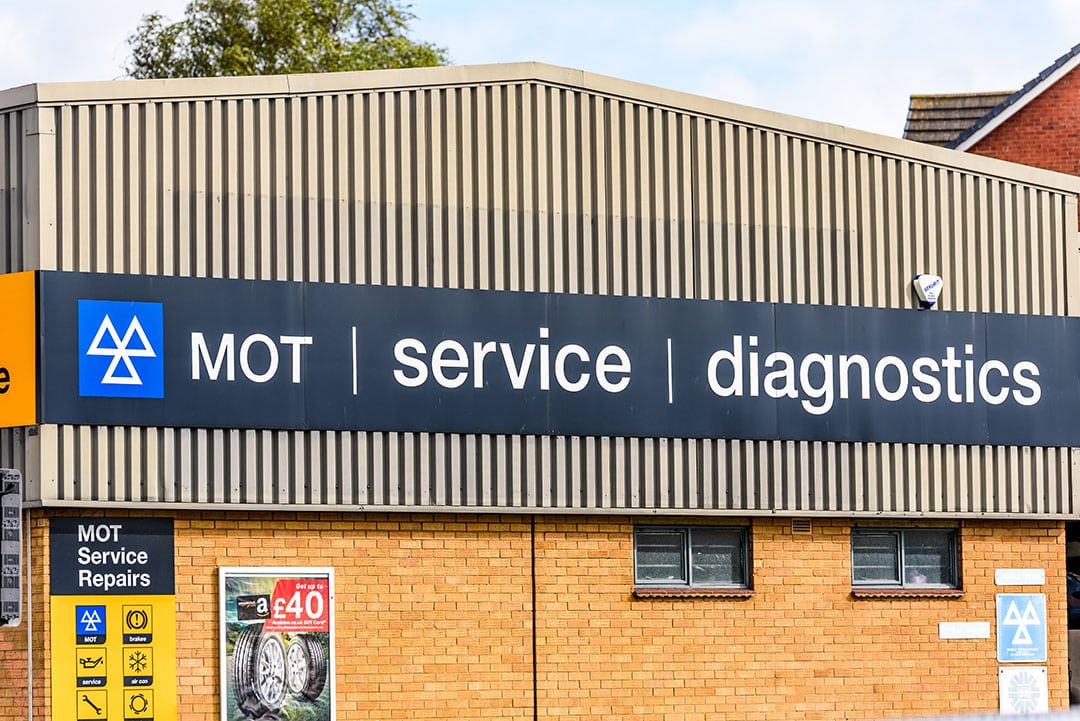
When does your car first need an MOT?
Most cars, motorcycles, and light vans need their first MOT three years after the date of first registration. After that first test, an MOT is required every 12 months.
How do you find your registration date?
The date of first registration is printed on your V5C logbook (section I). If your car was first registered on 10 June 2023, your first MOT would be due by 10 June 2026.
After that first test, the due date resets to 12 months from the date the vehicle passed. Your annual cycle runs from that point forward.
Are any vehicles exempt from MOT testing?
| Vehicle type | First MOT due | Notes |
| Cars, motorcycles, light vans | 3 years | Annual after first test |
| Heavy goods vehicles, buses | 1 year | Annual after first test |
| Historic vehicles (40+ years old) | Exempt | Rolling exemption; applies to vehicles built before 1986 as of 2026 |
| Imported vehicles | Varies | May need MOT on UK registration |
| Electric vehicles | 3 years | Same as petrol/diesel; fewer testable items |
How do you check when your MOT is due?
The quickest way is the free government MOT checker. Enter your registration number and you’ll see your MOT status, expiry date, and full test history in seconds.
What information does the MOT checker show?
The checker pulls data directly from DVSA records. You get your current MOT status, the exact expiry date, every previous pass and fail result, and any advisory notices from your most recent test.
Advisory notices flag items that passed but may need attention before your next test. Addressing them early can prevent a future failure and keep repair costs lower.
Can you check without a registration number?
The online checker requires your vehicle registration number. If you don’t have it to hand, the V5C reference number works on some government services. You can also contact the DVSA directly.
How far in advance can you get an MOT?
You can get an MOT at any time, but to keep your existing anniversary date, book no earlier than one month minus a day before your expiry date.
What is the one-month rule?
If you test within one month minus a day before your MOT expires, the new certificate runs from the old expiry date. You don’t lose any days. The GOV.UK motoring guide confirms this rule applies to all vehicle classes.
For example, if your MOT expires on 15 August, the earliest you can test and keep the same renewal date is 16 July. Your new certificate runs from 15 August to 15 August the following year.
What happens if you test earlier than one month?
If you test more than a month before your expiry date, the new certificate runs from the actual test date. You lose the remaining time on your current MOT.
There is no benefit to testing early unless your vehicle needs work and you want confirmation it meets the standard. In most cases, aim for two to three weeks before expiry.
What happens if your MOT expires?
Driving without a valid MOT is a criminal offence under Section 47 of the Road Traffic Act 1988. The maximum fine on prosecution is £1,000. It is not an endorsable offence, so it does not carry penalty points.
Can you still drive with an expired MOT?
Only in one situation. You can drive directly to a pre-booked MOT appointment with an expired certificate. The vehicle must be insured, and you must travel to the test centre and nowhere else.
You cannot drive to a garage for repairs, run errands on the way, or make any other journey. If stopped by police on a different route, you face prosecution.
How does an expired MOT affect your car insurance?
An expired MOT does not automatically void your insurance. However, many policies include roadworthiness clauses. If you have an accident in an untested vehicle and it turns out to have dangerous defects, your insurer could reject the claim or reduce the payout.
Your MOT status is one of the factors that affects how your car insurance is calculated. Keeping it current protects your no-claims bonus and avoids disputes at claim time.
It’s worth reviewing your car insurance at the same time as booking your MOT. Both protect you on the road, and both are easy to let slip.
How do MOT reminders work?
The DVSA sends MOT reminders to the registered keeper about one month before the certificate expires. You can receive them by post, email, or text message.
How do you sign up for email or text reminders?
Register your details through the government’s MOT reminder service. You’ll need your vehicle registration number and an email address or mobile number. Paper reminders are sent automatically to the address on the V5C.
Don’t rely solely on official reminders. Set your own calendar alert for at least four weeks before your expiry date. This gives you time to book a test and handle any repairs before the deadline.
What happens if your car fails its MOT?
If your car fails, you can leave it at the test centre for repair and get a free partial retest on the failed items. If you take it away for repair, a partial retest fee applies when you return.
How does the free retest work?
The free retest applies when the car stays at the test centre and is retested before the end of the next working day. If you take the car away and return within 10 working days to the same centre, you pay a partial retest fee covering only the failed items.
If you go to a different centre or take longer than 10 working days, you pay for a full retest at the standard fee.
If the failure is for a dangerous defect, you must not drive the vehicle on public roads until it is repaired. For major or minor faults, you may be able to drive it home or to a nearby garage, but confirm with the tester first. Your excess on any insurance claim would still apply if something goes wrong on the way home.
What is the difference between dangerous, major, and minor defects?
Dangerous defects are faults posing an immediate risk, such as severely worn brakes or a damaged steering component. The vehicle cannot be driven until the defect is fixed.
Major defects affect the vehicle’s safety or the environment but are not immediately dangerous. The vehicle fails and must be repaired. Minor defects are noted but do not cause a failure on their own.
Frequently Asked Questions (FAQs)
The standard online checker requires your vehicle registration number. You can also use the V5C reference number on some government services. If you don’t have either, contact the DVSA directly.
No. Driving without a valid MOT is not an endorsable offence and does not carry penalty points. The maximum penalty is a £1,000 fine on prosecution at a magistrates’ court.
Yes, but only if you are driving directly to a pre-booked MOT appointment. The vehicle must be insured. You cannot use the vehicle for any other journey until it has a valid MOT.
Not automatically. However, many policies include roadworthiness conditions. If you have an accident in an untested vehicle with dangerous defects, your insurer may dispute the claim. Keep your MOT current to avoid complications.
An MOT is a legal inspection checking minimum safety and emissions standards. A service is routine maintenance such as oil changes, filter replacements, and brake checks. You need both, but only the MOT is a legal requirement.
The maximum fee set by the DVSA is £54.85 for cars. Many garages charge less. The fee covers the test only, not any repairs needed to pass.
Some test centres open on Sundays, but it depends on the garage. Check with local MOT stations for their opening hours. You can search for nearby test centres on the GOV.UK website.
You pay for a full MOT retest at the standard fee. The 10 working day window applies from the date of the original failed test and only covers the items that failed, not the full test.