
What Is An Agreed Value Car Insurance Policy?


An agreed value car insurance policy guarantees a fixed, pre-approved payout if your car is written off or stolen, rather than paying out the market value at the time of the claim. The figure is locked in when you buy the policy, based on valuation evidence you supply, and it suits classic, modified, imported, or collector cars that standard market pricing tends to undervalue.
Standard UK car insurance bases a total-loss payout on the insurer’s view of market value, drawn from trade guides like Glass’s or CAP. That works for everyday cars but often short-changes owners of restored, rare, or heavily modified vehicles.
An agreed value policy removes that uncertainty by negotiating the payout up front. Premiums are usually 10-20% higher than a standard policy, and the paperwork is heavier.
If that cost is worth paying for your vehicle, compare specialist car insurance quotes to see what’s available.
An agreed value policy locks in a fixed, pre-approved payout at inception, so a classic, modified, or restored car isn’t valued against trade guides that can’t see the restoration work or rare parts.
Compare agreed value car insurance quotes to see if the extra premium is justified for your vehicle.
- How does an agreed value policy work?
- What’s the difference between market value and agreed value?
- Why would you choose agreed value cover?
- Do all insurers offer agreed value policies?
- How do you get an agreed value approved?
- Why does agreed value car insurance cost more?
- Can you get agreed value on classic and modified cars?
- Does agreed value apply to lease or PCP cars?
- Frequently asked questions (FAQs)
How does an agreed value policy work?
The insurer and policyholder agree a fixed payout figure at the start of the policy, supported by valuation evidence, and that figure is what you receive if the car is written off or stolen beyond recovery.
Setting the value
You propose a figure on a valuation form and back it up with documents like photos, a professional valuation, restoration receipts, and service history. The insurer reviews the evidence and either accepts, rejects, or negotiates the amount.
What stays fixed
Once agreed, the value is written into the policy and doesn’t move with market prices or depreciation. Some insurers require annual revalidation at renewal, especially if the car continues to appreciate or you add further modifications.
Claim payout
At total loss, you receive the agreed sum minus your excess, without the usual back-and-forth over market comparables. The Association of British Insurers explains total-loss claims in more detail, including category write-off rules.
What’s the difference between market value and agreed value?
Market value pays whatever the insurer calculates your car was worth just before the incident, while agreed value pays a fixed figure set in advance, regardless of depreciation or market movement.
Market value works well for everyday cars with predictable depreciation curves. It falls short on classics, restored vehicles, and modified cars that trade guides don’t price accurately.
| Feature | Market value | Agreed value |
| Payout basis | Current market price at claim | Pre-agreed fixed amount |
| Affected by depreciation | Yes | No |
| Ideal for | Standard daily drivers | Classics, modified, rare, collector cars |
| Valuation evidence | Not required up front | Required up front |
| Typical premium impact | Baseline | 10-20% higher |
Why would you choose agreed value cover?
Agreed value suits drivers whose cars are harder to price than a standard daily driver, where a trade-guide payout would leave them thousands short of the car’s real worth.
Typical candidates
Classics, vintage models, imports, and rare trims rarely sit neatly in UK valuation tools. Modified and restored cars have extra value tied up in parts and labour that standard depreciation models ignore.
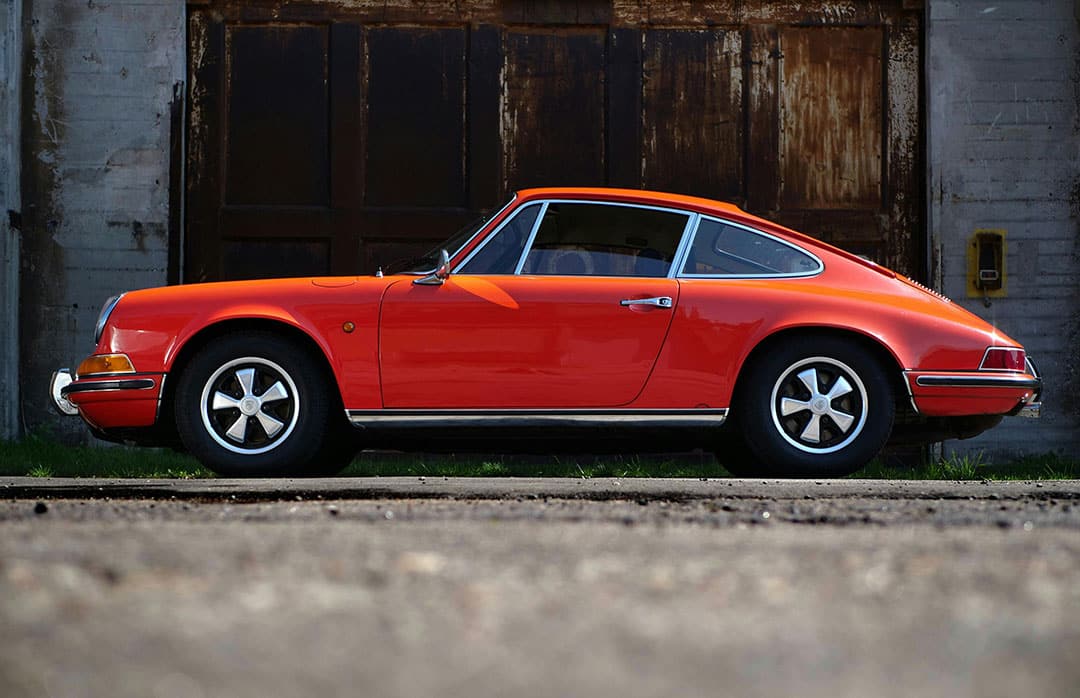
Example: 1978 Porsche 911 restoration
A market-value policy might price a restored 911 from general auction data and ignore the £20,000 of restoration work behind it. An agreed value policy locks that restoration cost into the payout, provided you have the invoices and photos to back it up.
For appreciating vehicles, this prevents the shortfall that a standard insurance payout creates after a total loss.
Do all insurers offer agreed value policies?
No. Agreed value is usually sold by specialist classic, modified, and performance insurers rather than mainstream comparison providers, because it requires more manual underwriting.
Mainstream insurers occasionally offer agreed value as an add-on, typically with conditions like a minimum vehicle age or a third-party valuation. Most still default to market value, which is why enthusiasts shop specialist panels.
Eligibility rules vary by insurer. Common requirements include garaging overnight, limited annual mileage, and a minimum spend on restoration work.
It pays to compare insurers side by side and find one that lists agreed value as a core feature rather than a bolt-on.
How do you get an agreed value approved?
You submit documented proof of your car’s worth on a valuation form, the insurer reviews it, and the figure is written into the policy once both sides agree.
Evidence most insurers ask for
- Recent professional valuation from a recognised appraiser or specialist dealer
- High-resolution photos covering interior, exterior, engine bay, and mileage
- Invoices for restoration work, parts, and modifications
- Full service history and MOT records
- Condition report or in-person inspection for high-value vehicles
Avoiding rejection
Insurers push back when valuations are inflated or poorly evidenced. Base your figure on recent comparable sales and specialist appraisal, not what you hope the car would fetch.
Why does agreed value car insurance cost more?
Insurers charge more because they’re committing to a payout that won’t shrink with depreciation, which shifts the financial risk onto them.
Premiums usually sit 10-20% above a comparable market-value policy on the same car. The gap widens for heavily modified vehicles, where the sum insured can be well above any trade-guide price.
What drives the premium higher
Extra underwriting time, a higher sum insured, and tighter fraud checks all feed into the price. Specialist insurers also operate in a narrower market with less direct competition, which keeps prices firmer than mainstream policies.
You can offset some of that with standard premium-lowering tactics like higher voluntary excess or limited mileage.
Can you get agreed value on classic and modified cars?
Yes. Classic and modified vehicles are the two biggest categories for agreed value cover, because both routinely sit above standard market valuations.
Classic cars
Classic cars often appreciate rather than depreciate, which makes market value cover risky. A restored 1968 Jaguar E-Type can be worth £80,000 or more, but a trade-guide payout may miss that mark by tens of thousands.
If the car qualifies for historic vehicle tax class, it’s also likely to fit the profile most specialist insurers underwrite.
Modified cars
Tuning, bodywork, respray, and specialist audio rarely show up in valuation databases. Agreed value folds those upgrades into the insured sum, provided you declared them at inception and have invoices for the work.
Insurers usually insist modifications are professionally fitted and legal for UK road use.
Does agreed value apply to lease or PCP cars?
No. You can’t agree a value on a car you don’t legally own, which rules out lease agreements and PCP vehicles until the final payment is made.
The closest equivalent is GAP insurance. If your PCP car is written off and the insurer pays £12,000 market value against a £15,000 outstanding balance, GAP covers the £3,000 shortfall.
It’s not identical to agreed value, but it stops you being out of pocket on a finance deal.
Cars kept off-road on a SORN declaration can still be covered under agreed value against theft, fire, and accidental damage, which matters for storage and restoration projects.
Frequently Asked Questions (FAQs)
No. It also suits modified, imported, rare, and collector vehicles where market valuation tools fall short of the car’s real worth.
Yes, it’s usually reviewed at renewal and adjusted if the car has appreciated or you’ve invested further in it. Keep documentation current to justify any uplift.
Often yes, especially for high-value or heavily modified cars. Some insurers accept owner valuations backed by photos and invoices for lower-value vehicles.
Yes. Payouts are fixed and pre-agreed, which removes the depreciation debate that standard policies often involve at total loss.
No, agreed value is designed for long-term policies with underwriting up front. For short-term needs, a temporary car insurance policy on market value is the standard option.
They’ll usually request extra documentation or a professional appraisal. Cover is only offered once they’re satisfied the evidence supports the figure.
Yes, it can protect against theft, fire, and accidental damage even when the car isn’t driven. The GOV.UK guidance on SORN explains what you can and can’t do with a vehicle taken off the road.
Start with specialist classic and performance panels, and compare car insurance quotes from providers that explicitly list agreed value as a core feature rather than a bolt-on.