
Does Car Insurance Cover Storm Damage?


Yes, car insurance covers storm damage, but only if you have a fully comp policy. Third-party and third-party, fire and theft policies do not cover weather-related damage to your own vehicle.
The UK has seen a sharp rise in storm-related claims in recent years. The Association of British Insurers reported over 7,000 vehicle damage claims following named storms in 2024-25 alone.
Below we explain which policies cover storm damage, why claims get rejected, what to do if your car is hit, and how to compare car insurance so you’re properly protected before the next storm arrives.
Only fully comprehensive car insurance covers storm damage. Third-party and third-party, fire and theft policies leave your own vehicle completely unprotected against flooding, fallen trees, and hail.
Compare fully comp car insurance quotes to make sure you are covered before the next storm.
What type of car insurance covers storm damage?
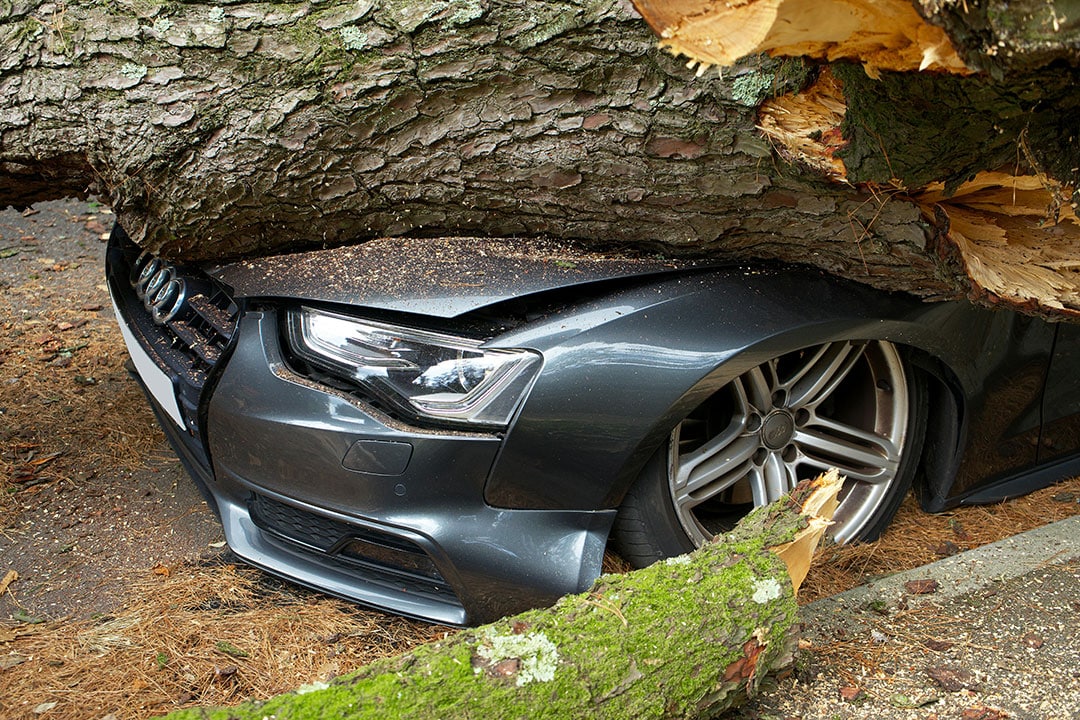
Only fully comp car insurance covers storm damage. It’s the highest level of cover and the only type that pays to repair your own vehicle after weather events like flooding, hail, fallen trees, or flying debris.
What each policy level covers
Third-party insurance meets the legal minimum but only pays for damage you cause to other people’s property. Third-party, fire and theft adds cover for fire and stolen vehicles but still excludes weather damage.
Fully comp extends protection to your own car, including storm and flood damage, smashed windscreens, and even personal belongings inside the vehicle at the time.
| Policy type | Covers storm damage? | What’s protected |
| Third-party only | No | Damage to others only |
| Third-party, fire and theft | No | Theft and fire, not weather |
| Fully comp | Yes | Weather, flooding, hail, debris, fallen trees |
Watch out for storm-specific excesses
Some insurers apply a higher excess for storm or flood claims. This means you’ll pay more upfront before the insurer covers the rest, so check your policy schedule for any weather-related excess before you need to claim.
Why might a storm damage claim be rejected?
Insurers reject storm claims when the driver could have avoided the damage or when the policy conditions haven’t been met. Fully comp cover protects against unforeseen weather, but it doesn’t cover carelessness.
Driving into floodwater
If you drive through a flooded road and your engine stalls, most insurers will class that as negligence. They expect you to avoid obvious hazards, especially when the Met Office has issued amber or red warnings.
Pre-existing damage or poor maintenance
If your car already had rust, leaking seals, or blocked drainage points before the storm, the insurer may argue the weather wasn’t the primary cause. Keeping up with basic maintenance removes this excuse.
Claims below your excess
If the repair cost is lower than your excess, the claim won’t pay out. A £350 repair on a policy with a £500 excess means you’ll cover the full cost yourself.
No evidence of a storm
Insurers cross-check claims against Met Office storm data. If there was no recorded warning in your area at the time, you’ll need strong photographic evidence to support your claim.
What should you do if your car is damaged in a storm?
Don’t drive the car and don’t try to start the engine if there’s been flooding. Water in the engine bay can cause far worse damage with a single ignition attempt.
Document everything immediately
Take photos from several angles, including close-ups of the damage and wide shots showing fallen branches, debris, or standing water nearby. Insurers cross-check claims with Met Office data, so timestamped photos are your strongest evidence.
Contact your insurer before arranging repairs
Report the damage as soon as possible. Give the time, location, and a brief account of what happened, plus any photos or video you’ve taken.
Don’t start repairs or move the car unless your insurer tells you to. Many prefer to inspect the damage themselves or send it to an approved garage first.
Be aware of your no-claims discount
A storm damage claim is treated like any other fault claim, so it may reduce your no-claims discount at renewal. If you’ve paid for no-claims protection, your discount stays safe.
Check your policy renewal date so you know when any change would take effect.
How can you check if you’re covered for storm damage?
Start with the basics: if your policy is third-party or third-party, fire and theft, storm damage isn’t included. Only fully comp policies cover weather-related events.
Read the policy wording
Look for sections headed ‘weather damage’ or ‘acts of nature’ in your policy document. Some insurers require a Met Office warning to be active at the time, while others define storms more broadly.
Check your excess levels
Your policy schedule lists the excess for different claim types. Storm and flood claims sometimes carry a higher excess than standard accidental damage, so check the figure before you need it.
Call your insurer and get it in writing
A five-minute phone call can confirm whether personal items inside the car are covered, what counts as preventable damage, and whether flood and hail are treated differently. Ask them to confirm the answer in writing.
How can you protect your car during UK storm season?
Fully comp insurance is the only financial safety net if a storm damages your car, but prevention is cheaper than a claim. Compare car insurance well before storm season to make sure you’re covered.
Park away from hazards
Avoid parking under trees, near walls, or in flood-prone spots when severe weather is forecast. A covered car park or garage is the safest option.
Monitor weather warnings
Check the Met Office UK Storm Centre and local flood risk warnings regularly during autumn and winter. Moving your car to higher ground before heavy rain arrives can prevent flood damage entirely.
Keep your car well maintained
Blocked drains, worn seals, and cracked windscreens all give insurers a reason to reduce or reject a claim. Regular servicing removes these weak points before a storm exposes them.
Upgrade to fully comp if you haven’t already
If you’re on a third-party policy, you have zero weather protection. Use a comparison site to see how much fully comp would cost.
The difference is often smaller than drivers expect, especially if you have a clean driving record and a few years of no-claims discount.
Frequently Asked Questions (FAQs)
No, third-party insurance only covers damage you cause to other people’s property. It doesn’t include damage to your own vehicle from storms or floods.
Yes, if you have fully comp cover. It should pay for repairs or a replacement if a tree or branch falls on your vehicle during severe weather.
Flood damage is covered under fully comp insurance, provided you didn’t drive into floodwater deliberately. Claims may be rejected if the insurer considers the damage preventable.
Yes, hail is classed as storm damage by most insurers. Fully comp cover typically pays for repairs to bodywork, windows, and windscreens damaged by hailstones.
Yes, unless you’ve paid for no-claims protection. Storm claims are treated like any other fault claim and may reduce your discount at renewal.
Don’t start the engine, as this can cause further damage. Temporary car insurance can cover a hire car while yours is being repaired.
Park away from trees, walls, and flood-prone areas when severe weather is forecast. Move to higher ground or a covered location if you can, and keep your car well maintained so insurers can’t reject a claim on maintenance grounds.