
Does Car Insurance Cover Parking Damage?


It depends on who caused the damage and what policy you have. If another driver hits your parked car, their insurance pays, but if you cause the damage or the other driver is unknown, you need comprehensive insurance.
Parking damage is one of the most common types of vehicle damage in the UK. Scraped bumpers, dented doors, and cracked mirrors in car parks happen daily.
Whether your insurer pays depends on the scenario, your policy type, and whether the repair cost makes a claim worthwhile.
It turns on who caused it and whether they stayed. Another driver identified and at fault means their insurer pays and you keep your discount. Nobody identified, or the damage was yours, and you are on your own comprehensive policy paying an excess. For the typical car park scrape, the excess plus the lost no-claims discount often exceeds the repair bill.
Compare comprehensive car insurance and weigh the excess.
- What happens if someone else damages your parked car?
- What if someone hits your parked car and drives off?
- What if you cause parking damage to your own car?
- Is it worth claiming for minor parking damage?
- What are the legal penalties for driving off after hitting a parked car?
- How can you reduce the risk of parking damage?
- Frequently asked questions (FAQs)
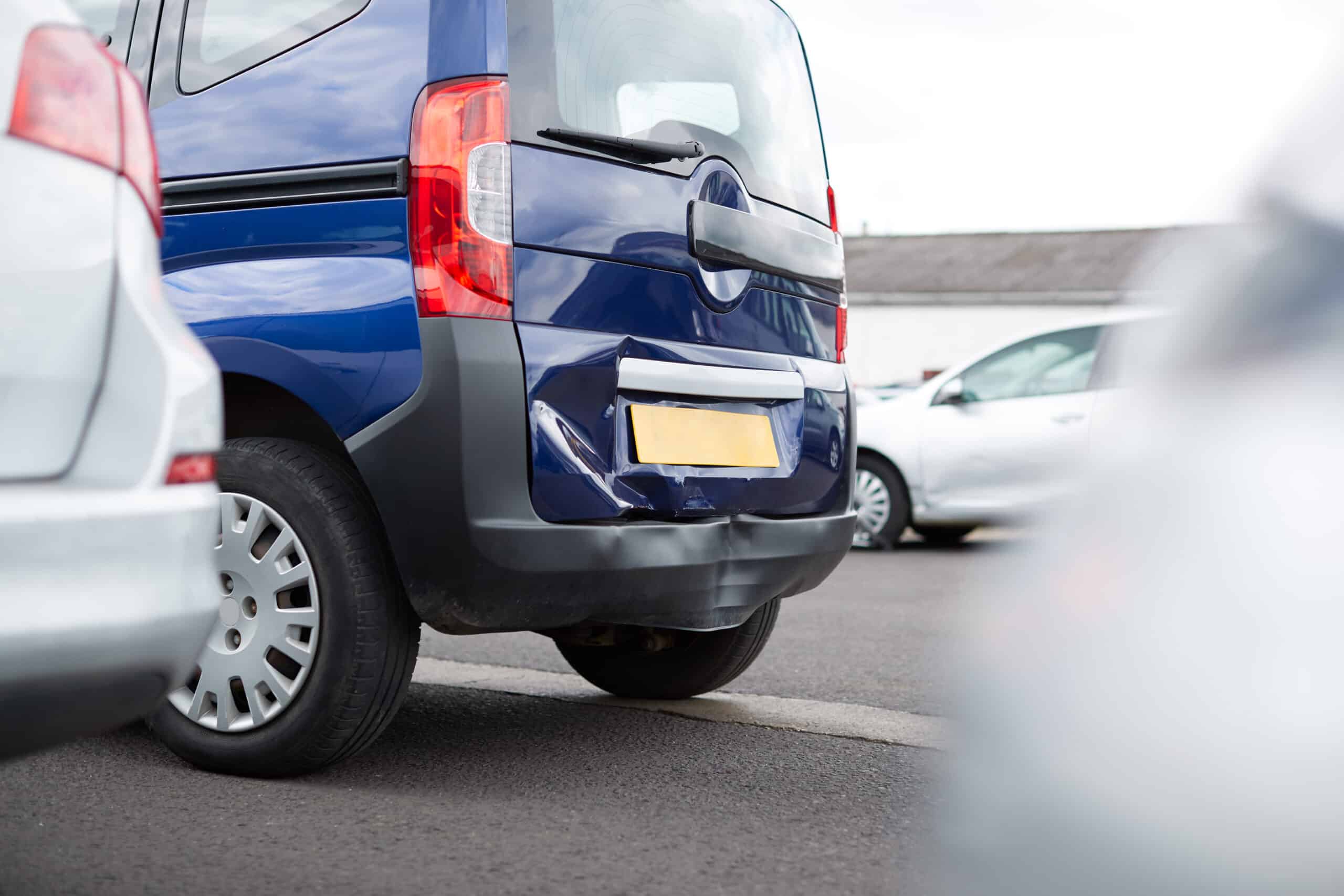
What happens if someone else damages your parked car?
Their third-party insurance covers the repair. You claim against their policy, not yours, and your no-claims discount is unaffected.
What should you do at the scene?
Exchange names, contact details, and insurance information with the other driver. Photograph the damage to both vehicles from multiple angles, noting the date, time, and exact location.
Report the incident to your insurer even if you plan to claim against the other driver. Your insurer handles the recovery process on your behalf.
What if the other driver leaves a note?
Follow the same process by contacting them, exchanging insurance details, and reporting to your insurer. A note with valid details means this is treated as a non-fault claim.
Leaving your details is not a courtesy but a legal requirement under Section 170 of the Road Traffic Act 1988, and it applies to minor damage just as much as major.
What if someone hits your parked car and drives off?
You can only claim on your own comprehensive insurance. Third-party and TPFT policies do not cover unidentified driver damage to your vehicle.
How is the claim treated?
Your insurer treats this as an at-fault claim because there is no third party to recover costs from. This affects your no-claims discount and you pay your policy excess.
If the other driver is later identified through CCTV or witnesses, your insurer can pursue their policy for recovery. If successful, the claim is reclassified as non-fault and your NCD is restored.
What evidence should you gather?
Photograph the damage and surrounding area immediately. Check for CCTV cameras in the car park and ask the operator or nearby businesses for footage.
Report the incident to the police on 101 and get a crime reference number. Your insurer needs this before processing a hit-and-run claim.
Can you claim through the Motor Insurers’ Bureau?
If you are injured or the damage exceeds £300, you can claim through the Motor Insurers’ Bureau. The MIB compensates victims of untraced and uninsured drivers, funded by a levy on all UK motor insurance policies.
MIB claims take longer than standard insurance claims, typically 6 to 12 months. They also apply an excess, currently £400 for property damage only claims.
What if you cause parking damage to your own car?
Only comprehensive insurance covers accidental damage to your own vehicle. If you scrape a pillar, clip a bollard, or reverse into a wall, TPFT and TPO policies pay nothing towards your repair.
What about damage to someone else’s property?
If you hit another car, a wall, or a barrier, the third-party element of any policy covers the damage to their property. This applies to third-party only, TPFT, and comprehensive policies equally.
You must leave your details or report to the police within 24 hours. Driving off after causing damage to another vehicle is a criminal offence.
Is it worth claiming for minor parking damage?
For most minor scrapes and dents, no. The excess payment plus the loss of your no-claims discount usually costs more than paying for the repair yourself.
How does the cost compare?
| Repair cost | Excess (£300) | Insurer pays | Est. NCD loss (3 years) | Better option |
| £200 | £300 | £0 (below excess) | N/A | Self-fund |
| £500 | £300 | £200 | £600-£1,200 | Self-fund |
| £1,000 | £300 | £700 | £600-£1,200 | Borderline |
| £2,500 | £300 | £2,200 | £600-£1,200 | Claim |
| £5,000+ | £300 | £4,700+ | £600-£1,200 | Claim |
Our car insurance costs guide explains how at-fault claims affect your renewal premium across different insurers.
What are the legal penalties for driving off after hitting a parked car?
Failing to stop and report is a criminal offence under Section 170 of the Road Traffic Act 1988. Penalties include 5 to 10 penalty points, a fine of up to £5,000, and up to six months in prison.
What must you do after hitting a parked car?
You must stop at the scene. If you cannot find the owner, leave a note with your name, address, and registration number in a visible position on the damaged vehicle.
If you do not leave details at the scene, you must report the incident to the police within 24 hours. Failure to do either is a separate offence that carries its own penalty points.
What about CCTV evidence?
Most car parks have CCTV, and if you drive off, the footage will likely identify your vehicle. Police can trace the registered keeper and prosecute.
A hit-and-run conviction also affects your insurance. Our tips to lower your premium explain how penalty points and convictions increase renewal costs.
How can you reduce the risk of parking damage?
Park further from the entrance where spaces are emptier and there is less passing traffic. End spaces and spaces next to walls give you fewer vehicles alongside.
What practical steps help?
Use parking sensors and cameras if your vehicle has them, and take your time when manoeuvring. Avoid very tight spaces where opening doors is difficult for both you and neighbouring drivers.
Park in well-lit areas with CCTV. This deters hit-and-run damage and provides evidence if your car is damaged while you are away.
Does a dashcam help?
A parking-mode dashcam records motion around your vehicle even when the engine is off. If someone hits your car and drives off, the footage can identify their vehicle and registration.
Dashcam footage is accepted by insurers and police as evidence. It can turn an at-fault hit-and-run claim into a recoverable non-fault claim if the other driver is identified.
Frequently Asked Questions (FAQs)
Only if someone else caused the damage and you can identify them, because you claim against their insurance. If you caused the damage or the other driver is unknown, third-party insurance does not cover your vehicle.
Yes, because your insurer cannot recover costs from an unidentified driver. The claim is treated as at-fault, and your NCD is usually reduced.
Usually not for minor damage. If the repair cost is close to your excess, the resulting NCD loss and premium increase will likely cost more than the insurer pays out.
Yes. Under Section 170 of the Road Traffic Act 1988, failing to stop carries 5 to 10 penalty points, a fine of up to £5,000, and up to six months in prison.
Only if the operator’s negligence caused the damage, such as a falling barrier or dangerous surface. Car park operators are not liable for damage caused by other drivers.
Photograph the damage, check for CCTV, report to the police on 101, and contact your insurer. You can claim on comprehensive insurance, but it will be treated as at-fault.