
Does Car Insurance Cover Tree Damage?


Yes, if you have comprehensive car insurance. A falling tree or branch is treated as accidental damage, and your insurer pays for repairs minus your excess.
Third-party, fire and theft and third-party only policies do not cover tree damage because they exclude accidental damage to your own vehicle.
Named storms generate thousands of vehicle damage claims each season, and fallen trees and branches account for a large proportion of them.
Yes, on comprehensive — a falling tree or branch is accidental damage and TPFT does not stretch to it. The more interesting question is liability. An act of nature in a storm is nobody’s fault, but a tree that was visibly diseased and left unattended puts the owner on the hook for negligence, which is how you get your excess back. Photograph the tree, not just the car.
Compare comprehensive car insurance before the next storm.
- Which types of car insurance cover tree damage?
- When can your insurer refuse a tree damage claim?
- Who is liable when a tree falls on your car?
- How much does tree damage cost to repair?
- What should you do if a tree damages your car?
- How can you reduce the risk of tree damage?
- Frequently asked questions (FAQs)
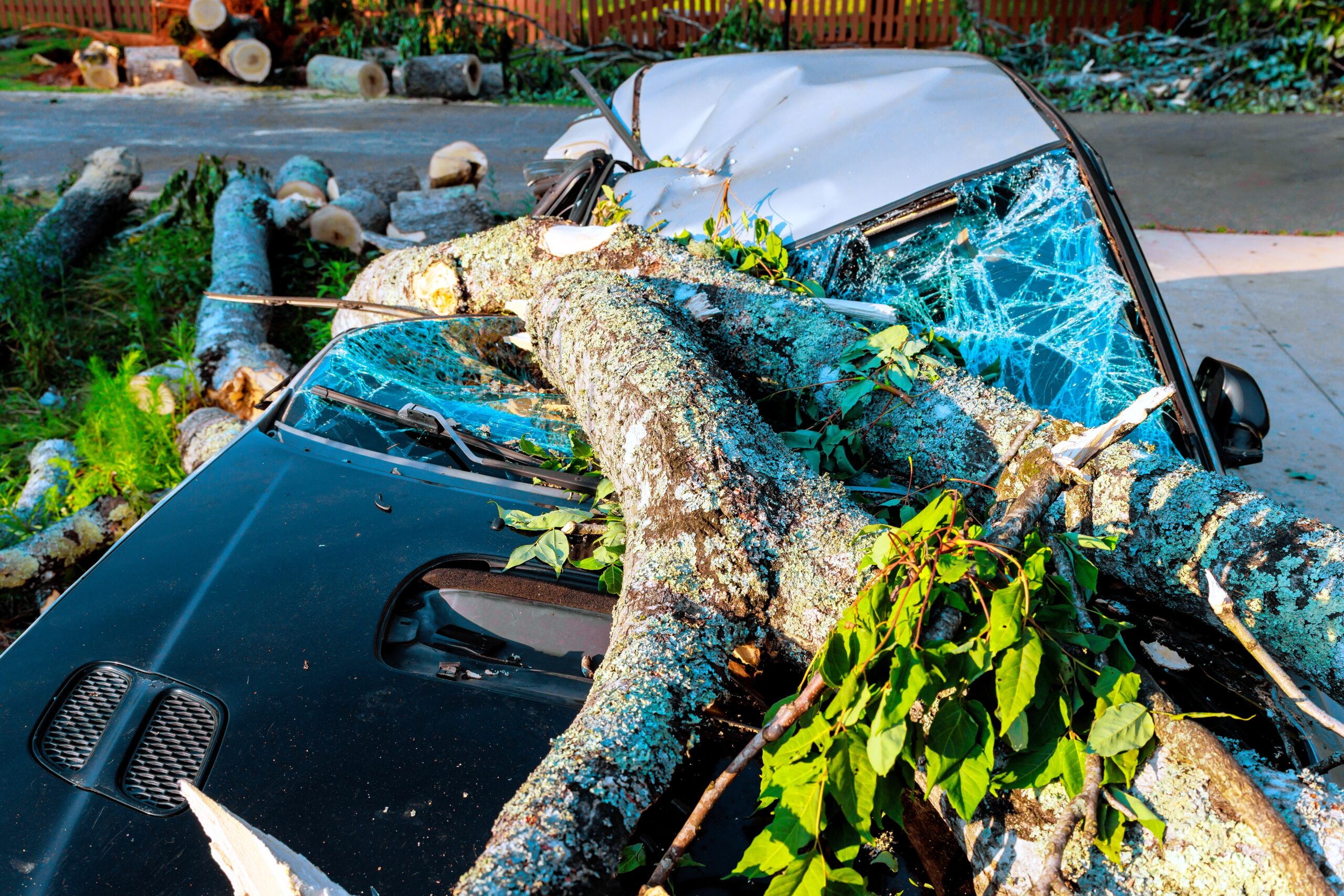
Which types of car insurance cover tree damage?
Only comprehensive insurance covers damage from falling trees and branches. The other two policy types leave you paying for repairs yourself.
How does cover differ by policy type?
| Policy type | Tree damage cover | Storm damage cover | Vandalism cover |
| Comprehensive | Yes | Yes | Yes |
| Third-party, fire and theft | No | No | No |
| Third-party only | No | No | No |
TPFT covers fire and theft but not accidental damage from external events. Tree damage falls into the accidental damage category, which only comprehensive policies include.
Does it matter how the tree fell?
No, because comprehensive cover applies whether the tree fell in a storm, snapped in calm weather, or was knocked over by a third party. The cause does not affect your cover, although it may affect who is ultimately liable.
When can your insurer refuse a tree damage claim?
Your insurer can refuse or reduce the payout if they believe you were negligent. The key test is whether you took reasonable care to avoid the damage.
What counts as negligence?
Parking under a tree with visibly dead branches, exposed roots, or fungal growth is the most common reason for refusal. If the tree was clearly unsafe and you chose to park beneath it, the insurer may argue you failed to take reasonable precautions.
Ignoring a Met Office severe weather warning when you could have moved your car to a safer location is another ground for challenge. In practice, most tree damage claims are paid because storms are unpredictable and healthy trees can fall without warning.
What about trees on your own property?
If a tree in your garden fell on your car because you failed to address visible decay, your insurer may reject the claim. Homeowners have a duty to maintain trees on their property and remove dead or dangerous specimens.
Get a tree surgeon to inspect any trees that overhang your parking spot every two to three years. A recent survey report strengthens your position if you need to make a claim.
Who is liable when a tree falls on your car?
Liability depends on who owned the tree and whether they maintained it properly. The Occupiers’ Liability Act 1957 makes landowners responsible for the safety of trees on their property.
What if a neighbour’s tree falls on your car?
If the tree was diseased or visibly dangerous and the neighbour failed to act, they are liable under negligence. Your insurer pays your claim and then pursues the neighbour’s home insurance to recover the cost.
If the tree was healthy and fell in a storm, nobody is at fault. Your comprehensive policy covers the damage and the claim is treated as a no-fault incident, although it still counts as a claim on your record.
What if a council tree falls on your car?
Local authorities are responsible for maintaining trees on public land, including roadside trees and those in parks and car parks. If a council tree fell because of poor maintenance, you can submit a claim to the council’s insurance team.
Council claims take longer than insurer claims because the council must investigate and accept liability. Claim on your own comprehensive policy first, and your insurer can pursue the council to recover costs on your behalf.
How much does tree damage cost to repair?
Repair costs range from £150 for minor scratches to £5,000 or more for structural damage. Your excess is deducted from the payout, so small repairs may not be worth claiming.
What are typical repair costs?
| Damage type | Typical cost | Worth claiming? |
| Scratches and minor dents | £150-£400 | Usually not (often below excess) |
| Cracked or smashed windscreen | £200-£400 | Use windscreen cover if included |
| Roof dents and panel damage | £500-£2,000 | Yes (usually exceeds excess) |
| Crushed roof or structural damage | £2,000-£5,000+ | Yes (may be written off) |
Should you claim or pay out of pocket?
Compare the repair cost against your total excess (compulsory plus voluntary) and the potential increase in your premium at renewal. Our car insurance costs guide shows how claims affect renewal prices.
A £300 repair with a £250 excess gives you only £50 from the insurer but adds a claim to your record. Paying out of pocket protects your no-claims discount and keeps your renewal price lower.
What should you do if a tree damages your car?
Photograph everything before the tree or branches are moved. Your insurer needs evidence of the tree’s condition, the damage to your car, and the surrounding area.
What steps should you follow?
Take photos from multiple angles showing the fallen tree, your car’s damage, and any signs of decay or disease on the tree. Record the date, time, and weather conditions at the time of the incident.
Check the Met Office storm centre to confirm whether any weather warnings were active in your area. A screenshot of the forecast supports your case that the event was unforeseeable.
Who should you contact?
Identify who owns the tree and note the property address if it is on a neighbour’s land. If it is on council land, contact your local authority’s highways department to report the fallen tree.
Call your insurer with your policy number, photos, and a description of what happened. Most storm damage claims are settled within two to four weeks once all documents are provided, though claim volumes spike after a named storm and can slow that down.
How can you reduce the risk of tree damage?
Avoid parking under large trees during storm season, which runs from October to March in the UK. If you must park near trees, choose younger, smaller specimens rather than mature trees with heavy branches.
What precautions help?
Use a garage or covered car park whenever possible. If you park on the street, choose a spot away from overhanging branches, especially during amber or red weather warnings.
Our tips to lower your premium include advice on how parking location and security measures affect your renewal price.
Should you inspect trees near your home?
Check trees on your property for dead branches, fungal growth, and leaning trunks each autumn. Remove dead wood before storm season to reduce the risk to your car and to strengthen your position if you ever need to claim.
If a neighbour’s tree overhangs your parking spot, raise it with them in writing. A written record shows you took reasonable steps to address the risk, which supports any future claim.
Frequently Asked Questions (FAQs)
No, because tree damage is classified as accidental damage, which TPFT does not include. Only comprehensive insurance covers damage from falling trees and branches.
Usually yes, because most insurers treat tree damage like any other claim. No-claims protection, if included in your policy, can shield your discount for one claim per year.
Your comprehensive insurance pays for the repair, and your insurer can then pursue the council to recover the cost if poor maintenance was the cause. You can also claim against the council directly, but this takes longer.
Possibly, if the tree was visibly dead or dangerous. Parking under a healthy tree is not negligence, so claims for storm damage to cars parked under sound trees are almost always paid.
Minor scratches and dents take one to three days, and windscreen replacement takes one to two days. Structural repairs to a crushed roof can take one to two weeks or longer.
Yes, most home insurance policies cover the cost of removing a fallen tree from your property. Your car insurance covers the vehicle damage, and your home insurance covers the tree removal and any damage to your property.