
Does Changing Exhaust Affect Insurance?


Yes, if the exhaust modification increases engine power. A performance exhaust system can add 10% to 25% to your premium, while a stock replacement with no power gains may have little or no impact.
You must declare any exhaust change to your insurer regardless of whether it affects performance.
Exhaust modifications range from cosmetic tip changes to full turbo-back performance systems. The insurance impact depends on whether the exhaust increases horsepower, how your insurer classifies the change, and whether the modification is legal for road use.
If your current insurer loads your premium heavily for modifications, comparing car insurance from modification-friendly providers can reduce the cost. Some specialist insurers charge far less for the same modification.
Yes, and the size of the effect depends on what the exhaust actually does. A cat-back fitted for sound is a modest loading. Anything that raises power puts you in a different risk bracket entirely.
The real cost is not declaring it. An undeclared modification gives your insurer grounds to reduce a payout or void the policy outright, and that risk sits with you for as long as the part is on the car.
Compare car insurance quotes with the modification declared.
- How do different exhaust types affect your insurance?
- Why do performance exhausts increase your premium?
- Do you have to declare an exhaust change to your insurer?
- What are the legal noise limits for exhaust systems?
- How can you reduce the insurance impact of an exhaust change?
- What happens if you do not declare an exhaust modification?
- Frequently asked questions (FAQs)
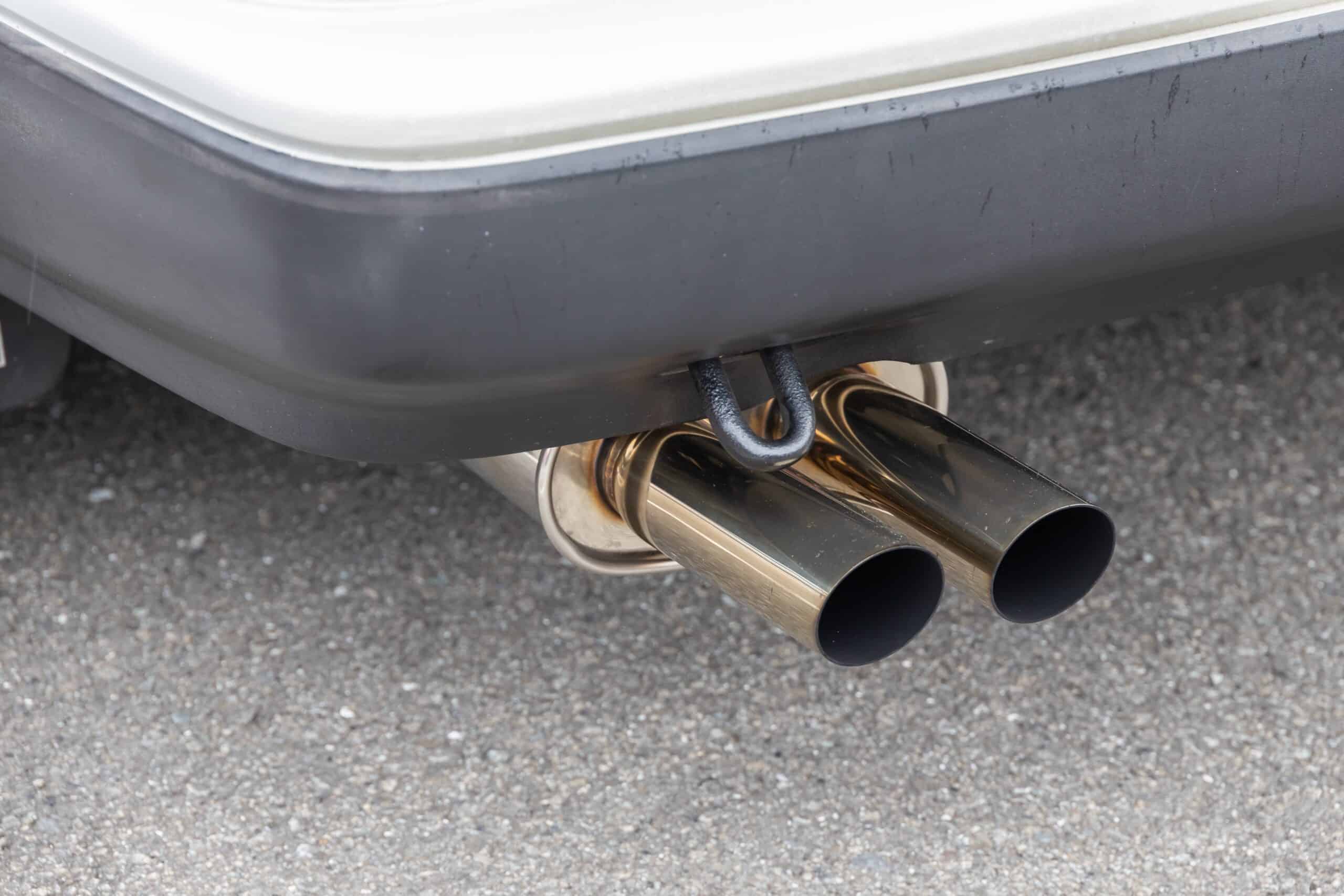
How do different exhaust types affect your insurance?
The premium impact depends on whether the exhaust increases engine power. Cosmetic changes that only alter sound or appearance have minimal effect, while performance systems that add horsepower trigger larger increases.
What is the typical premium impact by exhaust type?
| Exhaust type | Typical power gain | Premium impact | Must you declare it? |
| Stock replacement | None | None to minimal | Recommended |
| Cat-back (cosmetic) | None | 0-5% | Yes |
| Cat-back (performance) | 5-15 bhp | 10-20% | Yes |
| Turbo-back system | 15-40 bhp | 15-25% | Yes |
| Decat or straight pipe | 5-20 bhp | 20-30%+ | Yes (may be illegal) |
| Resonator delete | None | 0-5% | Yes |
Insurers use data from manufacturers and tuning specialists to assess whether an exhaust increases power. If the exhaust manufacturer advertises horsepower gains, your insurer will price accordingly.
Does a cat-back exhaust affect insurance?
A cosmetic cat-back that changes sound but not power output sits in a grey area. Most insurers treat it as a minor modification with a premium increase of 0% to 5%.
A performance cat-back designed to improve exhaust flow and add 5 to 15 bhp is treated differently. Expect a 10% to 20% premium increase, similar to other performance modifications.
Why do performance exhausts increase your premium?
Insurers associate higher engine power with higher accident risk and greater claim costs. A modified car also costs more to repair because aftermarket parts need specialist fitting.
Our car insurance costs guide explains how insurers calculate your base premium before any modification loading is applied.
What risk factors do insurers consider?
Higher power output means higher potential speed, which insurers link to more severe collisions and larger claims. Modified cars also cost more to repair because non-standard components are harder to source and fit.
Insurers also view drivers who modify their cars as more likely to make further changes or drive enthusiastically. A single exhaust modification can signal a broader risk profile that affects your overall premium.
Does a modified exhaust increase theft risk?
Visibly modified cars are more attractive to thieves, particularly those with performance parts. Fitting a Thatcham-approved alarm and immobiliser can offset some of this increased risk.
A black box policy can also help by proving you drive safely despite the modification. Telematics data gives insurers evidence of your actual driving behaviour rather than assumptions based on the vehicle specification.
Do you have to declare an exhaust change to your insurer?
Yes, you must declare any modification to your car, including exhaust changes. Insurers treat any alteration from factory specification as a modification, and policy wordings require you to disclose it.
What counts as a modification?
Any change from the manufacturer’s original specification counts, including cosmetic exhaust tips, cat-back systems, decat pipes, and full turbo-back installations. Even a replacement exhaust that looks identical but is made by a different manufacturer should be declared.
If you are unsure whether a change counts as a modification, declare it anyway. Telling your insurer about a change that does not affect your premium costs nothing, but failing to declare one that does can invalidate your entire policy.
When should you tell your insurer?
Contact your insurer before fitting the exhaust. They can tell you the premium impact in advance, which lets you factor the insurance cost into your total modification budget.
If you declare at the start of a new policy rather than mid-term, some insurers are more accommodating. Shopping around at renewal with the modification already included often produces better quotes than adding it to an existing policy.
What are the legal noise limits for exhaust systems?
The Road Vehicles (Construction and Use) Regulations 1986 require that an exhaust system must not be modified to make the vehicle noisier than the level at which it was type-approved. The current type-approval limit for most passenger cars is 72 decibels.
How are noise limits enforced?
During an MOT test, the examiner assesses whether exhaust noise is unreasonably above what they would expect from a similar vehicle with a standard silencer. Excessively loud exhausts fail the MOT.
The police can also issue on-the-spot fines and require you to remove the vehicle from the road until the exhaust is corrected. Some forces are trialling noise camera technology to detect excessively loud vehicles automatically.
Can an illegal exhaust invalidate your insurance?
Yes, because your insurer can refuse a claim on the grounds that the vehicle was unroadworthy. An exhaust that exceeds legal noise limits or removes the catalytic converter makes the car illegal to drive on public roads.
Removing the catalytic converter (a decat) is illegal for road use in the UK and will fail the MOT emissions test. It also invalidates your insurance, because your insurer can argue the vehicle was not legally roadworthy at the time of the incident.
How can you reduce the insurance impact of an exhaust change?
Specialist modified car insurers often charge less than mainstream providers for the same modification. Our tips to lower your premium include other ways to offset the increased cost.
What steps can you take?
Get insurance quotes with the planned modification included before committing to the purchase. This avoids surprises and lets you compare the total cost of ownership including the insurance increase.
Keep all documentation including receipts, fitting certificates, and any decibel test results. This demonstrates the exhaust is professionally fitted, within legal limits, and covered by the manufacturer’s warranty.
Should you use a specialist insurer?
Specialist insurers understand exhaust modifications and often charge less than mainstream providers. They also offer agreed-value policies that cover the cost of your modifications if the car is written off, which standard comprehensive policies typically do not.
Declare all modifications at the quote stage rather than adding them mid-policy. Specialist insurers are more accommodating when modifications are disclosed from the start, and this approach avoids mid-term adjustment fees.
What happens if you do not declare an exhaust modification?
Your insurer can refuse any claim and cancel your policy. You may also be prosecuted for driving without valid insurance, because an undeclared modification can make your existing policy void from the date the change was made.
How do insurers find out about undeclared modifications?
Insurers discover undeclared modifications during claims inspections, when an assessor examines the vehicle. Aftermarket exhaust systems are easy to identify because they differ visibly from factory components.
If a claim is refused due to an undeclared modification, you pay for all damage yourself. You may also face prosecution for driving without insurance, which carries six penalty points, an unlimited fine, and potential disqualification.
Frequently Asked Questions (FAQs)
It depends on whether it increases power, because a cosmetic cat-back may add 0% to 5% while a performance cat-back with power gains can add 10% to 20%. Declare it to your insurer either way.
If it is a like-for-like replacement with identical specifications, the premium impact is usually zero. However, inform your insurer to avoid any ambiguity during a claim.
Yes. If your exhaust exceeds legal noise or emissions limits, your insurer can refuse a claim on the grounds that the vehicle was unroadworthy at the time of the incident.
Yes, notify your insurer of the removal and your premium should reduce at your next renewal or through a mid-policy adjustment.
A cat-back replaces the exhaust from after the catalytic converter. A turbo-back replaces from after the turbocharger, affecting more of the system and typically producing larger power gains with a higher premium increase.
A resonator delete changes exhaust sound without necessarily increasing power, so the premium impact is usually minimal at 0% to 5%. Declare it as a modification, and check that the increased noise stays within legal limits.