
Does Car Insurance Cover Catalytic Converter Theft?


Yes, if you hold comprehensive or third-party fire and theft cover. Both tiers pay to replace the part, fit a new one, and fix any damage caused during removal, while third-party-only policies do not cover theft at all.
Catalytic converter theft is one of the fastest-growing vehicle crimes in the UK, driven by the scrap value of the platinum, palladium, and rhodium inside. ABI figures show motor claims hit a record £11.7 billion in 2024, with theft-related claims making up a growing share of the total.
This guide covers exactly which policies pay out, what the claim includes, how much a replacement costs, how to claim properly, and the security steps that actually move the needle. If you’re unsure whether your current policy includes theft, compare car insurance quotes to see your options side by side.
Comprehensive and third-party fire and theft both cover catalytic converter theft, but third-party only doesn’t. Hybrids are the biggest target, with replacements costing up to £2,500. Before claiming on a cheaper repair, weigh the excess plus premium increase at your next two renewals, as paying out of pocket can sometimes save more.
Check your policy includes theft cover when you compare car insurance quotes, especially if you drive a hybrid.
- Which car insurance policies cover catalytic converter theft?
- What does the insurance claim cover?
- How much does a replacement catalytic converter cost?
- Which vehicles are most targeted by catalytic converter thieves?
- How do you claim for catalytic converter theft?
- Will a catalytic converter claim affect my no-claims discount?
- How can you reduce your risk of catalytic converter theft?
- Frequently asked questions (FAQs)
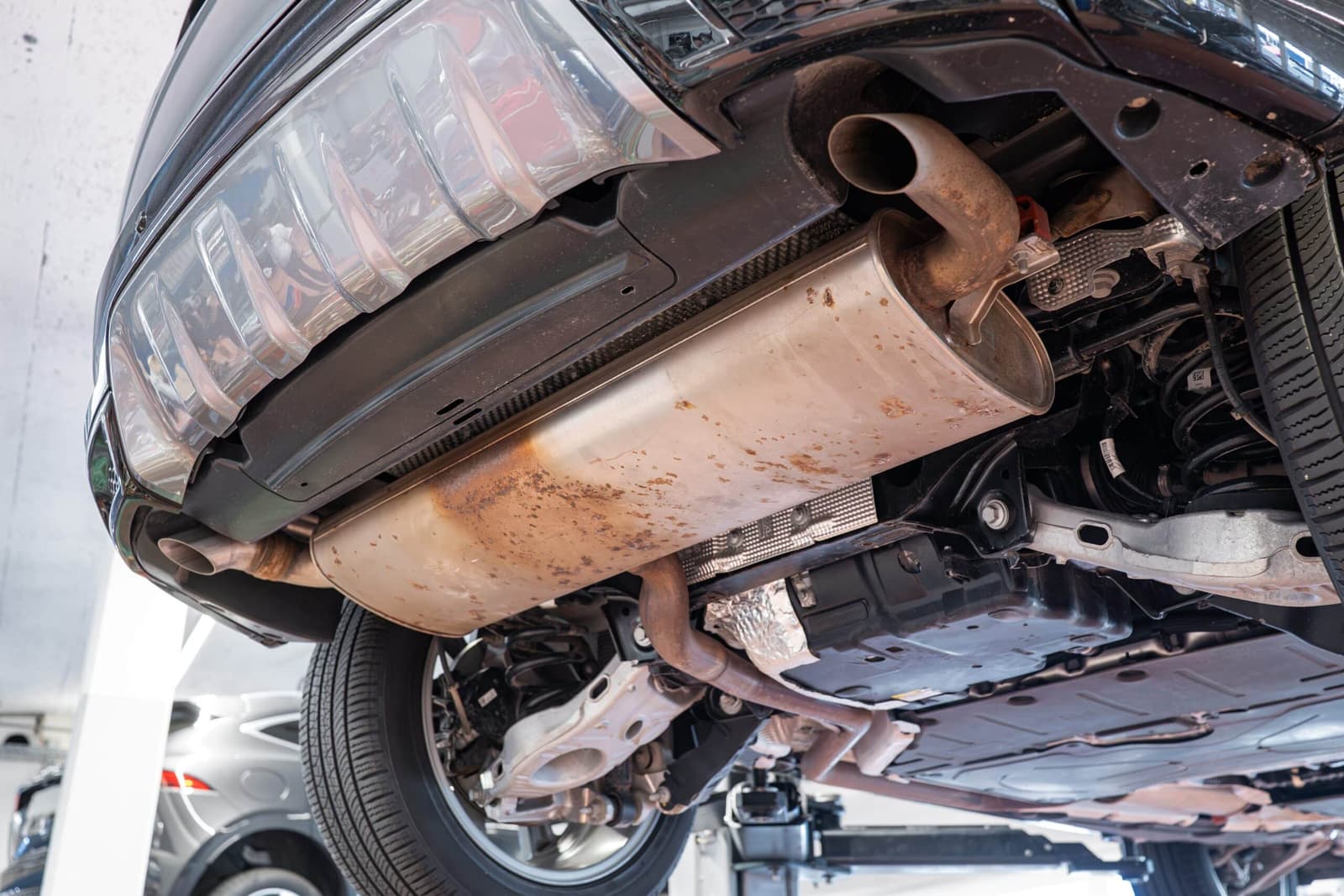
Which car insurance policies cover catalytic converter theft?
Both comprehensive and third-party fire and theft include theft cover, so both pay out if your converter is stolen. Third-party only meets the legal minimum and does not cover theft of any kind.
The legal minimum set by section 143 of the Road Traffic Act 1988 is liability for injury and damage to others, which is why theft protection doesn’t sit inside third-party-only cover.
What each tier covers for cat converter theft
| Cover tier | Cat converter theft covered? | Typical situation |
|---|---|---|
| Third-party only | No | Cheapest legal cover; theft excluded |
| Third-party, fire and theft | Yes | Middle tier; theft included but own-damage excluded |
| Comprehensive | Yes | Most common tier; theft plus own damage and associated repairs |
Wording varies between insurers, so read the “What is covered” and “What is not covered” sections of your policy schedule. The full list of things car insurance covers is a useful cross-check before you assume anything. You could save up to £535.17* on your car insurance in minutes.
Compare Car Insurance
What does the insurance claim cover?
A successful claim pays for the replacement converter, the labour to fit it, and any damage caused during the theft, minus your policy excess.
Replacement part and fitting
The insurer covers the OEM or approved-equivalent replacement and the garage labour. Fitting typically runs one to three hours depending on the vehicle.
Associated damage
Thieves often cut through the exhaust system, mounts, heat shields, and oxygen sensors to remove the converter fast. Everything damaged during the theft falls under the same claim, not a separate one.
Your excess
You pay the compulsory and voluntary excess up front, and the insurer covers the rest. Our guide to how car insurance excess works explains the split on a £1,200 claim with a £350 excess: you pay £350 and the insurer pays £850.
How much does a replacement catalytic converter cost?
A replacement catalytic converter typically costs between £250 and £2,500 fitted, depending on the vehicle. Hybrids and luxury cars sit at the top end because their converters hold higher concentrations of precious metals.
Typical cost by vehicle type
| Vehicle type | Part cost | Fitted cost (incl. labour) |
|---|---|---|
| Standard petrol hatchback | £150 – £600 | £250 – £850 |
| Small hybrid (e.g. Toyota Prius) | £800 – £1,400 | £1,000 – £1,700 |
| SUV or 4×4 (petrol) | £500 – £1,200 | £700 – £1,500 |
| Luxury or performance hybrid | £1,200 – £2,000+ | £1,500 – £2,500+ |
Costs creep higher when secondary parts are damaged during removal. Oxygen sensors alone run around £50 to £150 each for the part, plus fitting, and some cars carry two or three of them.
Which vehicles are most targeted by catalytic converter thieves?
Hybrids top the UK target list because their converters contain more precious metal and are in better condition, thanks to the car switching between electric and petrol power.
Most commonly targeted models
| Make and model | Why it’s targeted |
|---|---|
| Toyota Prius (gen 2 and 3) | Highest precious metal content; converter sits low and accessible |
| Toyota Auris hybrid | Shares Prius platform and converter profile |
| Toyota Yaris hybrid | Same hybrid drivetrain as Auris; easy access |
| Honda Jazz | Accessible underside; older cars have unmarked converters |
| Honda CR-V | High ground clearance; SUV body makes access easier |
| Lexus RX hybrid | Premium converter worth more in scrap |
High ground clearance works against SUV and 4×4 owners because thieves can slide underneath without jacking the car. Some collectors and modified-car owners use agreed value policies so that any theft settlement reflects the vehicle’s true value rather than a standard market-value figure.
How do you claim for catalytic converter theft?
Report the theft to the police first, get a crime reference number, then call your insurer with the evidence. The claim usually takes seven to twenty-one days if you have photographs and your policy schedule ready.
The steps below apply specifically to component theft, but the general process mirrors our full guide to making a car insurance claim in the UK.
Step 1: Report to the police
Call 101 (non-emergency) or report online through your local force’s website, and make a note of the crime reference number.
If you catch the theft in progress, call 999. Every insurer requires a crime reference number before they’ll even log the claim.
Step 2: Photograph the damage
Take clear, well-lit photos of the underside showing where the converter used to sit and any cut pipes or damaged mounts. Photograph from multiple angles and note the date and mileage.
Step 3: Contact your insurer
Call the claims line on your policy documents rather than the general switchboard to skip the queue. Have your policy number, crime reference, photos, and a description of where and when you discovered the theft.
Step 4: Approved repair and excess
Most insurers direct you to an approved repairer who invoices them directly. You settle the excess at collection and your no-claims position is confirmed in writing at that point.
Will a catalytic converter claim affect my no-claims discount?
Yes, unless your policy includes protected no-claims. A theft claim is treated the same as any other fault-style claim for NCD purposes, even though you’re not at fault.
When claiming makes sense
Total up the replacement cost, the excess, and the premium uplift you’re likely to see at the next two renewals. If the numbers work against you on a lower-cost repair, paying out of pocket sometimes protects more long-term value than claiming.
When claiming is clearly worth it
On hybrid and luxury cars where fitted costs top £1,500, claiming almost always pays. Protected no-claims cover, which typically adds £20 to £40 to the premium, keeps the discount intact even after a theft payout.
How can you reduce your risk of catalytic converter theft?
Park in a locked garage or under CCTV where possible, fit a physical guard over the converter, mark the part forensically, and park close to walls or kerbs on the exhaust side to block access underneath.
Physical guards and cages
A bolt-on metal cage makes the converter far harder to cut out quickly, adding enough time that most thieves move on. Supply and fit typically runs £150 to £400 depending on the vehicle.
Forensic marking
Forensic marking kits tag the converter with a unique coded serial that shows under UV light. Some police forces run free marking events for high-risk models, so check your local force’s website.
Smart parking and alarms
Tilt sensors trigger the alarm if someone jacks the vehicle, which is the first move in any cat converter theft. Insurers running black box policies sometimes discount cover further when approved security is fitted.
Frequently Asked Questions (FAQs)
Yes, TPFT includes theft of the vehicle and its parts, which covers the converter. Check your policy wording for any component-theft exclusions before you rely on it.
Between £250 and £2,500 fitted depending on the vehicle, with hybrids and luxury models running highest due to the precious metal content. Part and labour are usually itemised separately on the garage quote.
Yes, unless you have protected no-claims cover. Theft claims affect the discount in the same way fault claims do, even though the accident isn’t your fault.
Hybrid converters hold more platinum, palladium, and rhodium, and stay in better condition because the car regularly switches to electric power. Both factors push up the scrap value.
No method is foolproof, but guards, forensic marking, tilt alarms, and locked-garage parking reduce the risk sharply. Some insurers factor approved security into pricing, so it’s worth comparing insurers after you’ve fitted a guard to see the discount pass through.
Yes, your insurer will not progress a claim without a crime reference number. Call 101 for non-emergency reporting or 999 if the theft is in progress.
Yes, collateral damage to exhausts, sensors, mounts, and heat shields caused during the theft is included in the single claim. You don’t pay a separate excess on the associated repairs.
Seven to fourteen days is typical once the police reference, photos, and repairer quote are in hand. Approved-repairer routes are faster because the insurer pays the garage direct.