
Do You Need Insurance for Professional Driving Lessons?


It depends on whether you are the instructor or the learner. Instructors need specialist driving instructor insurance that covers them for teaching commercially, while learners are covered by their instructor’s policy during paid lessons.
If you are learning to drive with a qualified instructor, you do not need to arrange your own cover for those lessons. Your instructor’s policy includes any-driver cover that protects you while you are behind the wheel during a booked session.
If you are the instructor, standard car insurance does not cover you for teaching. Even if you only take on a handful of students a week, the moment you accept payment for driving tuition it becomes a commercial activity that your personal policy explicitly excludes.
It depends which side of the car you are on. As a learner in a booked lesson you are covered by your instructor’s any-driver policy and need nothing of your own — but that cover ends the moment the lesson does, so private practice needs its own arrangement. As an instructor, teaching for payment is a commercial use that standard motor insurance simply excludes.
Compare driving instructor insurance if you teach for a living.
- Why does standard car insurance not cover driving instruction?
- What does driving instructor insurance actually include?
- How does ADI insurance differ from PDI insurance?
- What do learners need to know about insurance for their lessons?
- What are the legal consequences of teaching without specialist cover?
- How can instructors reduce their insurance costs?
- Frequently asked questions (FAQs)
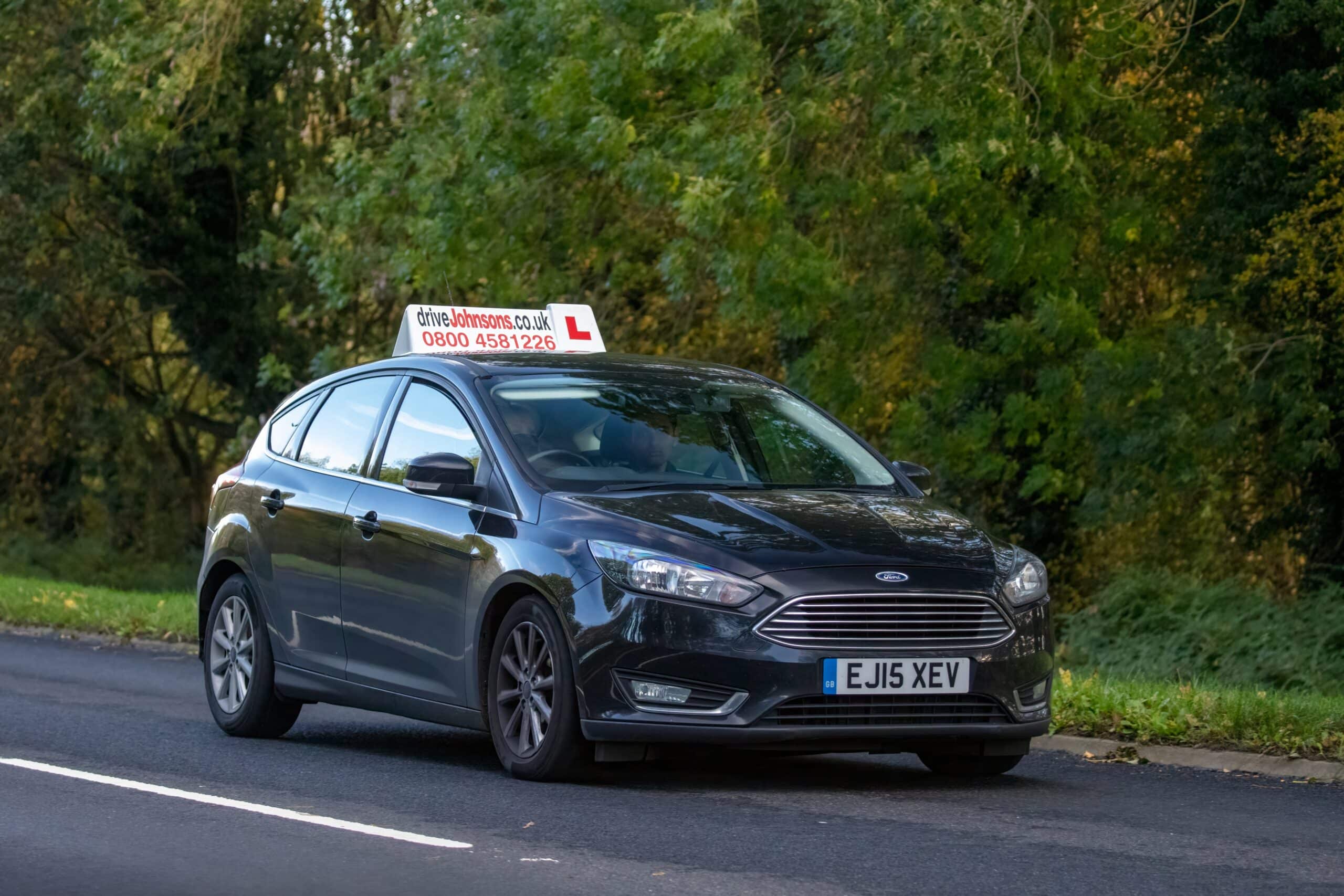
Why does standard car insurance not cover driving instruction?
Personal motor policies cover social, domestic, and pleasure use. Teaching someone to drive for money is classified as hire and reward, which falls outside those terms entirely.
Even business car insurance designed for commuting or visiting clients does not extend to driving instruction.
What makes instruction higher risk?
Insurers rate driving instruction as higher risk because you are managing an inexperienced driver who may react unpredictably. You repeat manoeuvres in busy areas dozens of times a day, and your vehicle accumulates far more mileage than a typical car.
If you make a claim on a standard policy while teaching, your insurer will refuse to pay and may void the policy entirely. That leaves you personally liable for all costs and facing prosecution for driving without appropriate cover.
What does driving instructor insurance actually include?
Specialist policies combine hire-and-reward cover with any-driver cover, so any licensed learner can legally drive your car during lessons. The DVSA requires instructors to hold valid insurance before they can teach, whether they hold a green badge (ADI) or a pink badge (PDI).
What is covered as standard?
Any-driver cover is the core feature. It means every learner who books a lesson with you is automatically insured to drive your vehicle, without being individually named on the policy.
Hire-and-reward cover protects you for the commercial activity of accepting payment for instruction. Third-party liability covers damage your student causes to other vehicles, property, or people during a lesson.
Vehicle damage cover handles repairs to your own car, including damage caused by student errors.
What optional extras are worth considering?
A replacement dual-control car is the most valuable add-on for full-time instructors. If your vehicle is off the road after an accident, a temporary dual-control replacement lets you keep teaching and earning.
Breakdown cover with priority recovery minimises lesson cancellations. Professional indemnity covers legal costs if a student or third party claims negligence, and personal accident cover provides income protection if an injury stops you from working.
How does ADI insurance differ from PDI insurance?
Both cover driving instruction, but PDI premiums are typically higher because trainee instructors represent a greater risk. The key differences come down to qualification status, permitted activities, and pricing.
How do the two compare?
| Factor | ADI (green badge) | PDI (pink badge) |
| Qualification | Fully qualified, passed all 3 ADI parts | In training, passed Part 1 and Part 2 only |
| Teaching permitted | Unlimited paid lessons | Up to 6 months on a trainee licence (renewable once) |
| Typical premium | Lower, reflecting experience and full qualification | Higher, reflecting trainee risk profile |
| Examiner cover | Usually included as standard | May not be included or costs extra |
| No-claims discount | Builds over time, reduces premiums at renewal | Starts from zero on first policy |
Once you pass your Part 3 test and receive your green badge, your insurer can often adjust your policy mid-term to reflect your qualified status. This usually results in a lower premium for the remainder of the year.
What do learners need to know about insurance for their lessons?
If you are paying for professional lessons with a qualified instructor, you do not need your own insurance for those sessions. Your instructor’s any-driver policy covers you while you are driving their car during the lesson.
When do learners need their own cover?
You need insurance when practising outside of paid lessons. If a parent or family member supervises you in their car, you must be insured on that vehicle.
Our guide on learner driver insurance explains the options for practising between lessons.
If you drive a parent’s car, you can either be added as a named driver on their policy or arrange temporary car insurance for each practice session. Our guide on driving your parents’ car covers the rules around supervision and fronting.
What are the legal consequences of teaching without specialist cover?
Under the Road Traffic Act 1988, driving without valid insurance is a criminal offence. The fixed penalty is £300 and six penalty points, and in court the fine is unlimited with possible disqualification.
What happens to the instructor’s career?
A conviction for uninsured driving goes on your criminal record and triggers an IN10 endorsement that stays on your licence for four years. The DVSA can also revoke or refuse to renew your ADI registration if you are convicted of a motoring offence.
Without a valid ADI badge, you cannot legally teach. Rebuilding your career after a conviction means reapplying to the register, passing all three parts again, and finding an insurer willing to cover someone with an IN10 on their licence.
How can instructors reduce their insurance costs?
The same principles that apply to standard driving instructor insurance pricing apply here. A clean driving record, a modern car with good safety ratings, and several years of claims-free teaching are the strongest factors.
What practical steps lower premiums?
Choose a vehicle with a low insurance group rating. Many instructors find that small automatics like the Vauxhall Corsa or Toyota Yaris attract competitive premiums and are popular with learners.
Set a higher voluntary excess if you can afford to cover the first portion of a claim yourself. Paying annually rather than monthly avoids the interest charges that insurers add to monthly payment plans, which typically add 10% to 20% to the total cost.
Build your no-claims discount steadily. After three to five claim-free years, your renewal premium can drop by 30% to 50%.
Specialist brokers who understand the instructor market are more likely to offer competitive rates than standard comparison websites.
Frequently Asked Questions (FAQs)
No, your instructor’s any-driver policy covers you while you are driving their car during a paid lesson. You only need your own insurance when practising privately outside of booked sessions.
Both cover driving instruction, but PDI policies cost more because trainee instructors represent a higher risk. Once you qualify as an ADI with a green badge, your premiums typically decrease.
No, standard business use insurance does not include the any-driver or hire-and-reward elements that driving instruction requires. You need a policy specifically designed for instructors.
Yes, there is no exemption based on hours. If you accept payment for even one lesson a week, you need the same specialist cover as a full-time instructor.
Most standard comparison sites do not include specialist instructor policies. You usually need to approach a specialist broker or go direct to a provider that underwrites instructor cover.
Your specialist policy covers vehicle damage including damage caused by student error. You pay the excess, and the insurer covers the repair costs.