
Does Tinting Windows Affect Insurance?


Legal window tinting rarely affects your premium, with most UK insurers treating it as a minor cosmetic change. However, you must declare all aftermarket tinting to your insurer, and illegal tinting on front windows can lead to refused claims and a voided policy.
The distinction that matters is legality. Tinting your rear windows has no legal limit and minimal insurance impact, while tinting your front windows below the legal threshold creates problems with both the police and your insurer.
Under the Road Vehicles (Construction and Use) Regulations 1986, your front windscreen must allow at least 75% visible light transmission (VLT) and your front side windows must allow at least 70%.
Yes, and the law matters more than the premium here. Front side windows and the windscreen have strict light-transmission limits; rear windows have none.
Tint is a declarable modification either way. Illegal tint can mean a prohibition notice and a failed MOT, and driving a car in an unlawful condition gives an insurer a reason to walk away from a claim.
Compare car insurance quotes with the tint declared.
- What are the UK legal limits for window tinting?
- Do you need to declare window tinting to your insurer?
- How much does window tinting add to your premium?
- What are the consequences of illegal window tinting?
- How should you get your windows tinted properly?
- Can you remove tinting to reduce your premium?
- Frequently asked questions (FAQs)
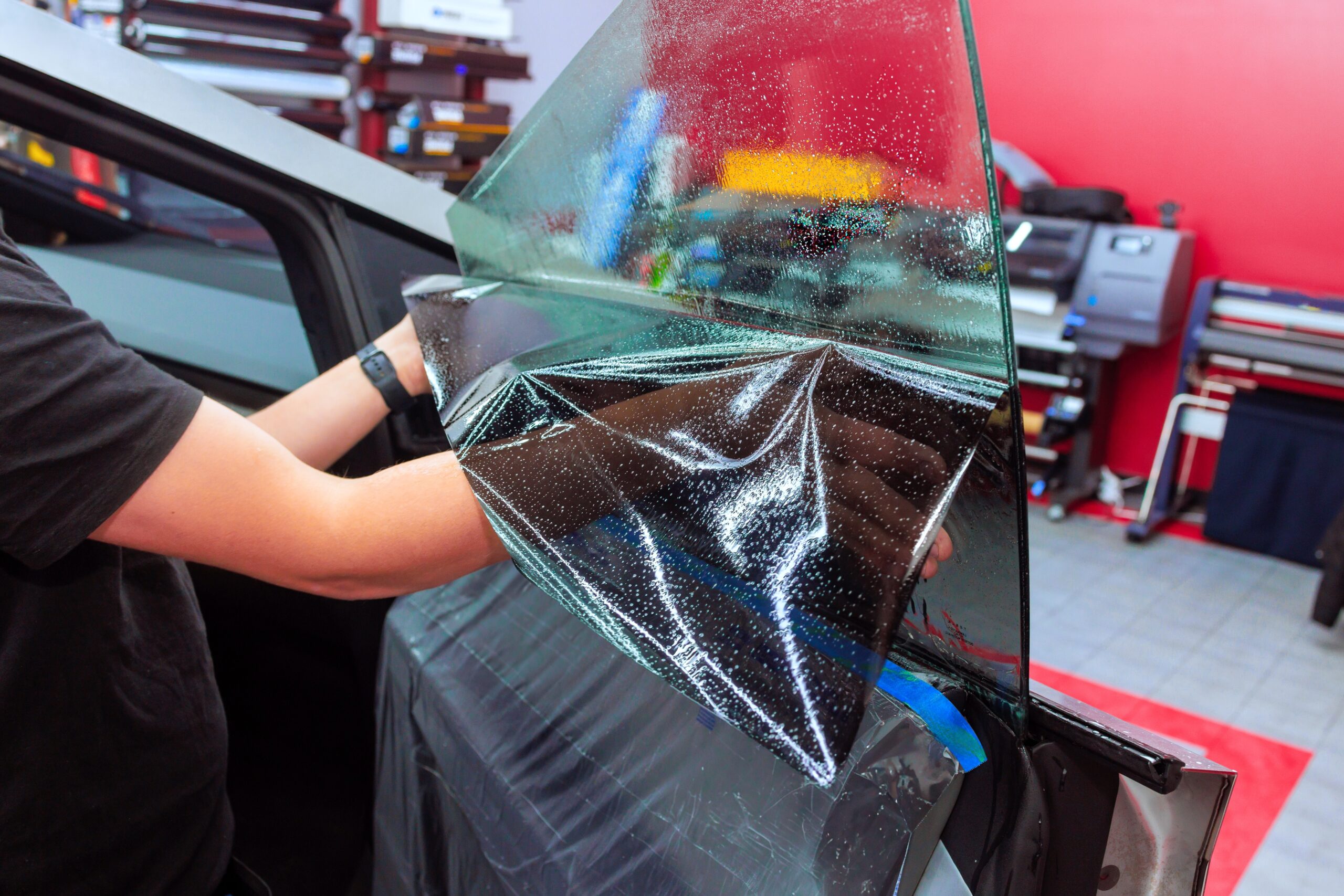
What are the UK legal limits for window tinting?
The law sets minimum light transmission levels for front windows only. Rear windows, rear side windows, and the rear windscreen have no restrictions at all.
What are the VLT requirements by window position?
| Window position | Minimum VLT required | Legal to tint? | Insurance impact |
| Front windscreen | 75% | Only very light tint (factory usually 78-82%) | Declare, but typically no premium change |
| Front side windows | 70% | Only very light tint allowed | Declare, but typically no premium change |
| Rear side windows | No limit | Yes, any darkness level | Declare, minimal or no premium change |
| Rear windscreen | No limit | Yes, any darkness level | Declare, minimal or no premium change |
Police use specialist VLT meters during roadside checks. If your front windows fail the test, you face a £60 fine and 3 penalty points.
Your MOT will also fail if front window tinting is below the legal limit.
Do you need to declare window tinting to your insurer?
Yes, all aftermarket window tinting is a vehicle modification and must be declared. Even legal tinting that costs nothing extra still needs to be mentioned when you arrange or renew your cover.
What about factory-fitted tinted windows?
Factory privacy glass that came with the car as standard does not usually require separate declaration. It is part of the manufacturer’s specification, not an aftermarket change.
If you are unsure whether your tinting is factory or aftermarket, mention it when quoting. Declaring something that does not need declaring causes no harm, while failing to declare something that does can void your policy.
What happens if you do not declare tinting?
Your insurer can refuse a claim or void your policy for non-disclosure, even if the tinting had nothing to do with the accident. Under UK insurance law, any undeclared modification counts as misrepresentation of your vehicle.
How much does window tinting add to your premium?
Legal tinting typically adds £0-£50 per year. Many insurers charge nothing at all, treating it the same as a factory option.
Our guide to car insurance costs explains how insurers calculate premiums and where modifications fit in.
Why do some insurers charge and others do not?
Insurers that charge for tinting price the administrative cost of recording the modification, not a genuine increase in risk. Legal tinting does not change how the car handles, its speed, or its repair cost.
Shopping around is the best approach. When comparing car insurance quotes, run one with tinting declared and one without to see the exact difference before committing to the modification.
What are the consequences of illegal window tinting?
Illegal front window tinting creates problems across three areas: the law, your MOT, and your insurance. Any one of these can be costly, and together they make illegal tinting a serious financial risk.
What penalties do you face?
| Consequence | What happens |
| Fixed penalty notice | £60 fine and 3 penalty points for front windows below the legal VLT limit |
| Prohibition notice | Your car is taken off the road until the illegal tint is removed (for very dark tinting) |
| MOT failure | Illegal front window tinting is a mandatory fail item during the annual test |
| Insurance claim refused | Your insurer can refuse any claim if tinting is undeclared, regardless of the accident cause |
| Policy voided | Recorded on the CUE database, making future insurance more expensive for years |
For young drivers already paying high premiums, a voided policy from undeclared tinting creates years of elevated costs. The saving from not declaring is never worth the risk.
How should you get your windows tinted properly?
Use a professional tinting company that provides a VLT certificate confirming your windows meet the legal limits. This certificate is your proof of compliance if you are stopped by police or questioned by your insurer.
What steps should you follow?
Contact your insurer before having the work done to confirm they accept the modification. Get a written quote and check whether any premium increase applies.
After the tinting is fitted, keep the VLT certificate and the invoice with your vehicle documents. If you sell the car, pass these to the new owner so they can declare the modification on their own policy.
Our guide to excess explains how claim costs work, which is relevant if a tinting-related claim is ever disputed.
Can you remove tinting to reduce your premium?
Yes, if you remove aftermarket tinting, notify your insurer and they will update your policy. Any premium increase from the tinting should be reversed at renewal or through a mid-term adjustment.
Our tips to lower your premium cover other ways to bring costs down alongside removing modifications.
Is removal worth it financially?
If your insurer charges more than £50 per year for tinting, removal may save money over time. Professional removal costs £50-£150 depending on the number of windows, so it pays for itself within one to three years.
Frequently Asked Questions (FAQs)
If undeclared, your insurer can refuse claims and void your policy. Illegal tinting also risks MOT failure, fines, and penalty points from police.
Factory tinting that came with the car as standard usually does not need separate declaration. Mentioning it when quoting avoids any ambiguity.
A professional tinter can test light transmission with a VLT meter. Ask for a certificate confirming your front windscreen allows 75% VLT and your front side windows allow 70%.
Rear windows have no legal VLT limit, so tinting them is always legal. You should still declare the modification, but most insurers accept it without any premium increase.
Illegal tinting on the front windscreen or front side windows will cause an MOT failure. Legal front tinting and any level of rear tinting will not affect the result.
Professional tinting costs £150-£400 depending on the number of windows and the film quality. Higher-quality ceramic films cost more but last longer and offer better heat rejection.