
How Long Does It Take To Learn To Drive?


It takes most people around 45 hours of professional lessons and 22 hours of private practice to learn to drive in the UK. At one or two lessons a week, that means six months to a year from provisional licence to passing the practical test.
Those numbers come from the DVSA and represent the national average. Some learners pass in three months, others take 18 months or longer.
The real answer depends on how often you practise, whether you take an intensive course, and how quickly you pick up hazard awareness. You can apply for your provisional licence from the age of 15 years and 9 months.
Most learners need around 45 hours of professional lessons plus 22 hours of private practice, which typically takes six months to a year at one or two lessons a week. There’s no legal minimum, but the national pass rate sits at roughly 47-49%, so cutting lessons short to save money usually costs more in retakes and delayed no-claims history.
Compare learner and new driver car insurance quotes early so you’re covered the day you pass.
- How many driving lessons do you need?
- How long are driving lessons?
- Can you learn to drive faster with an intensive course?
- How long does the theory test take to prepare for?
- How long does the practical driving test last?
- How much does it cost to learn to drive?
- What insurance do you need as a learner driver?
- Frequently asked questions (FAQs)
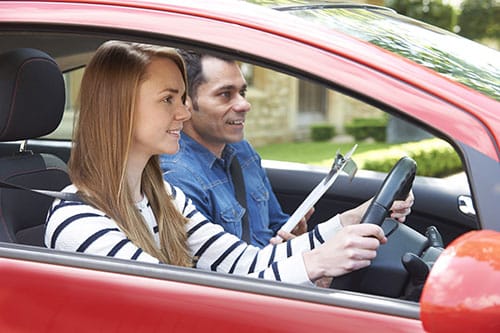
How many driving lessons do you need?
The DVSA recommends 45 hours of professional lessons before taking the practical test. On top of that, around 22 hours of private practice with a friend or family member makes a real difference to your pass rate.
There is no legal minimum
You can book your practical test without taking a single lesson. But the test costs £62, and failing wastes both money and time.
Most instructors will not recommend booking until they are confident you are ready. Trust their judgment over your own eagerness.
How long does 45 hours take in practice?
| Lesson Frequency | Approximate Timeline | Total Weeks |
| 1 lesson per week (1 hour) | 10-11 months | 45 weeks |
| 1 lesson per week (90 min) | 7-8 months | 30 weeks |
| 2 lessons per week (1 hour) | 5-6 months | 23 weeks |
| Intensive course (5 hours/day) | 1-2 weeks | 2 weeks |
Government data shows 67.7% of learners get their full licence within a year of starting. Only 18.5% manage it within six months.
Does age affect how quickly you learn?
Older learners often progress faster. Drivers over 34 tend to pass in fewer lessons than 17 to 24-year-olds, partly because they have more road awareness from years as a passenger.
That said, young driver insurance costs mean passing quickly has a financial benefit too. Each year of no-claims history you build reduces your premium.
How long are driving lessons?
Most driving lessons last 60 to 90 minutes. An hour is the standard, but 90-minute sessions give you more time to practise manoeuvres without the warm-up eating into your lesson.
Why 60 minutes is the minimum
It takes 10 to 15 minutes to settle in, adjust mirrors, and recap the last session. A 60-minute lesson gives you roughly 45 minutes of active driving.
Anything shorter and you spend more time setting up than learning. Most instructors will not offer lessons under an hour.
Two-hour sessions
Some learners book two-hour blocks to cover longer routes or practise test routes in full. This works well for learners who are past the basics and need road experience.
If you are a complete beginner, two hours of concentration is tiring. Stick with 60 or 90 minutes until you are comfortable with clutch control and junctions.
Can you learn to drive faster with an intensive course?
Yes. Intensive or crash courses condense weeks of learning into five to ten days, with four to six hours of driving per day and breaks in between.
Who intensive courses suit
They work best for people who already have some driving experience or who have failed a test and need focused preparation. Complete beginners can struggle with the pace.
They also suit anyone with a deadline. A new job that requires driving, a house move to a rural area, or a gap before starting university are all common reasons.
What to watch out for
Intensive courses cost £1,000 to £1,500 on average and often include the test fee. Some providers guarantee a test date within the course, but DVSA test availability varies by region.
Book your theory test well before the course starts. You cannot sit the practical without a theory pass, and theory test slots can have a three to four-week wait.
How long does the theory test take to prepare for?
Most learners need 12 to 24 hours of study to pass the theory test. The DVSA recommends at least 20 hours of revision spread across two-hour blocks.
What the theory test covers
The test has two parts. First, 50 multiple-choice questions with 57 minutes to answer, where you need 43 out of 50 to pass.
Second, 14 hazard perception clips where you click when you spot a developing hazard. You need 44 out of 75 on this section.
How to prepare efficiently
Use the official DVSA revision tools and apps. The theory test booking page links to approved revision materials.
Practise under timed conditions so the exam format does not catch you off guard. Start theory revision from your first driving lesson so you can book a practical date as soon as you are ready.
How long does the practical driving test last?
The standard practical test lasts around 40 minutes, including roughly 20 minutes of independent driving. Full details are on the DVSA practical test page.
What the examiner assesses
You will be marked on general driving ability, two manoeuvres (such as parallel parking or bay parking), and one emergency stop if selected.
You can pass with up to 15 minor faults. One serious or dangerous fault is an automatic fail.
Extended tests
If you have been disqualified from driving, you may need to take an extended test lasting 70 minutes. This applies to people returning to driving after a ban, not to first-time learners.
How much does it cost to learn to drive?
The total cost of learning to drive in the UK ranges from £1,500 to £2,500 for most learners. The biggest expense is lessons, which make up roughly 70% of the total.
| Item | Typical Cost |
| Provisional licence application | £34 |
| 45 hours of lessons (at £30-£40/hour) | £1,350 to £1,800 |
| Theory test | £23 |
| Practical test | £62 |
| First car insurance (annual, new driver) | £1,500 to £2,500 |
Ways to reduce the cost
Block-booking lessons (10 at a time) often saves 10-15% per hour. Practising with a friend or family member between sessions reduces the total paid hours you need.
Anyone who supervises you must be over 21 and have held a full licence for at least three years. Check their insurance covers learner drivers, or get temporary learner cover.
Once you pass, choosing a car in a low insurance group makes the biggest difference to your premium. Check out 10 tips for cheaper car insurance for more ways to save.
Avoid modifications that push your car into a higher insurance group when you are starting out. New drivers already pay the highest premiums without adding risk factors.
What insurance do you need as a learner driver?
You need valid insurance every time you drive, even as a learner. SimplyQuote offers dedicated learner driver insurance that covers you without affecting the car owner’s policy or no-claims bonus.
Practising in someone else’s car
If you practise in a parent’s or friend’s car, check whether their policy covers learner drivers. Many do not, and a separate temporary learner policy protects you and keeps their no-claims bonus safe.
Short-term policies run from a single day to several months. Temporary car insurance for new drivers gives you flexible cover that matches your lesson schedule.
Insuring your own car as a learner
You can insure a car in your own name with a provisional licence, though premiums will be higher than for a full licence holder. A black box policy tracks your driving and rewards safe habits with lower costs over time.
Adding a parent as a named driver on your policy is legal and can reduce the premium. But listing the parent as the main driver when you actually drive most is fronting, which is insurance fraud.
After you pass
Your learner policy ends when you get your full licence. You will need standard car insurance from that point.
New drivers pay the highest premiums in their first year. Young driver car insurance from SimplyQuote helps you compare quotes quickly so you are covered the day you pass.
Choosing the right car makes a big difference. Check the cheapest cars to insure for new drivers before you buy.
Compare quotes from multiple insurance providers to find the best deal. Prices vary widely between companies for the same driver and car.
Frequently asked questions (FAQs)
The DVSA average is 45 hours of professional lessons plus 22 hours of private practice. Some learners need more, some less.
Yes, there is no legal minimum number of lessons. But the practical test costs £62 and the pass rate for self-taught drivers is much lower.
Often, yes, because automatics remove clutch control and gear changes from the learning process. But passing in an automatic means your licence only covers automatic cars.
Your theory test pass is valid for two years. If you do not pass the practical test within that window, you will need to retake and pass the theory again.
Yes, you must be insured every time you drive, even with a provisional licence. Get separate learner driver insurance if the car owner’s policy does not cover learners.
The national pass rate is around 47 to 49%, meaning roughly half of all candidates fail. Adequate preparation and enough lesson hours improve your odds considerably.
Block-book lessons for a discount and practise between sessions with a supervising driver. Once you have your licence, follow 10 tips for cheaper insurance to keep your first policy affordable.
Your learner policy ends and you need full car insurance before driving independently. A black box policy can bring costs down for new drivers.