
What Are Car Insurance Write-Off Categories?


Car insurance write-off categories are the labels insurers use to classify vehicles that are too damaged to repair economically or safely. The four categories in the UK are A, B, S, and N, ranging from total destruction to minor non-structural damage.
When your insurer declares a vehicle a total loss, it’s assigned one of these categories. The category determines whether the car can return to the road, be stripped for parts, or must be crushed entirely.
Understanding write-off categories matters whether you’re making a claim, buying a used car, or comparing car insurance quotes. A write-off on a vehicle’s history affects its value, insurability, and safety profile for years.
This guide explains each category, how the system works, and what to do if you’re dealing with a write-off as an owner or buyer.
UK write-off categories run from A (must be crushed entirely) through B (parts only), S (repairable structural damage), to N (non-structural damage). The category stays on the vehicle’s history permanently, reducing resale value by 20-50% and often increasing insurance premiums.
Compare car insurance quotes before buying a previously written-off vehicle to see how the category affects your premium.
- What does it mean when a car is written off?
- How did the write-off categories change in 2017?
- What is a Category A write-off?
- What is a Category B write-off?
- What is a Category S write-off?
- What is a Category N write-off?
- How do write-off categories affect insurance and resale value?
- How do you check if a car has been written off?
- What should you do if your car is written off?
- Should you buy a written-off vehicle?
- Frequently asked questions (FAQs)
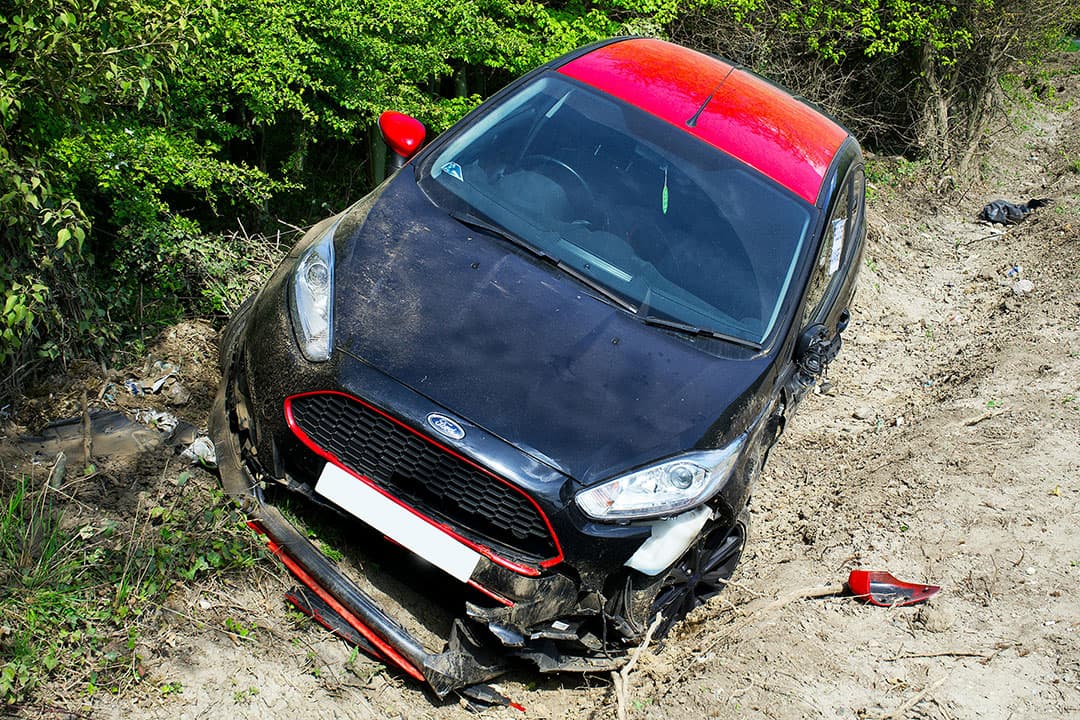
What does it mean when a car is written off?
A car is written off when your insurer decides the cost of repairing it exceeds a set percentage of its market value, or when the damage makes it structurally unsafe to fix. The insurer then declares the vehicle a total loss.
How insurers make the decision
Insurers calculate repair costs including parts, labour, VAT, and vehicle downtime. If that total exceeds around 60% to 80% of the car’s pre-accident value, it’s usually written off.
The exact threshold varies between providers. Some will repair at 80% of market value if the damage is cosmetic, while others draw the line at 60%.
Why write-offs aren’t always wrecks
Many written-off cars look perfectly drivable. Hidden damage to electronics, airbag systems, or structural components can push repair costs past the threshold without any visible signs.
Older or lower-value cars are especially vulnerable. A repair bill of £2,500 on a car worth £4,000 triggers a write-off, even if the damage is straightforward.
Compare Car Insurance
Save up to £535.17* on your car insurance in minutes.
How did the write-off categories change in 2017?
In October 2017, the Association of British Insurers (ABI) replaced Categories C and D with Categories S and N. The change shifted the focus from repair cost to the type of damage sustained.
The old system vs the new system
| Old Category | New Category | What Changed |
| Cat C (repair cost > value) | Cat S (structural damage) | Now based on whether the chassis or frame is compromised |
| Cat D (repair cost < value but uneconomic) | Cat N (non-structural damage) | Now based on damage type, not repair economics |
| Cat A (scrap only) | Cat A (unchanged) | Still the most severe; vehicle must be destroyed |
| Cat B (break for parts) | Cat B (unchanged) | Still requires the shell to be crushed |
Why the change was needed
Under the old system, a car could be categorised based purely on repair cost. A vehicle with serious structural damage but a low repair quote might escape the highest category.
The new system prioritises safety over economics. If the frame is damaged, it’s Category S regardless of cost.
What is a Category A write-off?
Category A is the most severe write-off classification. The vehicle must be completely destroyed, with no parts salvaged or reused.
What causes a Cat A classification
Cat A vehicles are typically the result of catastrophic collisions, intense fires, or severe flooding. The damage is so extensive that even individual components are considered unsafe to reuse.
What happens to a Cat A car
The vehicle is sent to an authorised treatment facility and crushed. The DVLA permanently marks the record, and it’s illegal to sell any parts from a Cat A write-off.
You won’t find Cat A vehicles on forecourts or auction sites. They’re removed from circulation entirely.
What is a Category B write-off?
A Category B write-off is a vehicle too damaged to return to the road, but some of its parts can be legally salvaged and resold. The body shell must be crushed by law.
What can be salvaged from a Cat B car
Components like the engine, gearbox, wheels, and interior trim may be intact and safe to reuse. Licensed breakers remove these parts before the shell is destroyed.
How Cat B cars appear at auction
You’ll sometimes see “Cat B breaker” listings at salvage auctions. These are sold purely for parts, not for repair.
Cat B vehicles cannot be re-registered with the DVLA or issued a new logbook. The car itself can never legally return to the road.
What is a Category S write-off?
Category S means the vehicle has structural damage that can be repaired. The “S” stands for structural, and it replaced the old Category C in 2017.
What counts as structural damage
Structural damage affects the vehicle’s frame, chassis, or crumple zones. This includes bent suspension mountings, twisted sills, a collapsed boot floor, or damage to the roof pillars.
Can you drive a Cat S car?
Yes, but only after repairs are completed and the DVLA is notified. The original V5C logbook becomes void and must be reissued before the car can legally go back on the road.
The risks of buying Cat S
Poor structural repairs can compromise crash safety, even if the car looks fine on the surface. Always request repair documentation and consider an independent inspection before buying.
Cat S vehicles typically sell at 30% to 50% below market value. That discount reflects the risk, the reduced resale market, and the likelihood of higher insurance premiums.
What is a Category N write-off?
Category N covers non-structural damage such as cosmetic, electrical, or mechanical faults. The “N” stands for non-structural, and these vehicles don’t require re-registration with the DVLA once repaired.
Common reasons for a Cat N classification
Faulty airbag systems, damaged parking sensors, a failed ECU, or cosmetic panel dents can all trigger a Cat N write-off. The frame and chassis are unaffected.
Insurers write these cars off when the repair cost approaches the vehicle’s market value. A buyer who sources second-hand parts can often fix them for far less.
Does a Cat N car need a new V5C?
No. Because the structure isn’t compromised, a Cat N car doesn’t need a new logbook.
Once repaired, it can go straight back on the road without any extra paperwork.
The write-off status stays on the vehicle’s history permanently, though. Every future buyer and insurer will see it.
How do write-off categories affect insurance and resale value?
A write-off classification permanently reduces a vehicle’s resale value and can lead to higher insurance premiums or restricted cover. The impact depends on the category and the quality of any repairs.
Typical value and insurance impact
| Category | Typical Value Reduction | Insurance Impact |
| Cat N | 20% to 40% below market | Higher premium likely; most insurers will quote |
| Cat S | 30% to 50% below market | May limit cover or increase excess |
| Cat B | Not roadworthy | Cannot be insured as a vehicle |
| Cat A | Not roadworthy | Cannot be insured as a vehicle |
Why insurers price write-offs differently
Insurers view write-offs as higher risk because of uncertainty around repair quality. A Cat S car with professional repair invoices will get better rates than one with no documentation.
Your premium is also influenced by your vehicle’s age, your driving record, and your cover level. Read more about how car insurance is calculated.
Compare Car Insurance
Save up to £535.17* on your car insurance in minutes.
Will you get comprehensive cover?
Some insurers won’t offer comprehensive cover on a Cat S vehicle. Others will, but with a higher excess or a reduced payout cap.
Cat N vehicles are easier to insure because the structural integrity was never in question. Shopping around is the best way to find a reasonable quote.
Need to insure a previously written-off vehicle? Compare car insurance quotes.
How do you check if a car has been written off?
You can check a vehicle’s write-off status by running a history check through services like HPI Check, AutoTrader, or MyCarCheck. These reports show whether a car was classified as Cat A, B, S, or N, and when.
Why the V5C logbook isn’t enough
A write-off may appear in the V5C’s special notes section, but not all logbooks carry the detail. You can’t rely on the logbook alone to tell you a car’s full history.
The DVLA’s vehicle enquiry service shows basic registration status, but for full write-off history you need a paid vehicle check.
What a vehicle history check reveals
Paid reports cost between £10 and £20 and show the write-off category, the date it was recorded, and whether the car has outstanding finance. They also flag stolen vehicles and mileage discrepancies.
Running a check before buying any used car is one of the simplest ways to avoid costly surprises. It’s especially important for private sales where sellers may not volunteer the full history.
What should you do if your car is written off?
If your car is written off, you need to review the insurer’s valuation, decide whether to accept the payout or buy the car back, and notify the DVLA. Acting quickly and keeping records protects your position.
Review the insurer’s offer
Your insurer will offer a settlement based on your car’s pre-accident market value. If you think the figure is too low, gather evidence: recent adverts for similar cars, service history, and low mileage records.
You’re not obliged to accept the first offer. Many drivers negotiate successfully by providing comparable vehicle listings.
Decide whether to keep or surrender the car
If the car is Cat S or N, you may have the option to buy it back from your insurer. Your payout is reduced by the car’s salvage value, and you take on responsibility for repairs.
For Cat A or B vehicles, there’s no choice. The car must be scrapped or broken for parts.
Notify the DVLA and cancel your cover
Complete Section 9 of the V5C logbook or use the DVLA’s online service to report the write-off. Cancel your insurance and reclaim any unused road tax through GOV.UK.
Understanding your excess
Your insurer will deduct your excess from the settlement. Check your policy to see if you’re paying a compulsory excess, a voluntary one, or both.
Should you buy a written-off vehicle?
Buying a written-off vehicle can save you 20% to 40%, but it carries risks around repair quality, insurance availability, and future resale value. Whether it’s worth it depends on the category and how thoroughly you check the car.
When it can work in your favour
A Cat N vehicle with documented repairs and a clean MOT can be a smart buy. The damage was non-structural, the fix is verifiable, and the discount is significant.
If you’re buying privately, consider arranging temporary car insurance so you can test drive the vehicle and get it inspected before committing.
Just make sure the car has a valid MOT and that all repairs are documented.
When to walk away
Avoid Cat S vehicles with no repair invoices, missing V5C documents, or vague seller explanations. Under the Consumer Rights Act 2015, trade sellers must disclose known faults, but private sellers have fewer obligations.
If the price seems too good, it usually is. Factor in the cost of a professional inspection, potential insurance loading, and the reduced resale value when you come to sell.
Insuring a written-off car
Some insurers specialise in previously written-off vehicles. Compare quotes across multiple providers, and read more about how much car insurance costs to set your expectations.
Frequently asked questions (FAQs)
Yes, once repaired a Cat N car can be legally driven without re-registration. The write-off status stays on its history permanently.
A write-off may appear in the V5C’s special notes, but it’s not guaranteed. A vehicle history check through HPI or similar is the only reliable way to confirm.
No. Once a vehicle is officially recorded as written off, the category stays on its history permanently and cannot be removed.
Often, yes. Some insurers increase premiums or restrict cover on previously written-off vehicles, especially Cat S with structural repairs.
Most insurers aim to settle within 2 to 6 weeks of agreement. Delays can occur if there’s a dispute over the car’s valuation or if paperwork is incomplete.
Yes. You’ll receive a refund for any full months remaining once the DVLA is notified that your car is no longer in use.
Yes, failing to disclose a write-off is considered misrepresentation under the Consumer Rights Act 2015 and could invalidate the sale.
Cat S replaced Cat C in 2017. The key change is that Cat S is based on whether the vehicle has structural damage, not whether the repair cost exceeds its value.