
What Insurance Do Bricklayers Need?


Bricklayers need public liability insurance as their foundation cover, employers’ liability if they have any staff, and tool cover to protect their equipment. Professional indemnity is only needed if you provide design advice or structural specifications.
Bricklaying involves working at height, handling heavy materials, and operating near other trades on busy sites. The right tradesman insurance protects both you and your clients, meets legal requirements, and gives clients the confidence to hire you.
This guide covers each type of cover, when it applies, what it costs, and how to build a policy that matches your operation.
Public liability and employers’ liability are the two covers most bricklayers actually need. Tool cover is worth adding, but professional indemnity only applies if you give design or structural advice.
Compare tradesman insurance quotes to bundle your covers and cut costs.
Why do bricklayers need public liability insurance?
Public liability insurance protects you if a client, member of the public, or third party suffers injury or property damage because of your work. It is not legally required, but most clients will not hire you without it.
What risks does public liability cover?
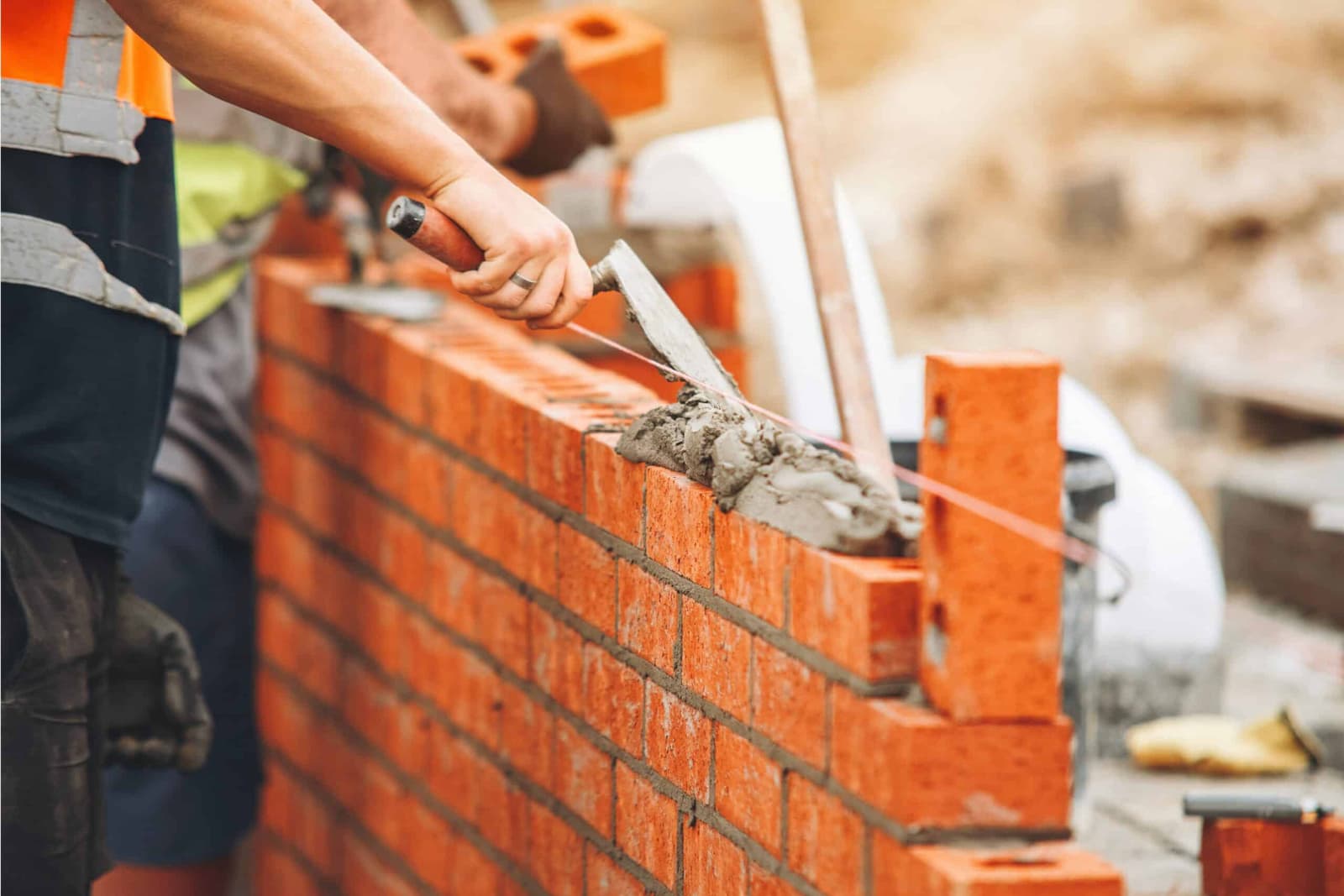
Bricklayers regularly work in residential and commercial settings where accidents happen. You might accidentally damage a neighbouring property, drop materials from scaffolding, or cause structural damage during construction.
Public liability covers legal costs, compensation claims, and defence expenses. A single incident could result in claims worth tens of thousands of pounds.
Dust and debris from cutting, grinding, and mixing can also damage nearby vehicles and property. Long-term exposure to silica dust creates occupational health risks that may not surface for years.
How much cover do you need?
Most bricklayers carry between £1 million and £2 million for domestic work. Larger contracts and commercial clients often require £5 million or £10 million.
Check what your clients and contracts specify before choosing a cover level. Underinsuring to save on premiums leaves you exposed if a claim exceeds your limit.
According to the HSE, construction is one of the highest-risk industries in the UK. Falls from height and contact with moving machinery account for the majority of serious injuries on site.
Do bricklayers need employers’ liability insurance?
Yes, if you employ anyone at all. Employers’ liability insurance is a legal requirement under the Employers’ Liability (Compulsory Insurance) Act 1969 with a minimum of £5 million cover.
Who counts as an employee?
The requirement applies to full-time staff, part-time workers, apprentices, and labour-only subcontractors working under your direction. If you take on a labourer for a single job, you need cover in place before they start.
Sole traders with no employees do not need employers’ liability. But the moment you hire anyone, even temporarily, the legal obligation kicks in.
Claims can arise years after the exposure, particularly for occupational health conditions like silicosis from cutting bricks and blocks. Employers’ liability covers these long-tail risks.
What are the penalties for non-compliance?
| Offence | Penalty |
|---|---|
| Operating without employers’ liability insurance | Fine of up to £2,500 per day uninsured |
| Not displaying your EL certificate | Fine of up to £1,000 |
| Failing to make certificate available for inspection | Fine of up to £1,000 |
The government guidance on employers’ liability explains which businesses are exempt, including most sole traders and some family businesses. Check whether the exemption applies to your setup before assuming you don’t need cover.
Should bricklayers have tool and equipment cover?
Tool cover is optional but strongly recommended. Bricklayers invest heavily in tools and specialist equipment, and standard public liability does not cover your own belongings.
What does tool insurance cover?
Tool insurance typically covers equipment in your workshop, in transit, and at job sites. Some policies include accidental damage protection alongside theft and vandalism.
Most policies require specific security measures like aftermarket van locks for overnight cover to apply. Check what your insurer expects before relying on a claim.
Keep an up-to-date inventory of your tools with photos, receipts, and serial numbers. This speeds up any claim and proves the value of what was lost or damaged.
Is it worth the cost?
If your tools are stolen from your van, damaged on site, or vandalised, you face the full replacement cost without dedicated cover. For bricklayers with thousands of pounds worth of kit, tool insurance is a small cost against a large risk.
Related: Top 6 UK Business Van Insurance Providers
When do bricklayers need professional indemnity insurance?
Most bricklayers do not need professional indemnity insurance. It is only relevant if you provide design advice, produce specifications, or take responsibility for structural decisions.
Who needs it and who doesn’t?
If you are laying bricks to someone else’s specifications, professional indemnity is not necessary. You are following instructions, not giving professional advice.
If you advise on structural matters, specify materials, or produce designs, it is worth considering. Some larger clients and main contractors require it as a contract condition regardless of your actual role.
The cover protects you if a client suffers a financial loss because of advice or a specification you provided. Claims can arise years after the work is completed, so run-off cover is worth considering if you retire or change trades.
How much does bricklayer insurance cost?
Premiums depend on your experience, team size, annual turnover, claims history, and the level of cover you choose. A clean claims record and relevant qualifications help you access better rates.
What factors affect your premium?
| Factor | Impact on premium |
|---|---|
| Type of work | Residential bricklaying costs less than commercial or structural work |
| Number of employees | More staff means higher employers’ liability premiums |
| Annual turnover | Higher turnover generally means higher public liability premiums |
| Claims history | Previous claims increase your premium; a clean record earns discounts |
| Cover level | £1m public liability costs less than £5m or £10m |
| Location | Working in central London costs more than rural areas |
How can you reduce your premium?
Bundle your covers into a single business insurance package rather than buying each policy separately. Insurers typically offer discounts for combined policies.
Professional qualifications, trade body membership, and a clean claims record all help reduce what you pay. Compare quotes from multiple bricklayer insurers every year rather than automatically renewing.
Fitting security devices to your van, such as deadlocks and tracking systems, can reduce tool cover premiums. Choosing a higher voluntary excess also lowers the annual cost.
Frequently Asked Questions (FAQs)
Most bricklayers carry between £1 million and £2 million for domestic work. Larger contracts and commercial clients often require £5 million or £10 million, so check what your clients specify.
Yes, even when working under another company’s supervision, you remain liable for your own work. The main contractor’s insurance does not cover your negligence.
Public liability covers accidental damage during your work, such as cracking a window or damaging surrounding structures. It does not cover intentional damage or defective workmanship.
Yes, professional qualifications, a clean claims record, and bundling multiple cover types into one policy can all reduce your premium. Comparing quotes from multiple insurers also helps.
You are personally liable for all claims and compensation. If you have employees and no employers’ liability insurance, you also face criminal prosecution and daily fines.
Standard van insurance usually includes very limited contents cover. For adequate protection of tools and equipment, you will typically need a separate tool cover add-on or standalone policy.
You can compare tradesman insurance quotes through SimplyQuote to find the right cover for your trade. We compare prices from 25+ UK insurers.