
What Are The Cheapest Cars To Insure?


The cheapest cars to insure in the UK are city cars and small hatchbacks in insurance groups 1 to 5, including the Hyundai i10, Kia Picanto, Volkswagen Up, and Skoda Fabia.
Insurance groups run from 1 to 50, set by the ABI and Thatcham Research. Cars in the lowest groups attract the smallest premiums because they combine low engine power, cheap parts, and strong safety ratings.
Cars in insurance groups 1 to 5 are the cheapest to insure, and trim level matters: a base Volkswagen Up is group 1, but the GTi jumps to group 17. Always check the group for the exact spec, not just the model name.
Check the insurance group before you buy, then compare car insurance quotes for that specific trim.
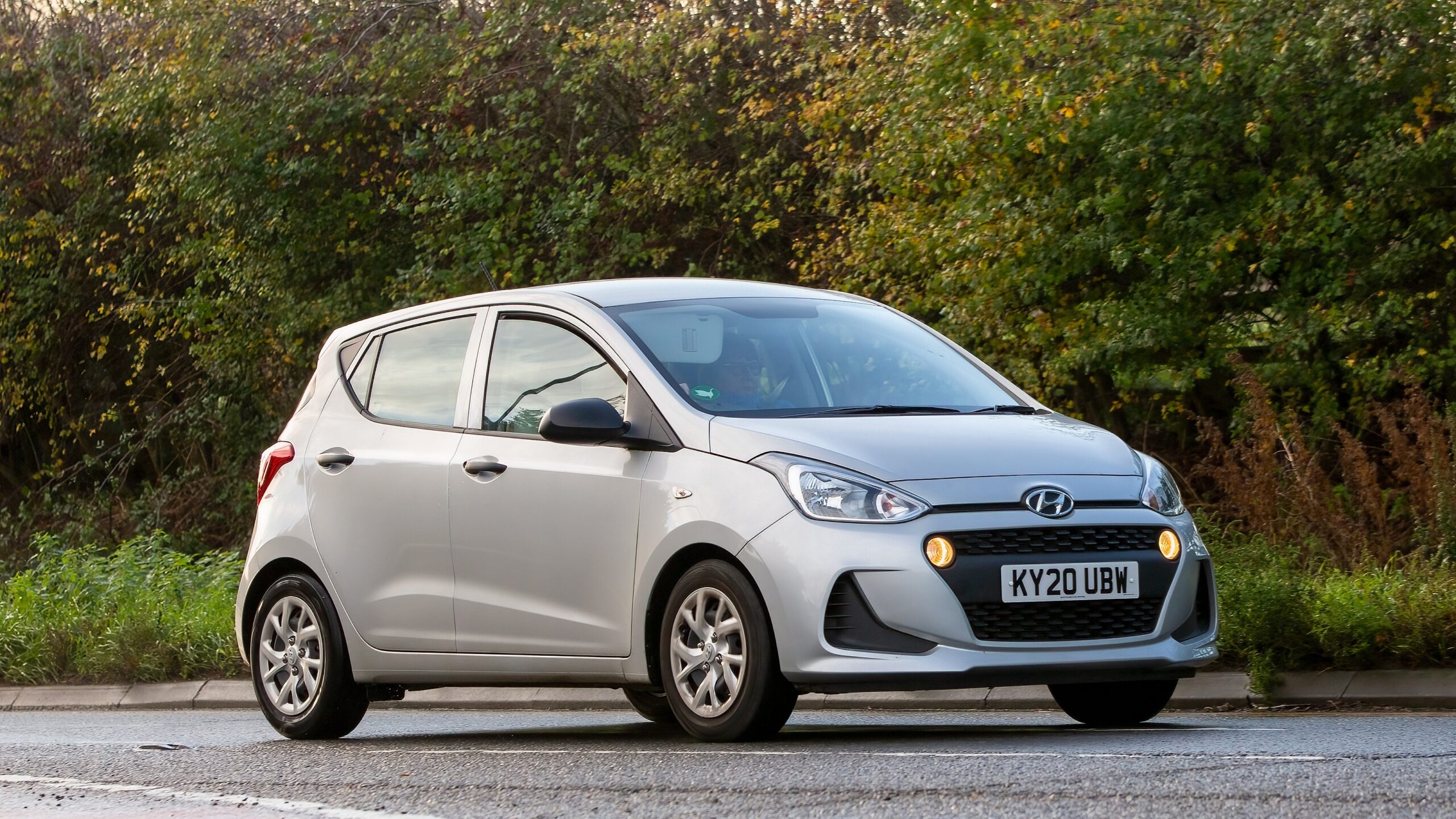
Which cars are the cheapest to insure in the UK?
City cars and superminis with 1.0 litre engines dominate insurance groups 1 to 5. The table below shows the most popular models with their group ratings and typical prices.
Which models sit in the lowest insurance groups?
The exact group depends on the trim level and engine variant. These are the base-specification ratings for the most commonly available models.
| Car | Engine | Insurance group | New from | Used from |
| Hyundai i10 | 1.0L petrol (67 hp) | 1 | From £15,400 (limited stock) | £1,500 |
| Volkswagen Up | 1.0L petrol (65 hp) | 1 | Discontinued (used only) | £3,000 |
| Kia Picanto | 1.0L petrol (67 hp) | 3 | £14,995 | £4,000 |
| Volkswagen Polo | 1.0L petrol (80 hp) | 3 | £22,000 | £5,000 |
| Skoda Fabia | 1.0L MPI (80 hp) | 4 | £18,500 | £4,000 |
| Toyota Aygo X | 1.0L petrol (72 hp) | 5 | £16,900 | £9,000 |
| Skoda Citigo | 1.0L petrol (60 hp) | 1 | Discontinued (used only) | £3,000 |
| Fiat Panda | 1.0/1.2L petrol | 1 | Discontinued (used only) | £1,000 |
Does the trim level change the insurance group?
Yes. A base Volkswagen Up sits in group 1, but the sportier Up GTi jumps to group 17. A low-spec Kia Picanto is group 3, while a fully loaded version with a larger engine can reach group 8 or higher.
Always check the group for the exact specification you are buying, not just the model name. A seemingly minor upgrade can shift a car several groups.
Why are these cars so cheap to insure?
Low engine power, affordable replacement parts, strong safety features, and low theft risk all contribute to the lowest group ratings.
What factors decide a car’s insurance group?
The Group Rating Panel, run by the ABI and Thatcham Research, assesses five areas: performance, damageability, reparability, safety, and security. These feed into how your premium is calculated.
A 1.0 litre engine producing 67 horsepower scores low on performance risk. High-volume parts availability keeps repair costs down. Standard immobilisers and low resale values make these cars unattractive to thieves.
Why do electric versions often cost more to insure?
Electric variants of otherwise cheap-to-insure models usually sit in higher groups because of expensive battery packs and specialist repair requirements. An electric Fiat 500 sits in group 16 compared to group 3 for the petrol version.
If cheap insurance is a priority, a petrol city car in groups 1 to 5 is still the most affordable option for most drivers.
How much can you save by choosing a cheaper car?
Choosing a group 1 to 5 car over a mid-group alternative can save a young driver over £1,000 a year on insurance alone, because the group rating is one of the biggest inputs into your premium.
What does a typical premium look like?
An experienced driver with a clean record might pay £300 to £500 a year for a group 1 car. A 17-year-old could still pay £1,200 to £1,800, even for the cheapest model, because age and experience carry heavy weight in the calculation.
The gap between groups widens for younger drivers. A 19-year-old moving from a group 15 car to a group 3 car can see their premium drop by 30 to 50%.
Does buying new or used make a difference to insurance?
The insurance group is fixed for each model, engine, and trim combination regardless of age. A five-year-old Hyundai i10 remains in the same group as a brand-new one.
Where new and used differ is total ownership cost. New group 1 city cars start around £14,000 to £17,000, while a two to three-year-old equivalent costs £5,000 to £9,000. Both insure at similar rates.
How can you get the cheapest insurance for any car?
The car’s group sets the baseline, but your personal circumstances and how you buy can cut the final premium significantly.
Which personal factors affect your premium most?
Age, postcode, job title, annual mileage, and no-claims bonus all influence the price. A clean driving record with five or more claim-free years can reduce your premium by 50 to 65%.
The cover level matters too. Fully comprehensive is often cheaper than third-party only for younger drivers, because third-party policies tend to attract higher-risk customers.
What practical steps can cut costs further?
A black box policy tracks your driving and rewards safe habits with lower premiums. This is particularly effective for learner drivers and newly qualified drivers building their record.
Increasing your voluntary excess reduces the premium, but only set it at a level you could afford to pay if you needed to claim. Paying annually instead of monthly also saves 10 to 20% in interest charges.
The simplest saving comes from shopping around for car insurance across multiple providers. The same car and driver profile can produce very different quotes depending on the insurer.
Frequently Asked Questions (FAQs)
No. Vehicle colour does not affect UK insurance premiums. The insurance group, engine size, safety features, and your driving history are the factors that determine cost.
Not usually. Electric cars often have higher repair costs because of specialist battery and electrical components, which places them in higher insurance groups than equivalent petrol models. A petrol city car remains cheaper to insure.
Group 1 is the cheapest. Cars like the Hyundai i10 and Volkswagen Up sit in group 1 in their base specifications, making them the least expensive to insure.
No. The group rating is fixed for each model, engine, and trim combination. A ten-year-old car stays in the same group as a new one. However, the vehicle’s lower value with age can slightly reduce the premium.
Yes. Modifications like engine tuning, body kits, or alloy wheels can move a car into a higher group or cause insurers to apply a loading to the premium. Always declare modifications to your insurer.
Generally yes. Smaller engines produce less power, which correlates with lower accident severity and cheaper repairs. A 1.0 litre engine is almost always in a lower group than a 1.6 or 2.0 litre version of the same model.
You can check any car’s group on the Thatcham Research website using the registration number or make and model. Your insurer or a comparison site will also show the group when you get a quote.
It can be. Multi-car insurance policies cover two or more vehicles in the same household on one policy, which often works out cheaper than insuring each car separately.