Car Insurance For Police Officers
Compare Car Insurance Quotes for Police Officers
You could save up to £581* on your car insurance in minutes.






Compare insurance quotes from top UK’s leading car insurers including:











Why Compare Car Insurance For Police Officers At SimplyQuote?
Comparing car insurance for police officers at SimplyQuote.co.uk helps you find tailored cover that reflects your driving profile, work commitments, and budget, ensuring you’re properly protected both on and off duty.
Police officers are often seen by insurers as low-risk drivers due to their advanced training, awareness, and adherence to road safety standards. Despite this, premiums can still vary considerably between providers. Some insurers may offer specialist discounts for law enforcement professionals, while others simply consider driving history, postcode, and mileage. By using SimplyQuote.co.uk, you can quickly identify which insurers recognise the unique profile of police officers and which offer the best rates for your circumstances.
Rather than approaching each insurer individually, SimplyQuote.co.uk lets you compare multiple quotes side by side. This makes it easier to see differences in price, policy inclusions, and optional extras such as business use or legal protection. The comparison process helps ensure you’re not overpaying for features you don’t need, while highlighting policies that fit the realities of your role — whether that’s long commutes, shift work, or secure vehicle storage at a station.
SimplyQuote.co.uk partners with Quotezone to bring together a wide panel of trusted UK insurers. It’s a transparent, straightforward way to find the right policy for your profession, without wasting hours chasing quotes across individual sites.
What Do You Need To Get A Quote?
To get a car insurance quote for police officers, you’ll need to provide accurate information about yourself, your vehicle, and your driving history so insurers can calculate a fair premium.
When you begin a quote, accuracy is crucial. Insurers assess risk using the details you provide, so every piece of information helps them tailor the quote correctly. Even minor errors, such as misjudging mileage or forgetting to mention commuting patterns, can change the final price or affect the validity of your policy later.
You’ll typically need the following information:
- Personal details: your name, address, date of birth, and occupation (for example, police officer, sergeant, or detective).
- Vehicle information: the registration number, make, model, and where the car is kept overnight.
- Driving history: licence type, years held, any claims or convictions.
- Annual mileage: covering both off-duty and commuting journeys to the station.
- No-claims bonus: proof from your current or previous insurer to confirm your discount.
- Usage type: whether you use your vehicle solely for personal travel or include business use for authorised journeys.
These details help insurers judge your risk level more precisely. For example, officers who mainly drive locally and store their vehicle securely can often benefit from lower premiums.
Why Do Police Officers Need Car Insurance Cover?
Police officers need car insurance cover to stay protected when driving their personal vehicles off duty, commuting to work, or using them for approved business travel.
Even though police vehicles are covered by force insurance, that protection doesn’t extend to private cars. Officers still need a personal policy to cover their own journeys, whether they’re travelling to and from a station, visiting family, or attending training outside of work. Without valid private cover, an officer could face the same penalties as any other driver — including fines, points, or prosecution for driving without insurance.
The nature of police work often involves irregular hours, night shifts, and high-mileage commutes. A tailored car insurance policy accounts for this by providing flexibility around use types and vehicle storage. For instance, officers who travel between multiple stations may need business use added to their policy, ensuring they remain covered while driving for work-related purposes.
Some insurers also offer occupation-based benefits, recognising that police officers are generally experienced, safety-conscious drivers. These can include lower premiums, courtesy car options, or even enhanced personal belongings cover. The right policy doesn’t just meet the legal minimum — it reflects the reality of the role, where reliability and protection matter on and off duty.
What Does Car Insurance For Police Officers Include?
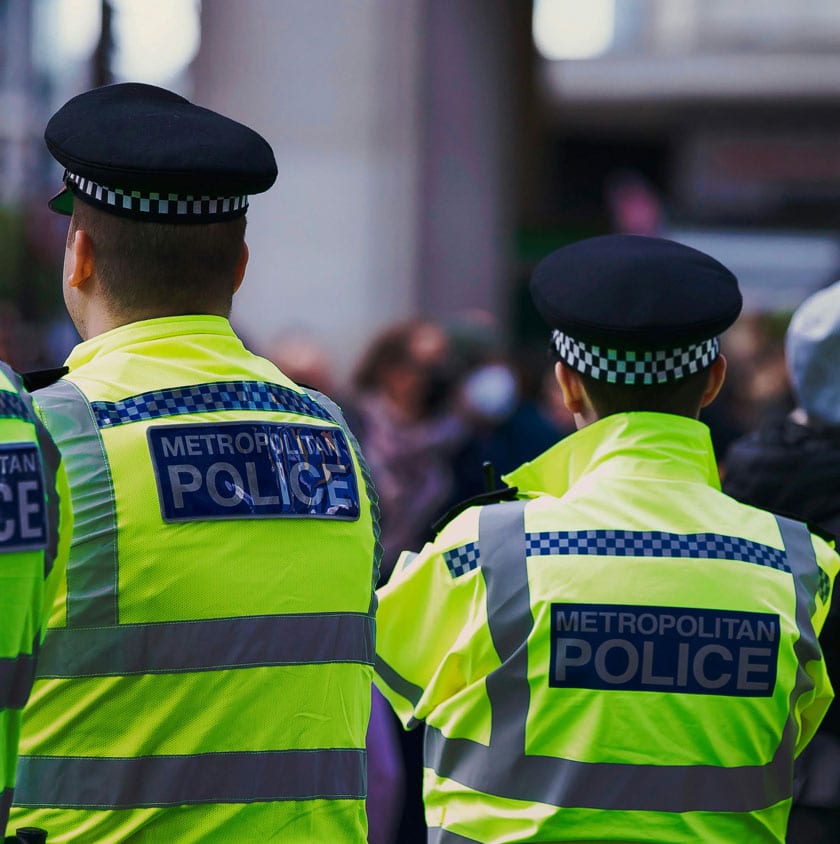
Car insurance for police officers includes the same core protections as standard policies, but some insurers also offer added benefits that reflect the professional profile and risk level of police drivers.
The foundation of any policy remains the same: you choose the level of cover that suits how and where you drive. For serving or retired officers, insurers often acknowledge the profession’s low-risk nature by offering competitive rates and tailored extras.
The three main levels of protection are:
| Cover Type | What It Includes | Typical Benefits for Police Officers |
|---|---|---|
| Third-party only | Covers damage to other vehicles or property, but not your own car | Legal minimum required to drive |
| Third-party, fire and theft | Adds protection if your car is stolen or damaged by fire | Balanced option with lower cost |
| Comprehensive | Covers damage to your own vehicle as well as others | May include courtesy car, windscreen, and accidental damage cover |
Beyond the basics, police officers can benefit from optional add-ons such as:
- Business use cover for authorised travel between stations or training locations.
- Legal expenses cover to handle costs arising from road-related incidents.
- Personal belongings cover for items like uniforms or police-issued equipment kept in the car.
- Protected no-claims bonus to maintain discounts even after minor claims.
- Breakdown cover for rapid roadside assistance, especially during shift hours.
These features provide flexibility and peace of mind, allowing officers to focus on the job knowing their vehicle and personal assets are protected.
What’s Not Included?
Car insurance for police officers doesn’t cover every scenario, and understanding what’s excluded helps ensure your policy remains valid whenever you’re behind the wheel.
Even comprehensive cover has limitations. Knowing where those boundaries lie is crucial, especially when your profession involves both on- and off-duty driving. Insurers set exclusions to keep premiums fair and define where responsibility begins and ends.
Common exclusions include:
- Emergency response driving: using your personal vehicle to respond to incidents is not covered, as this requires specialist authorisation and training under police policy.
- Paid security or private work: using your car for paid security, event duty, or other private employment is classed as commercial use.
- Undeclared modifications: fitting non-standard equipment or performance parts without notifying your insurer can invalidate your policy.
- Wear and tear or maintenance issues: gradual damage like worn tyres or clutch failure isn’t covered.
- Driving illegally: operating without a valid licence, MOT, or while under the influence will void any claim.
- Unapproved use of police equipment: if force-issued items stored in the car cause damage or loss not declared to the insurer, it may not be covered.
Each insurer defines exclusions slightly differently, so reading the policy document carefully is vital. A few minutes checking the fine print can make the difference between a smooth claim and an expensive mistake.
How Much Does Car Insurance For Police Officers Cost?
Car insurance for police officers typically costs between £500 and £900 per year, with many officers paying closer to £550 thanks to their low-risk driver status.
Police officers are generally viewed as responsible, well-trained drivers, which often leads to lower premiums than the national average. However, costs still depend on several personal factors — including your role, where you live, how far you drive, and the level of cover you choose.
A newly qualified constable driving a small hatchback in a rural area may pay significantly less than an officer commuting long distances into a city. Other variables, such as your vehicle group rating and no-claims history, will also influence the price.
Key factors that affect cost include:
- Postcode risk: urban areas attract higher premiums due to greater accident and theft rates.
- Driving record: a clean licence and long no-claims record can reduce your annual cost by up to 30%.
- Vehicle type: smaller, lower-powered cars fall into cheaper insurance groups.
- Usage: adding business use for travelling between stations may slightly raise your premium but ensures full protection.
- Excess level: increasing your voluntary excess can lower monthly payments if you can afford a higher contribution in the event of a claim.
Insurers tend to reward consistency and low risk. Officers who maintain clean records, drive modest vehicles, and compare quotes before renewal are likely to secure the best prices year after year.
How Can Police Officers Save Money On Car Insurance?
Police officers can save money on car insurance by comparing quotes, maintaining a clean driving record, and selecting vehicles in lower insurance groups.
Even with a trusted reputation as careful drivers, there are still several ways officers can keep premiums low. Small, informed choices often make the biggest difference over time — from how your car is parked to how you manage your policy renewals.
Secure storage is a good starting point. Insurers favour vehicles kept in locked garages or private driveways, reducing the risk of theft or vandalism. Parking within police station grounds overnight can also count as a security advantage, depending on the insurer.
You might also consider:
- Paying annually rather than monthly to avoid interest charges.
- Avoiding automatic renewals and checking the market before your policy ends.
- Adding a named driver with a clean record, such as a partner or family member.
- Reviewing your annual mileage to ensure it reflects your actual use — overestimating can inflate costs.
- Choosing a car in a lower insurance group or one with strong safety ratings.
- Increasing your voluntary excess if you can comfortably afford a higher upfront payment in the event of a claim.
Finally, loyalty doesn’t always pay. Comparing quotes each year ensures you’re getting the true market rate rather than accepting a quiet price increase from your existing insurer. Over a few years, those savings can easily add up to hundreds of pounds.

How To Compare Police Officer Car Insurance At SimplyQuote.co.uk?
To compare car insurance quotes for police officers, visit SimplyQuote.co.uk, enter your details once, and instantly view tailored results from trusted UK insurers.
The process is straightforward, designed to save time while helping you find the right cover for your personal circumstances. Instead of visiting multiple insurer websites, SimplyQuote.co.uk lets you see all your options side by side — allowing you to focus on price, cover level, and policy features that matter most.
Here’s how it works:
- Enter your details. Start with your personal and vehicle information, including your role, driving history, and where the car is kept.
- Select your cover type. Choose between third-party, third-party fire and theft, or comprehensive protection.
- Compare your results. Review prices, included benefits, and optional extras such as legal expenses or business use.
- Check exclusions. Look for any limits around commuting or storage to ensure your policy fits your real usage.
- Choose and apply. Once you’ve found a policy that suits your budget and requirements, continue securely to the insurer’s site to finalise your cover.
SimplyQuote.co.uk works with Quotezone, a leading UK comparison platform that connects you with FCA-regulated insurers. This ensures every quote is sourced from a trusted provider and reflects the latest market rates.
By comparing before you renew, you can often find equivalent or better cover at a lower price — helping you stay protected without paying more than you need to.

Frequently Asked Questions
Yes. Many insurers consider police officers low-risk drivers due to their advanced training and disciplined driving habits, which often results in lower premiums compared to the general public.
Yes, but only for personal or commuting use. Officers who drive to multiple stations or attend training may need business use added to their policy.
No. Official police vehicles are insured by the force. Personal car insurance only applies to privately owned vehicles used off duty.
No. Emergency response driving requires separate authorisation and is never covered by private car insurance policies.
Some insurers extend preferential rates to retired officers, especially those with a long no-claims history, but it depends on the provider.
Yes. Business use is essential for anyone driving between schools, attending meetings, or travelling to training sessions as part of their job.
Only if your insurer includes personal belongings cover, and limits usually apply. Check your policy documents for item value restrictions.
Yes. Adding a partner with a clean driving record can sometimes reduce your premium, depending on the insurer’s risk model.
Car Insurance Guides