
What Is Impound Insurance?


Impound insurance is a specialist short-term policy that lets you collect a vehicle seized by the police. Standard annual policies almost always exclude impounded cars, so without this cover you cannot legally drive your vehicle out of the compound.
Police forces across the UK impound roughly 130,000 vehicles every year for offences ranging from no insurance to dangerous parking. Storage fees of £26 per day start immediately, and you have just 14 days before the authorities can crush or sell it.
Most policies last 30 days because that is the minimum compounds will accept. Cover is typically third-party only, and you can compare impound insurance quotes online with documents emailed within minutes.
This guide explains why cars get seized, what the insurance costs, exactly which documents you need at the compound gate, and how impoundment affects your premiums going forward.
Impound insurance is a specialist 30-day policy you need to collect a seized vehicle from a police compound. Standard car insurance almost never covers impounded cars, and you have just 14 days to act before the police can dispose of your vehicle.
Compare impound insurance quotes to get cover and collect your car fast.
- Why would your car be impounded?
- How much does impound insurance cost?
- How do you get your car out of an impound?
- What documents do you need to release an impounded car?
- What does impound insurance cover?
- Why can’t you use normal car insurance for an impounded car?
- How does impoundment affect your car insurance?
- How can you avoid having your car impounded?
- Frequently asked questions (FAQs)
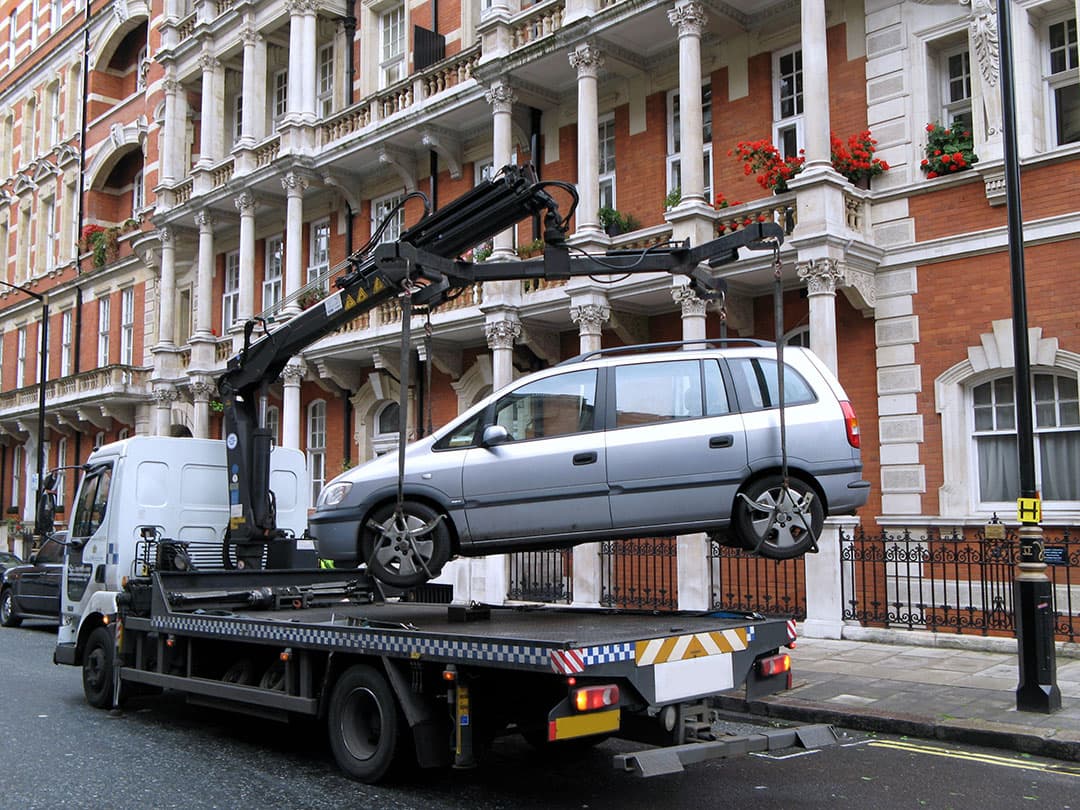
Why would your car be impounded?
The police can seize your vehicle under Section 165A of the Road Traffic Act 1988 if they suspect it is being driven without insurance or by an unlicensed driver.
Section 165A gives officers the power to seize on the spot, with no court order needed. Full details of the seizure powers are published on the GOV.UK impounding vehicles page.
Compare Impound Insurance
Get the cover you need to release your vehicle from an impound.
Common reasons for seizure
Driving without valid insurance is the single most common cause. Even a one-day lapse, a missed direct debit, or a policy that was cancelled without your knowledge can leave you uninsured.
Other triggers include driving without a valid licence, driving while disqualified, untaxed vehicles spotted by ANPR cameras, dangerous or obstructive parking, and vehicles linked to criminal activity.
How ANPR cameras catch uninsured drivers
Automatic Number Plate Recognition cameras cross-reference every passing vehicle against the Motor Insurance Database maintained by the Motor Insurers’ Bureau. If your car shows as uninsured, the system flags it instantly.
You do not need to be stopped in person. Even a parked car without insurance can be seized if it is on a public road without a SORN declaration.
How much does impound insurance cost?
A 30-day impound insurance policy typically costs between £150 and £500, depending on the driver’s age, location, driving history, and the vehicle itself.
Premiums are higher than standard temporary cover because insurers view impounded vehicles as higher risk. The car has already been involved in an incident that led to seizure, which statistically correlates with future claims.
Typical cost by driver profile
| Driver profile | Estimated 30-day premium | Key factor |
| Clean licence, aged 30–50 | £150–£250 | Lowest risk bracket |
| Young driver (21–25), clean licence | £250–£400 | Age loading applies |
| Driver with 6+ points | £300–£450 | Convictions increase premium |
| Previously uninsured driver | £350–£500 | No insurance history is high risk |
Compound release fees on top of the insurance
The insurance premium is only one part of the total bill. The government sets fixed tariffs for compound fees:
| Fee type | Cars and vans (under 3.5t) | Motorbikes and scooters |
| Removal charge (one-off) | £192 | £192 |
| Daily storage | £26 per day | £13 per day |
Source: UK government removal and storage tariffs, 2023 SI No. 331
Worked example: total cost for a 7-day recovery
A 35-year-old driver with a clean licence has their car seized on a Monday. They buy impound insurance the same day (£180) but cannot get to the compound until the following Monday. By day 7, they owe:
Insurance: £180 + removal: £192 + storage (7 days × £26): £182 = £554 total. Every extra day adds £26, so acting fast saves real money.
Compare Impound Insurance
Every day costs £26 in storage. Get impoound insurance in minutes.
How do you get your car out of an impound?
You need to visit the compound in person with valid insurance, proof of identity, proof of ownership, and payment for the release fees.
The process is straightforward on paper but time-sensitive. Miss the 14-day window and the police can legally dispose of your vehicle.
Step-by-step process
- Buy a 30-day impound insurance policy. Most providers deliver the certificate by email within minutes of payment.
- Gather all the required documents (see the checklist below). Missing a single item means the compound will refuse to release the vehicle.
- Contact the compound to confirm opening hours and whether you need to book an appointment. Some compounds operate by appointment only.
- Attend the compound with your documents and payment. Staff will verify everything before releasing the car.
- Drive the vehicle home. Your 30-day policy covers you for this journey and for the remainder of the policy period.
The 14-day deadline
Once your car is seized, you have 7 working days to prove your entitlement and 14 days in total before the police can scrap or sell the vehicle. The Metropolitan Police seized vehicles page confirms this timeline.
Storage charges apply from day one, so the longer you wait, the more you pay. A car left for the full 14 days would rack up £364 in storage alone on top of the £192 removal fee.
Compare Impound Insurance
You have just 14 days to act. Get your impound policy in minutes.
What documents do you need to release an impounded car?
You need six items: a valid insurance certificate, the V5C logbook, a valid driving licence, photo ID, a valid MOT certificate (or a pre-booked MOT appointment), and proof of vehicle tax.
Full document checklist
| Document | Details | What happens if you don’t have it |
| Insurance certificate | Must cover impounded vehicles for at least 30 days | Vehicle will not be released |
| V5C logbook (or proof of lease) | Must show you as the registered keeper | Vehicle will not be released |
| Valid driving licence | Full UK, EU, or international licence | Vehicle will not be released |
| Photo ID | Passport or driving licence (can double up) | Vehicle will not be released |
| Valid MOT | If the vehicle is over 3 years old; or proof of a pre-booked MOT appointment | You may be allowed to drive directly to the MOT station |
| Proof of vehicle tax | Active vehicle excise duty or SORN declared | Vehicle will not be released |
What if you are not the registered keeper?
In most cases, only the person named on the V5C can collect the vehicle. Exceptions exist if the registered keeper is in hospital, abroad, or in custody.
You will need a signed letter of authority from the registered keeper, plus your own valid driving licence and proof of insurance in your name. Citizens Advice has a full breakdown of your rights when a vehicle is seized.
What does impound insurance cover?
Impound insurance provides third-party only cover for a minimum of 30 days, which is the legal requirement for compound release.
This means it covers damage you cause to other vehicles, property, or people while driving the released car. It does not cover damage to your own vehicle, fire, or theft.
What is included
Third-party damage liability (the minimum required by UK law), compound release endorsement (specific wording the compound requires), instant policy documents emailed to you, and 30 days of cover from the start date.
What is not included
Damage to your own vehicle, fire, or theft. If you need broader protection after collecting the car, you will need to arrange a separate comprehensive or third-party fire and theft policy before the 30-day impound cover expires.
Why can’t you use normal car insurance for an impounded car?
Most standard annual car insurance policies contain an exclusion clause that voids cover the moment a vehicle is seized by the police.
Even if your policy was active at the time of seizure, the act of impoundment typically triggers a clause that withdraws cover. Check your policy wording carefully. If it says anything about vehicles in the custody of the authorities being excluded, you will need specialist impound cover.
Why 30 days is the minimum
Compounds require proof of insurance that runs for at least 30 days from the collection date. A standard temporary car insurance policy lasting 1 to 28 days will not be accepted, even if it covers the vehicle.
This rule exists so the vehicle remains insured for a reasonable period after release, reducing the chance of it being seized again the following week.
What about your existing annual policy?
If your annual policy is still active and does not exclude impounded vehicles (which is rare), you can present it at the compound. Contact your insurer first and ask for written confirmation. Most drivers find it quicker to buy specialist cover. You can always compare car insurance quotes for a new annual policy once the 30-day impound cover expires.
How does impoundment affect your car insurance?
Having your car impounded will almost certainly increase your future premiums, especially if the seizure resulted in a conviction for driving without insurance or without a licence.
An IN10 conviction (using a motor vehicle uninsured) stays on your licence for four years from the date of conviction. Insurers will ask about unspent convictions, and an IN10 pushes you into the higher-risk category.
Impact on your no-claims bonus
If the seizure leads to your existing policy being cancelled, you could lose some or all of your no-claims bonus. A cancelled policy is also a red flag for future insurers, making quotes more expensive.
Finding cover after a conviction
Specialist convicted driver insurance exists for drivers with IN10 or similar motoring convictions. Premiums are higher than standard cover, but they reduce each year as the conviction ages.
How can you avoid having your car impounded?
Keeping your insurance, tax, MOT, and licence valid and up to date is the simplest way to avoid seizure.
Never let your insurance lapse
Set a calendar reminder 3 weeks before your renewal date. If you plan to switch providers, arrange the new policy to start the day the old one ends. Even a single day without cover means your car could be flagged by ANPR. If you need short-term cover while you shop around, temporary car insurance can fill the gap.
Keep your vehicle taxed or SORN declared
If you are keeping your car off the road, make a SORN declaration through the DVLA. A SORN means you do not need insurance while the car is stored off the public road. Without a SORN, an untaxed, uninsured vehicle on a public road can be seized. Use the GOV.UK vehicle tax checker to confirm your car’s status before it becomes a problem.
Young and learner drivers
Young drivers are statistically more likely to have their car impounded, often because a policy was cancelled due to non-disclosure or missed payments. Double-check every detail on your application and set up a direct debit to avoid accidental lapses. Learner drivers should confirm their supervising driver’s insurance covers the vehicle being used for practice.
Frequently Asked Questions (FAQs)
No. Compounds require a minimum of 30 days’ cover before they will release a vehicle. Any policy shorter than 30 days will be rejected at the gate.
No. It is a legal requirement under the Road Traffic Act to have valid insurance before a compound will release your vehicle. Turning up without a certificate means you will be turned away.
You have 7 working days to prove your entitlement and 14 calendar days in total. After 14 days, the police can crush or sell the vehicle.
No. The policy is issued to a named driver only. The named driver must usually be the registered keeper shown on the V5C logbook.
No. Standard temporary car insurance typically runs from 1 to 28 days and excludes impounded vehicles. Impound insurance is a specialist 30-day policy specifically designed to satisfy compound release requirements.
Yes. Most specialist providers can cover drivers with existing points or convictions, though premiums will be higher. A pending prosecution for no insurance does not automatically disqualify you.
If the vehicle does not have a valid MOT, some compounds will release it on the condition that you drive directly to a pre-booked MOT appointment. You cannot drive it for any other purpose until the MOT is passed.
Some providers offer impound cover for provisional licence holders, typically aged 17 to 69. A named driver aged 30 or over may need to be added to the policy.
This depends on the insurer. Most impound policies are non-refundable because the 30-day minimum is a legal requirement for compound release. Check the terms before you buy.
In most cases, yes. You can attend the compound to collect personal items from the vehicle without needing insurance. However, you will need photo ID and proof of ownership. You cannot drive the vehicle away without insurance.