
Does Where You Park Affect Car Insurance?


Yes, where you park overnight is one of the factors insurers use to calculate your premium. Driveway parking typically costs 5-15% less than on-street parking, and the gap widens in high-crime postcodes.
Insurers ask about your overnight parking because it directly affects theft, vandalism, and accidental damage risk. Your answer feeds into the pricing model alongside your postcode, age, and vehicle type.
Our breakdown of car insurance costs explains how all these factors combine, but parking is one of the few you can actively change to reduce your quote.
Yes, and it is the overnight location that counts. Insurers price on where the car sleeps, because that is when most theft and damage happens.
A locked garage beats a driveway, and a driveway beats the street, though the gap is smaller than most people expect. Declaring a garage you do not use is a misrepresentation, and it is the kind that surfaces during a theft claim.
Compare car insurance quotes with your real overnight parking.
- How does each parking type affect your premium?
- Why does overnight parking matter more than daytime?
- How does your postcode interact with parking type?
- Can you lie about where you park?
- How can you make the most of your parking situation?
- What counts as secure parking for insurance purposes?
- Frequently asked questions (FAQs)
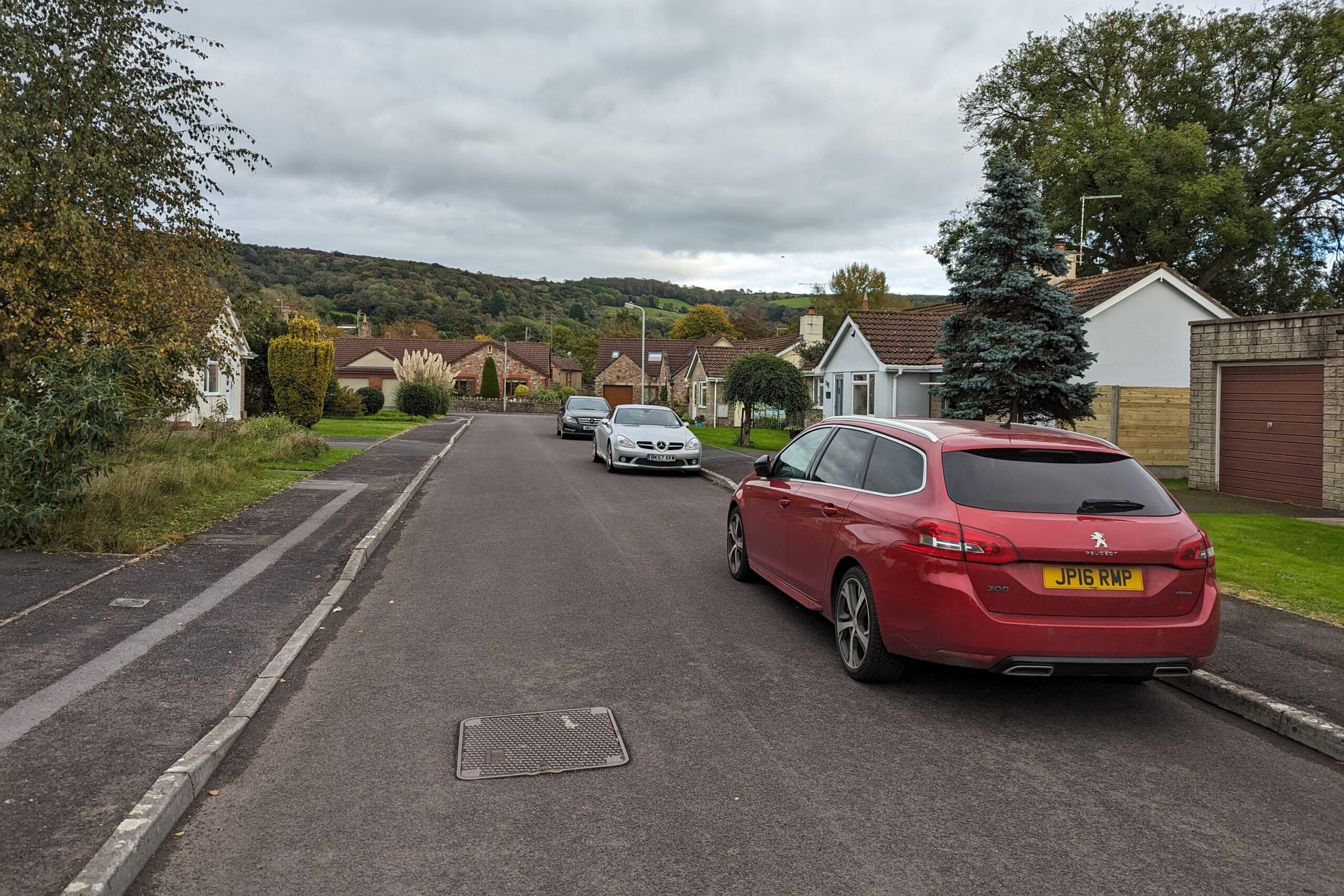
How does each parking type affect your premium?
Insurers group parking into five main categories, each carrying a different risk weighting. The table below shows typical premium impact compared to on-street parking as the baseline.
What are the typical premium differences?
| Parking type | Typical premium impact vs on-street | Why |
| Private driveway | 5-15% cheaper | Off-street, private property, lower theft exposure |
| Locked garage | 5-10% cheaper | Enclosed and secure, but scrape risk and stored items can cause damage |
| Residents’ car park (gated) | 0-5% cheaper | Controlled access but shared space with multiple vehicles |
| On-street near home | Baseline | Standard risk level used as the default in most pricing models |
| On-street away from home | 15-30% more expensive | Highest theft and vandalism risk, unfamiliar area |
Why are driveways often cheaper than garages?
This surprises most drivers. Garages carry a small additional risk of scrape damage when manoeuvring in and out, and items stored in the garage can fall onto the car.
Driveways avoid these risks while still being off-street and on private property. The difference is small, but it consistently appears in industry pricing data.
Why does overnight parking matter more than daytime?
Vehicle theft is concentrated in the evening and overnight hours, according to ONS crime data. This is why insurers focus on where the car sleeps rather than where it sits during the day.
Does daytime parking matter at all?
Some insurers ask about daytime parking as a secondary question. If you park in a secure workplace car park during the day, mentioning this can help slightly.
However, the overnight location carries far more weight in the pricing model because it covers the hours when most claims occur.
How does your postcode interact with parking type?
Postcode and parking work together. Secure parking in a high-crime area reduces the premium loading, but it cannot fully offset the underlying postcode risk.
Where does parking make the biggest difference?
In high-crime urban postcodes, moving from on-street to driveway parking can save £100-£200 per year. In a low-crime rural area, the same change might save £30-£50.
For young drivers in city postcodes, parking off-street at a parent’s home is one of the most effective ways to cut premiums.
The interaction means that drivers in the most expensive postcodes have the most to gain from secure parking arrangements.
Can you lie about where you park?
No, misrepresenting your parking location is fraud. Under UK insurance law, any material misrepresentation gives your insurer grounds to refuse claims and void your policy.
How do insurers check?
Insurers verify parking declarations during claims by checking your address, requesting photos, and cross-referencing with your postcode data. Smart dashcams and telematics devices can also reveal parking patterns.
A voided policy for fraud is recorded on the CUE database and makes future insurance much harder and more expensive to arrange. The short-term saving is never worth it.
How can you make the most of your parking situation?
If you already have secure parking, make sure your insurer knows. If you park on-street, focus on other ways to reduce your premium.
Our tips to lower your premium cover the full range of options available to every driver.
What if you only have street parking?
Fit a Thatcham-approved alarm and steering wheel lock. Visible deterrents address the theft risk that street parking introduces, and some insurers offer a small discount for approved devices.
A black box policy can also help. Telematics insurance prices your driving behaviour directly, which can reduce the impact of a less favourable parking situation.
Is renting a garage worth it?
In some urban areas, a lock-up garage costs £50-£100 per month to rent. If your insurance saving from switching to garage parking is £150-£200 per year, the maths does not work.
However, if the garage also protects against weather damage, catalytic converter theft, or you need the storage space, the combined value may justify the cost.
What counts as secure parking for insurance purposes?
Insurers have specific definitions for each parking category. Choosing the wrong one on your application can count as misrepresentation, so select the option that accurately describes where your car spends most nights.
The Highway Code also sets rules on where you can legally park on public roads.
How are parking types defined?
A locked garage means a fully enclosed structure with a secure door that you lock. An open-fronted carport does not qualify as a garage.
A private driveway is off-street parking on your own property. If you share a driveway with neighbours or it is directly accessible from the road without a gate, some insurers may classify it differently.
When comparing car insurance quotes, check how each insurer defines your parking arrangement.
Frequently Asked Questions (FAQs)
Typically 5-10% compared to on-street parking in the same postcode. The saving is larger in high-crime areas where theft is a major pricing factor, but driveways often produce a slightly bigger discount than garages.
Yes, driveway parking typically reduces premiums by 5-15% compared to on-street. It removes the theft and vandalism exposure of public street parking while avoiding the scrape risk associated with garages.
No, misrepresenting your parking is fraud. If your insurer discovers the discrepancy during a claim, they can refuse payment and void your policy, leaving you uninsured and recorded on the industry database.
Overnight parking is the main factor because most vehicle thefts happen at night. Daytime parking is a secondary consideration, but mentioning secure workplace parking can help slightly with some insurers.
Declare where the car spends the most nights. If it is on the driveway five nights a week and on the street for two, driveway is your primary parking location.
No, a carport is not fully enclosed and most insurers classify it as slightly better than open driveway parking but less secure than a locked garage. Select the parking option that matches your actual setup.