
What To Do After A Car Accident


If you’re involved in a car accident, stop your vehicle, check everyone is safe, and exchange details with the other driver. In the UK, failing to stop after an accident is a criminal offence under Section 170 of the Road Traffic Act 1988.
Even a low-speed bump can leave you flustered. What you do in the next 15 minutes affects your safety, your car insurance claim, and your legal position.
This guide covers every step: what to do at the scene, how to exchange details, when to call the police, and how to handle your insurer afterwards.
The most important thing you do after a car accident isn’t at the scene, it’s in the 24 hours that follow. Exchanging details is a legal requirement under the Road Traffic Act, but most people don’t realise that failing to report the incident to your insurer within 24 hours (even if you’re not claiming) can give them grounds to refuse a future claim on that policy.
- What should you do at the scene of a car accident?
- What details do you need to exchange after an accident?
- What evidence should you collect at the scene?
- When do you need to report an accident to the police?
- How do you report an accident to your insurer?
- What happens if your car is written off after an accident?
- Do you need medical or legal support after an accident?
- How does an accident affect your car insurance going forward?
- Frequently asked questions (FAQs)
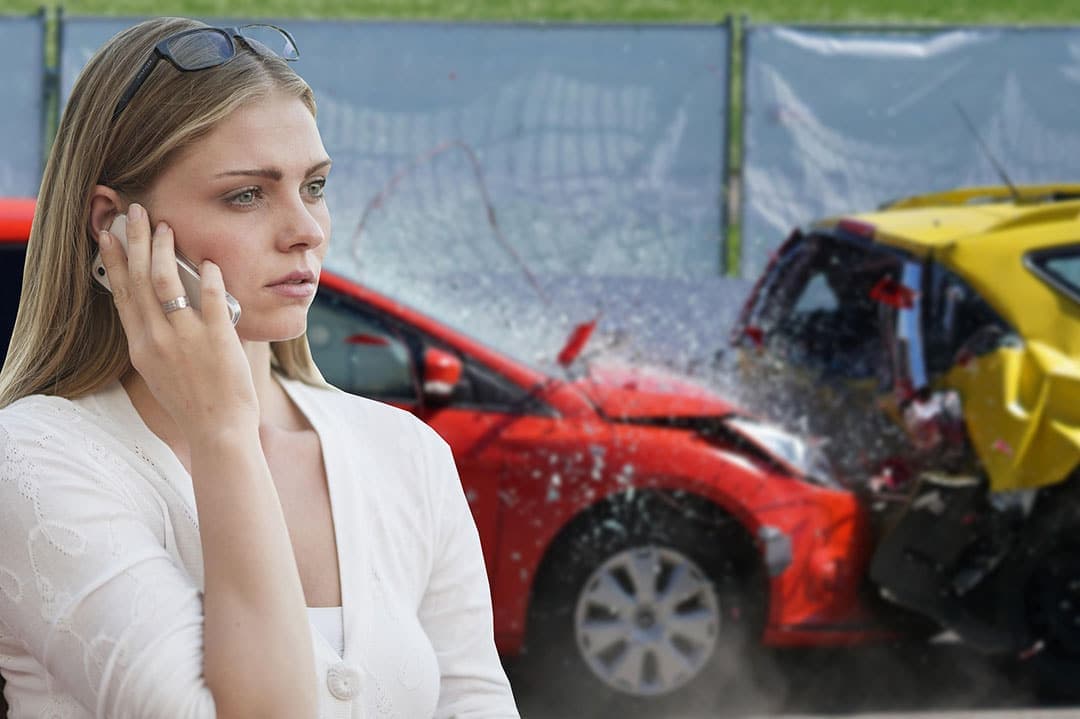
What should you do at the scene of a car accident?
Stop your vehicle, switch on your hazard lights, and check for injuries to yourself, your passengers, and anyone else involved. If anyone is hurt, call 999 immediately.
Making the scene safe
Switch off the engine and remove the keys. If the car is drivable and it’s safe to do so, move it to the side of the road or a lay-by to reduce the risk to other drivers.
If the vehicle can’t be moved, keep your hazard lights on and use a warning triangle if you have one. Stay behind the crash barrier on motorways and never stand between vehicles on a live carriageway.
When to call 999
Call 999 if anyone is injured, if the road is blocked and causing danger, or if you suspect the other driver is under the influence. The police will also need to attend if the other driver refuses to stop or provide details.
What not to do at the scene
Don’t admit fault or apologise, even if you feel responsible. Anything you say at the scene can be used when liability is assessed later.
Don’t leave the scene until you’ve exchanged details. Driving away without stopping is an offence that can lead to penalty points, a fine, or disqualification.
Compare Car Insurance
Save up to £535.17* on your car insurance in minutes.
What details do you need to exchange after an accident?
You must exchange your name, address, and vehicle registration number with the other driver. This is a legal requirement under Section 170 of the Road Traffic Act 1988, regardless of who was at fault.
Details you’re legally required to share
| Detail | Required by Law? | Notes |
| Full name | Yes | Both drivers must share this |
| Address | Yes | Home address, not just a phone number |
| Vehicle registration | Yes | Visible on the car but confirm verbally too |
| Insurance details | If injury occurred | Must be produced if anyone is injured; advisable in all cases |
| Phone number | No, but advisable | Makes follow-up much easier |
What to do if the other driver won’t cooperate
Note down everything you can: their registration plate, the make and colour of the vehicle, and the time and location. Report it to the police via 101 within 24 hours.
If you have a dashcam, save the footage immediately. Many cameras overwrite files if left running, so secure the recording before it’s lost.
What evidence should you collect at the scene?
Photograph the damage to both vehicles, the position of the cars, the road layout, and any relevant signs or markings. This evidence protects you if fault is disputed later.
Photos to take
Take wide shots of the full scene and close-ups of every area of damage. Capture both vehicles’ number plates, the road surface, traffic signs, junction layout, and any skid marks.
Weather and lighting conditions matter too. A photo of the scene at the time is worth more than a written description weeks later.
Witness details
If any bystanders saw the accident, ask for their name and phone number. Witness statements carry weight with insurers and can resolve disputed claims quickly.
Dashcam and video footage
Save dashcam footage to a separate device as soon as possible. Email photos and notes to yourself so you have a backup in case your phone is lost or damaged before the claim is settled.
When do you need to report an accident to the police?
You must report an accident to the police within 24 hours if someone is injured, if details weren’t exchanged at the scene, or if the other driver left without stopping.
Situations that require a police report
Any injury, no matter how minor, triggers a legal requirement to report. The same applies if the other driver refused to share their details or drove away.
You should also report if you suspect the other driver was impaired by alcohol or drugs, or if you believe the accident was deliberate. Call 101 for non-emergencies or visit your nearest police station.
What happens if you don’t report
Failing to report when required can result in a fine, penalty points on your licence, or even prosecution. The offence of failing to stop or report carries a maximum of 6 months’ imprisonment and an unlimited fine.
How do you report an accident to your insurer?
Contact your insurer within 24 hours, whether or not you plan to make a claim. Most providers offer 24/7 claims lines, mobile apps, and online portals for reporting.
Why you must report even minor bumps
Your policy requires you to notify your insurer of any accident you’re involved in. Failing to report can give them grounds to void your policy if the other party later makes a claim against you.
Reporting doesn’t automatically mean claiming. You can log the incident without starting a claim, which protects your position without necessarily affecting your premium.
What your insurer will ask
They’ll want the date, time, and location of the accident, the other driver’s details, and a description of what happened. Provide any photos, dashcam footage, or witness details you collected at the scene.
Your insurer will also need your policy number and details of any damage. Understanding your excess will help you decide whether a claim is worthwhile for minor damage.
Claiming vs not claiming
For small repairs, the cost of claiming may outweigh the benefit once you factor in your excess and the impact on your premium. Find out more about how car insurance premiums are calculated.
What happens if your car is written off after an accident?
If repair costs exceed your car’s market value, your insurer will declare it a total loss and assign a write-off category. You’ll receive a settlement based on the car’s pre-accident value, minus your excess.
Accepting or disputing the payout
Your insurer’s first offer may not reflect what your car was worth. Gather evidence of similar vehicles for sale, your service history, and low mileage records to negotiate a higher figure.
You’re not obliged to accept the first offer. Many drivers negotiate successfully by providing comparable vehicle listings from Autotrader or similar sites.
Buying back your written-off car
If the car is classified as Category S or N, you may be able to buy it back from your insurer. Your payout is reduced by the salvage value, and you take on responsibility for repairs and a fresh MOT if needed.
What to tell the DVLA
If you surrender the car to your insurer, they’ll notify the DVLA. If you keep it, you’ll need to update the V5C logbook yourself and ensure the car passes an MOT before driving it again.
Do you need medical or legal support after an accident?
Even if you feel fine at the scene, injuries like whiplash and concussion can take hours or days to show symptoms. If you experience pain, stiffness, or dizziness afterwards, contact NHS 111 or see your GP.
Delayed symptoms to watch for
Neck and shoulder pain, headaches, blurred vision, and numbness can all appear 24 to 72 hours after a collision. Don’t dismiss these as stress; get them checked.
When to get legal advice
Consider legal support if you’ve been injured and the accident wasn’t your fault, if the other driver denies involvement, or if the claim becomes complex. Check whether your policy includes legal expenses cover before paying for a solicitor.
Looking after your mental health
It’s normal to feel anxious or shaken after an accident, even a minor one. Give yourself time, and don’t rush back into driving if it makes you uncomfortable.
If anxiety persists beyond a few weeks or starts affecting daily life, speak to your GP. Brief therapy or CBT can help, especially after more serious collisions.
How does an accident affect your car insurance going forward?
An at-fault accident will usually increase your premium at renewal, and you may lose some or all of your no-claims bonus. A non-fault claim can also affect your premium, though the impact is typically smaller.
What happens to your no-claims bonus
If you make an at-fault claim, most insurers reduce or remove your no-claims discount. Some policies include no-claims protection, which limits the impact but doesn’t prevent it entirely.
Compare Car Insurance
Save up to £535.17* on your car insurance in minutes.
How long does an accident stay on your record?
Insurers typically ask about claims and accidents from the last 5 years. The impact on your premium fades over time, but you must declare them when asked.
Shopping around after an accident
Different insurers weigh accident history differently. Comparing quotes is the best way to find a fair price.
Read more about how much car insurance costs in the UK.
If your accident involved speeding, the combination of a claim and penalty points will have a larger effect on your premium.
Frequently asked questions (FAQs)
Yes, most UK insurers require you to notify them of any accident, even if you’re not making a claim. Failing to report can void your policy.
Only if it’s safe and you’ve exchanged details with the other driver. Leaving without stopping is a criminal offence.
Report it to the police via 101 as soon as possible. Provide their registration plate, vehicle description, and any witness information.
Your insurer handles the claim. You may lose part of your no-claims bonus and your premium could rise at renewal.
No, but you must report it within 24 hours if someone is injured or if details weren’t exchanged at the scene.
Most policies require notification within 24 hours. Report as soon as possible to protect your position.
It can, though the impact is usually smaller than an at-fault claim. Insurers factor in all claims when calculating your risk.
Leave a note with your name and address on the windscreen, and report the incident to the police within 24 hours. You must also tell your insurer.