
How Does The UK Licence Plate System Work?


The UK licence plate system uses a structured format of two letters, two numbers, and three letters to show where and when a vehicle was registered. The current format has been in use since September 2001.
Every plate on a UK road carries coded information about the car’s age and the region where it was first registered. The system is regulated by the DVLA under the Road Vehicles (Display of Registration Marks) Regulations 2001, and breaking the rules can result in fines up to £1,000.
Whether you’re buying a used car, checking a V5C logbook, or just curious about what the numbers mean, this guide explains the full system. We cover the format, regional codes, age identifiers, legal display rules, personalised plates, and the latest changes since Brexit.
The two numbers in the middle of a UK plate tell you exactly when the car was registered, and insurers use that age identifier when pricing your cover. If a car carries a Northern Irish plate, it hides the age entirely, so always run a vehicle history check before buying used.
Make sure your registration details are correct when you compare car insurance quotes, since the wrong plate means the wrong price.
- What format do UK licence plates follow?
- How do regional memory tags work?
- Why was the current system introduced?
- What are the rules for displaying licence plates?
- How do personalised and cherished plates work?
- How are Northern Irish plates different?
- What are green number plates?
- How does Brexit affect UK licence plates?
- How can you check a vehicle’s plate history?
- Frequently asked questions (FAQs)
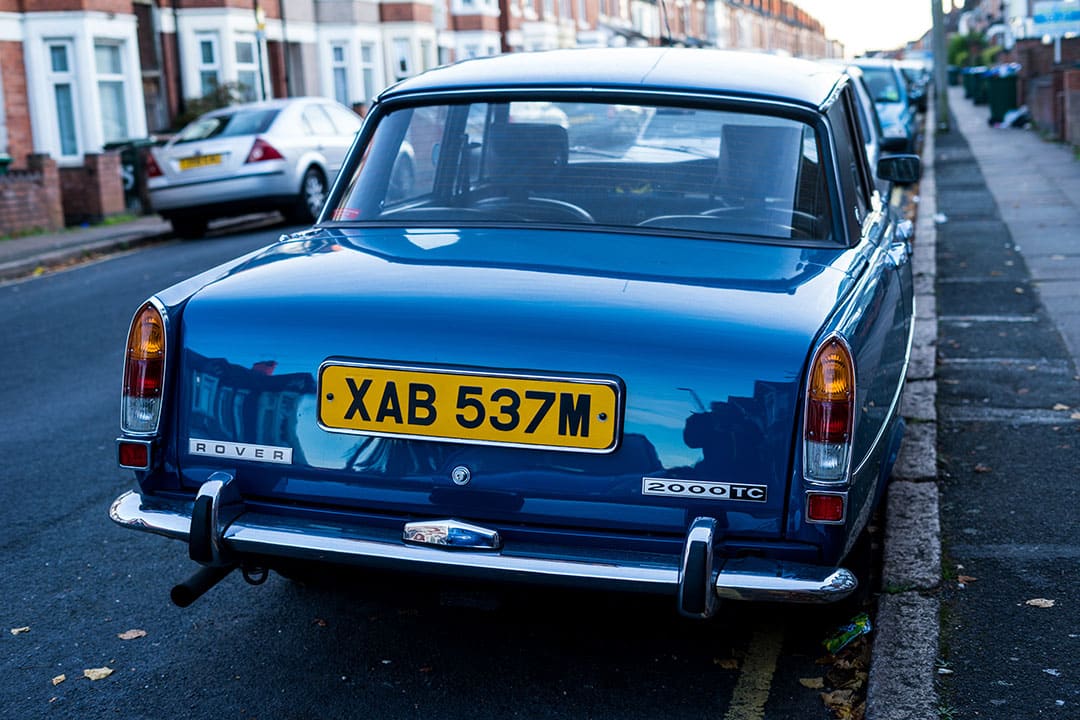
What format do UK licence plates follow?
UK plates follow a seven-character format: two letters, two numbers, a space, then three letters. An example is AB26 CDE.
What does each section mean?
The first two letters are the regional memory tag. They identify the DVLA office area where the car was first registered.
The two numbers are the age identifier. They tell you the six-month period when the car entered the system.
The final three letters are randomly assigned. They exist purely to create enough unique combinations for millions of registrations.
How does the age identifier work?
Plates issued between March and August use the last two digits of the year. Plates issued between September and February add 50 to those digits.
| Registration period | Age identifier | Example plate |
| March – August 2024 | 24 | BD24 SMT |
| September 2024 – February 2025 | 74 | BD74 SMT |
| March – August 2025 | 25 | LA25 WXC |
| September 2025 – February 2026 | 75 | LA75 WXC |
| March – August 2026 | 26 | MA26 HJK |
| September 2026 – February 2027 | 76 | MA76 HJK |
This two-release-per-year cycle means the system won’t run out of combinations for decades. Some insurers, particularly black box insurance providers, use the age identifier to assess risk when pricing cover.
How do regional memory tags work?
The first two letters on a UK plate identify the DVLA local office area where the vehicle was originally registered.
Which letters cover which regions?
The first letter shows the broad region, and the second narrows it to a specific office. Here are the main groupings.
| First letter | Region | Example offices |
| A | Anglia | Peterborough, Norwich, Ipswich |
| B | Birmingham | Birmingham, Coventry, Dudley |
| C | Cymru (Wales) | Cardiff, Swansea, Bangor |
| D | Deeside to Shrewsbury | Chester, Shrewsbury |
| E | Essex | Chelmsford, Colchester |
| F | Forest and Fens | Nottingham, Lincoln |
| G | Garden of England | Maidstone, Brighton |
| H | Hampshire and Dorset | Bournemouth, Portsmouth |
| K | Luton and Northampton | Luton, Northampton |
| L | London | Wimbledon, Borehamwood, Sidcup |
| M | Manchester and Merseyside | Manchester, Liverpool |
| N | North | Newcastle, Stockton |
| O | Oxford | Oxford, Reading |
| P | Preston and Lakeland | Preston, Carlisle |
| R | Reading | Reading, Swindon |
| S | Scotland | Edinburgh, Glasgow, Dundee, Aberdeen |
| V | Severn Valley | Worcester, Gloucester |
| W | West of England | Bristol, Exeter, Truro |
| Y | Yorkshire | Leeds, Sheffield, Beverley |
Letters I, Q, U, and Z are not used as first characters in the current system. Q is reserved for vehicles with uncertain age or identity, and plates linked to driving offence codes may appear on DVLA records alongside the registration.
Why was the current system introduced?
The DVLA introduced the current format in September 2001 because the previous prefix and suffix systems were running out of letter combinations.
What were the old systems?
Before 2001, the UK used two earlier formats. The suffix system (1963–1983) placed the year letter at the end of the plate, such as ABC 123A.
The prefix system (1983–2001) moved it to the front, like A123 ABC.
Both formats relied on a single letter to represent the year, which limited each system to 26 years at most. Neither showed where the vehicle was registered.
What did the new system fix?
The 2001 format embeds both the registration date and region into the plate. It also supports two releases per year, creating millions of available combinations that will last well into the 2050s.
The change also improved automatic number plate recognition (ANPR) accuracy, which supports everything from speed enforcement to MOT compliance checks and insurance verification.
What are the rules for displaying licence plates?
UK law requires plates to use a specific font, size, colour, and spacing. Breaking these rules can lead to a £1,000 fine and an MOT failure.
What are the legal specifications?
The government’s number plate rules set out exact requirements. Front plates must have black characters on a white reflective background.
Rear plates must have black characters on a yellow reflective background.
| Requirement | Specification |
| Font | Charles Wright 2001 |
| Character height | 79 mm |
| Character width | 50 mm |
| Stroke width | 14 mm |
| Space between characters | 11 mm |
| Space between groups | 33 mm |
| Minimum border | 11 mm all edges |
| Standard | BS AU 145e |
Plates must also display the supplier’s name and postcode, plus the BS AU 145e compliance mark. Motorcycles only need a rear plate.
What happens if your plates are illegal?
The police can issue a £100 fixed penalty notice on the spot for non-compliant plates. In more serious cases, the fine can reach £1,000.
Your car will also fail its MOT test if the plates don’t meet the standard.
Using bolts, tape, or screws to alter character spacing is a criminal offence. It falls under the same category of road infractions as other driving offence codes recorded on your licence.
How do personalised and cherished plates work?
Personalised plates are unique registrations bought from the DVLA or private dealers. Prices start from £250 through the DVLA, which includes the £80 assignment fee.
How do you buy a personalised plate?
You can browse and buy directly from the DVLA’s personalised registrations service. Once purchased, you receive a V750 certificate of entitlement for unassigned plates or a V778 retention document for plates removed from another vehicle.
After assignment, the DVLA updates your records and issues a new V5C logbook. You’ll then need to get new physical plates made and notify your insurer.
Failing to update your insurance details could affect a future claim or your no claims bonus.
What restrictions apply to personalised plates?
You cannot make a car appear newer than it is. A plate with a 76 age identifier cannot go on a vehicle first registered in 2010.
Plates must still follow all standard display rules: correct font, spacing, and format. Deliberately rearranging characters to spell words is illegal and can result in the plate being confiscated.
How are Northern Irish plates different?
Northern Ireland uses a separate format: three letters followed by up to four numbers, such as ABC 1234. These plates don’t include a visible age identifier.
Why are NI plates popular on the mainland?
Because NI plates carry no age code, they’re widely used across England, Scotland, and Wales as a way to hide a vehicle’s age. They’re managed by the Driver and Vehicle Agency (DVA), not the DVLA, and use letters like I and Z that rarely appear on GB plates.
When selling a car with an NI plate on the mainland, the plate can stay with the vehicle or be transferred. If you’re selling and need to cancel your insurance on the old car, make sure the plate transfer is processed first.
Related: How to Replace Lost Car Documents in the UK
What are green number plates?
Green number plates are reserved for fully zero-emission vehicles. Introduced in December 2020, they feature a green vertical flash on the left side of the plate.
Which vehicles qualify for green plates?
Only battery electric vehicles (BEVs) and hydrogen fuel cell cars qualify. Plug-in hybrids, mild hybrids, and standard petrol or diesel cars are not eligible, even if they produce low emissions.
If you drive an EV, electric car insurance covers the specific risks associated with battery damage and charging equipment.
What benefits do green plates offer?
Green plates help local authorities identify zero-emission vehicles quickly. Some councils offer reduced parking charges, bus lane access, or exemptions from clean air zone fees.
These benefits vary by area and are not guaranteed. The plates themselves are optional, not a legal requirement for EV owners.
How does Brexit affect UK licence plates?
Since Brexit, UK plates no longer display the EU flag. Drivers travelling to Europe must now show a UK identifier on their plate or display a separate UK sticker on the rear of the vehicle.
What do you need when driving in Europe?
If your plate shows the letters UK alongside the Union Jack, no extra sticker is needed. If your plate has no country identifier, or still shows the old GB marking, you must attach a physical UK sticker before travelling.
Some countries, including Spain, Cyprus, and Malta, require a UK sticker regardless of what your plate displays. If you’re only driving abroad briefly, temporary car insurance can cover you for the trip without changing your main policy.
If you’re involved in an incident abroad, knowing what to do is just as important as having the right plates.
Read our guide on what to do after a car accident.
How can you check a vehicle’s plate history?
The DVLA’s free online service lets you check a vehicle’s make, model, MOT status, and tax status using its registration number. Paid services reveal deeper history including previous plates and write-off records.
What do paid vehicle checks reveal?
Services like HPI Check, Total Car Check, and AutoTrader’s vehicle check can tell you whether the car has been recorded as stolen, has outstanding finance, or has been classified under car insurance write-off categories. They also flag mileage discrepancies and previous plate changes.
Running a history check is one of the smartest steps before buying a used car. A plate that looks standard could be hiding a Cat S write-off or a stolen vehicle.
This kind of background check also matters when arranging car insurance, as past write-offs can affect your premium and cover options.
Frequently asked questions (FAQs)
No, UK plates must follow strict rules on font, spacing, and colour. Altering or stylising characters is illegal, even if the registration number itself is valid.
No, green plates are optional. They’re available for zero-emission vehicles but aren’t required by law.
No, a registration number stays with the vehicle for life unless it’s replaced by a personalised plate or the car is scrapped.
Yes, you can transfer it using a DVLA retention certificate. Both vehicles must be registered, taxed, or have a SORN in place.
Yes, NI plates are fully legal throughout the UK. They’re popular on the mainland because they don’t display a visible age identifier.
A 76 plate means the vehicle was registered between September 2026 and February 2027. The DVLA adds 50 to the year digits for the second registration period.
Prices start from £250 through the DVLA, which includes the £80 assignment fee. If you want to keep a plate for future use without assigning it, the retention fee is £80.
Report suspicious plates to your local police via 101 or through Crimestoppers online. Altered plates are a criminal offence.