
Provisional Driving Licence Rules: A Guide for New Drivers


You can apply for a provisional driving licence from age 15 years and 9 months, start driving a car at 17, and must follow specific rules on supervision, L plates, and insurance until you pass your practical test.
A provisional licence is your first step toward driving independently in the UK. It lets you practise on public roads under supervision and is required before you can book your theory or practical tests.
DVLA data shows over 2.1 million provisional licence holders in the UK, with 77,402 of them carrying penalty points in 2020. Getting the rules right from the start keeps you legal and protects your future full licence.
This guide covers everything from how to apply and what the rules are, to insurance options and test preparation.
You can apply for a provisional licence from 15 years and 9 months and start driving at 17, but you must always have a supervising driver (aged 21+, with 3+ years on a full licence), display L plates, and hold valid insurance. Points on your provisional carry over to your full licence, and just 6 points within two years of passing gets your full licence revoked.
Compare learner driver insurance quotes so you’re covered from your first lesson without risking the car owner’s no-claims bonus.
- What is a provisional driving licence?
- How do you apply for a provisional driving licence?
- What are the rules for provisional licence holders?
- Can you drive on a motorway with a provisional licence?
- Do you need insurance with a provisional licence?
- How much does a provisional driving licence cost?
- How long is a provisional licence valid?
- What happens if you break the rules as a learner driver?
- What does the learner driver journey look like?
- How do you prepare for your theory and practical tests?
- Frequently asked questions (FAQs)
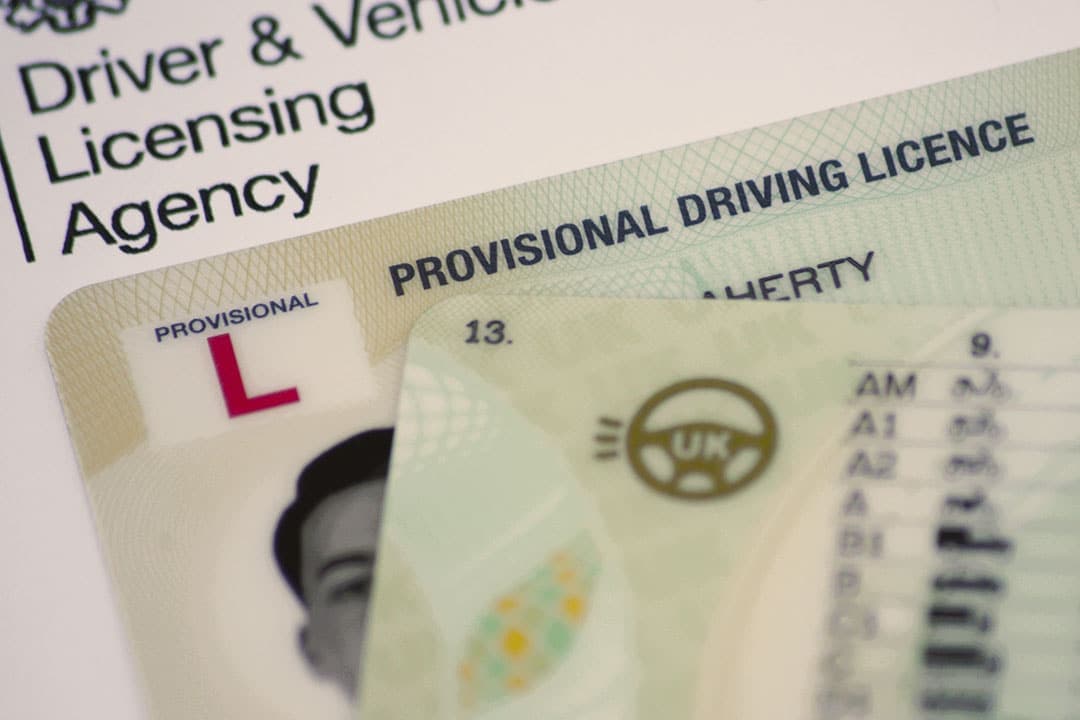
What is a provisional driving licence?
A provisional driving licence is a learner’s permit issued by the DVLA that allows you to drive on UK roads under supervised conditions. It is a legal requirement before you can take driving lessons or sit your tests.
What does it let you do?
With a provisional licence you can practise driving on public roads with a qualified supervising driver. You can also ride a moped or light quad bike from age 16.
The licence itself looks like a full photocard licence but without the full driving entitlements. It includes your photo, address, and the vehicle categories you are permitted to drive.
Who needs one?
Anyone learning to drive a car, motorbike, or moped in the UK needs a provisional licence. You also need one to book your theory test and your practical driving test.
Related: How long does it take to learn to drive?
Compare Car Insurance
Save up to £535.17* on your car insurance in minutes.
How do you apply for a provisional driving licence?
Apply online through gov.uk for £34, or by post using a D1 form for £43. Online applications are processed within about a week.
Eligibility requirements
- You must be at least 15 years and 9 months old to applyYou must be a UK resident and have lived in Great Britain for at least 185 days in the past 12 monthsYou must be able to read a number plate from 20 metresYou must not be prevented from driving by a medical condition (or must have declared any relevant conditions)
Documents you need
For the online application, you will need a valid UK passport, your National Insurance number, and your address history for the past three years. If you do not have a passport, you must apply by post with an identity document such as a birth certificate.
How long does it take?
Online applications typically arrive within one to two weeks. Postal applications take longer, sometimes up to three weeks.
| Application method | Cost | Processing time |
| Online (gov.uk) | £34 | 1-2 weeks |
| Post (D1 form) | £43 | Up to 3 weeks |
What are the rules for provisional licence holders?
Provisional licence holders must follow strict rules on supervision, display L plates at all times, and are banned from certain roads unless accompanied by an approved instructor.
Supervision requirements
You must always be accompanied by a qualified driver who is at least 21 years old and has held a full UK driving licence for at least three years. The supervising driver must sit in the front passenger seat.
The supervisor is legally responsible for the vehicle while you are driving. They must not be under the influence of alcohol or drugs, and the drink-drive limit applies to them.
L plates
Red L plates must be displayed on the front and rear of the vehicle whenever a learner is driving. In Wales, you can use D plates instead.
Plates must be clearly visible and not obstruct your view. Failure to display them can result in a fine of up to £1,000 and your insurance may be invalid.
Passengers
There are no specific restrictions on carrying passengers as a learner, as long as a qualified supervisor is in the front seat. However, some insurance policies restrict who can be in the car, so check your policy wording.
Night driving and bad weather
Learner drivers are not banned from driving at night or in poor weather conditions. Practising in the dark and in rain before your test is strongly recommended.
Many new drivers avoid night driving during lessons and then face it for the first time after passing. Building experience in varied conditions while you have a supervisor beside you is safer than learning alone.
Towing a trailer
Provisional licence holders cannot tow a trailer. You must hold a full driving licence before you are allowed to tow, and depending on the trailer weight, you may need an additional test.
Can you drive on a motorway with a provisional licence?
Yes, but only if you are with an approved driving instructor (ADI) in a car fitted with dual controls. You cannot drive on a motorway with a friend or family member supervising.
When did the rules change?
Before June 2018, learner drivers were completely banned from motorways. The law changed to allow motorway lessons with an ADI, recognising that many new drivers were getting their full licence without any motorway experience.
What about Northern Ireland?
In Northern Ireland, learner drivers are still banned from motorways entirely. This rule applies regardless of who is supervising.
Related: How much does it cost to learn to drive in the UK?
Do you need insurance with a provisional licence?
Driving without insurance is illegal regardless of your licence type. In 2020, 14,618 provisional licence holders were caught driving uninsured, a 16% increase on the previous year.
Insurance options for learners
Learner driver insurance is a short-term policy designed for people practising in a family member’s or friend’s car. It protects the car owner’s no-claims discount if you have an accident.
Alternatively, you can be added as a named driver on the car owner’s existing policy. This is often cheaper upfront, but a claim would affect the main driver’s no-claims bonus.
If you only need cover for a few days of practice, temporary car insurance gives you short-term cover without committing to a full annual policy.
If you are learning with a professional driving instructor, their vehicle will already be insured for learner use. You do not need your own policy for those lessons.
What type of cover do you need?
At minimum, you need third-party insurance. But fully comp cover is usually better value for learners because it covers damage to the car you are driving, not just other vehicles.
Young and new drivers often pay higher premiums. A black box policy can reduce costs by tracking your driving behaviour and rewarding safe habits.
Related: How is car insurance calculated?
Compare Car Insurance
Save up to £535.17* on your car insurance in minutes.
How much does a provisional driving licence cost?
The online application costs £34, while a postal application using the D1 form costs £43. Both give you the same licence.
What about the total cost of learning to drive?
The provisional licence fee is just the starting point. Driving lessons typically cost £30-£45 per hour, and most learners need around 45 hours of professional instruction.
Add in the theory test (£23) and practical test (£62 on weekdays, £75 on evenings/weekends), and the total cost of learning to drive often falls between £1,500 and £2,500.
Insurance on top of that depends on your age and the car you drive. Understanding how car insurance excess works can help you choose a policy that balances cost with the level of cover you need.
Read our guide on how much car insurance costs for a breakdown of what new drivers typically pay.
How long is a provisional licence valid?
A provisional driving licence is valid for 10 years from the date of issue. If it expires before you pass your practical test, you will need to renew it before you can continue driving or take your test.
How do you renew it?
You can renew through DVLA online or by post. Read our guide on how to renew an expired driving licence for the full process.
What if you lose it?
A replacement provisional licence costs £20 online. Our guide on what to do if you lose your driving licence covers the replacement process step by step.
What happens if you break the rules as a learner driver?
Penalty points, fines, and even a driving ban can be applied to provisional licence holders. Points on your provisional carry over to your full licence when you pass your test.
The 6-point rule for new drivers
If you accumulate 6 or more penalty points within two years of passing your test, your full licence is revoked and you revert to a provisional licence. For provisional holders, the limit is also 6 points before DVLA can revoke your entitlement.
That threshold is half the 12-point limit for experienced drivers. A single serious offence, like using a mobile phone (6 points), could cost you your licence.
Common offences for learner drivers
| Offence | Penalty points | Fine |
| Driving without L plates | 0 | Up to £1,000 |
| Driving uninsured | 6-8 | Up to £300 fixed penalty (unlimited at court) |
| Driving unsupervised | 3-6 | Up to £1,000 |
| Using a mobile phone | 6 | £200 fixed penalty |
| Speeding | 3-6 | Minimum £100 |
| Driving on a motorway without an ADI | 3-6 | Up to £1,000 |
81% of learner drivers with penalty points are male
DVLA data from 2020 shows that male provisional holders account for 81% of all learner penalty points. Drivers aged 20-29 are the most likely age group to receive endorsements.
Keep your record clean and you will benefit from lower car insurance premiums when you pass your test.
What does the learner driver journey look like?
From first application to full licence, the process typically takes between 6 and 12 months. Some learners take longer, especially if they spread lessons out over a year or more.
| Stage | Typical timeframe | Cost |
| Apply for provisional licence | 1-2 weeks | £34 (online) |
| Start driving lessons | Week 3+ | £30-£45 per hour |
| Book and pass theory test | Month 2-4 | £23 |
| Build up lesson hours (45 avg) | Month 2-8 | £1,350-£2,025 total |
| Book and pass practical test | Month 6-12 | £62-£75 |
| Get first car insurance policy | After passing | Varies (compare quotes) |
Intensive courses compress the timeline into one to two weeks but cost more upfront. The right approach depends on your learning style and budget.
How do you prepare for your theory and practical tests?
The theory test covers road knowledge and hazard awareness, while the practical test assesses your ability to drive safely in real traffic. You must pass the theory before you can book the practical.
Theory test structure
The theory test has two parts. The multiple-choice section asks 50 questions based on the Highway Code; you need 43 correct to pass.
The hazard perception section plays 14 video clips. You must score at least 44 out of 75 by clicking when you spot a developing hazard.
Practical test structure
The practical driving test lasts about 40 minutes and includes a vehicle safety check, 20 minutes of independent driving, and at least one reversing manoeuvre.
You are allowed up to 15 minor faults (often called “minors”) and still pass. A single serious or dangerous fault is an automatic fail.
According to DVSA data, the national pass rate for the practical test sits at around 48%. Thorough preparation makes a measurable difference.
Tips for passing first time
- Use the DVSA Theory Test Kit app to practise questions and hazard perception clipsTake lessons in different conditions: rain, darkness, heavy traffic, and quiet rural roadsPractise your manoeuvres until they feel automatic, not rehearsedDrive the routes around your test centre so the roads feel familiar on the day
Once you pass, compare first car insurance deals to find the best policy as a new driver.
For young drivers, premiums can be high in the first year. Our 10 tips to lower your premium covers practical ways to bring costs down.
Frequently asked questions (FAQs)
Only if you are with an approved driving instructor in a car with dual controls. You cannot use a motorway with a friend or family member supervising.
Online applications usually arrive within one to two weeks. Postal applications can take up to three weeks.
Any points on your provisional licence transfer to your full licence when you pass. If you reach 6 points within two years of passing, your full licence is revoked.
You can start driving a car at 17. You can apply for the provisional licence itself from age 15 years and 9 months.
Yes. A dedicated learner driver insurance policy keeps the vehicle owner’s no-claims discount protected if you have an accident while practising.
£34 online or £43 by post. The online route is cheaper and faster.
Yes, you can renew it through DVLA online or by post. Renewal fees apply.
Use SimplyQuote’s car insurance comparison to find learner driver and new driver policies from leading UK insurers.