
How Do Landlords File a Self Assessment Tax Return?


You tell HMRC you have rental income by 5 October after the tax year it started, then file an SA100 return with the SA105 property pages attached. Online filing and payment both fall due on 31 January.
The mechanics have not moved for the 2025-26 return, but two things around them have. Furnished holiday letting rules were abolished from 6 April 2025, and Making Tax Digital started pulling the largest landlords into quarterly reporting from 6 April 2026.
You tell HMRC about rental income by the 5 October after the tax year it started, then report it on the SA105 property pages attached to your return. Online filing and payment both fall on 31 January, and penalties start the day after. Keep rent records, invoices and mortgage statements so every figure on the return can be backed up if HMRC asks. Furnished holiday letting rules have gone, and Making Tax Digital is pulling larger landlords into quarterly reporting.
Compare Airbnb insurance quotes if you let short term as well.
- Do you have to register for self assessment as a landlord?
- Which boxes on the sa105 do you fill in?
- How do you file the return step by step?
- Which dates do you need in the diary?
- What are the penalties for filing or paying late?
- What records do you need and how long do you keep them?
- What do landlords get wrong on the sa105?
- How does making tax digital change this?
- Frequently asked questions (FAQs)
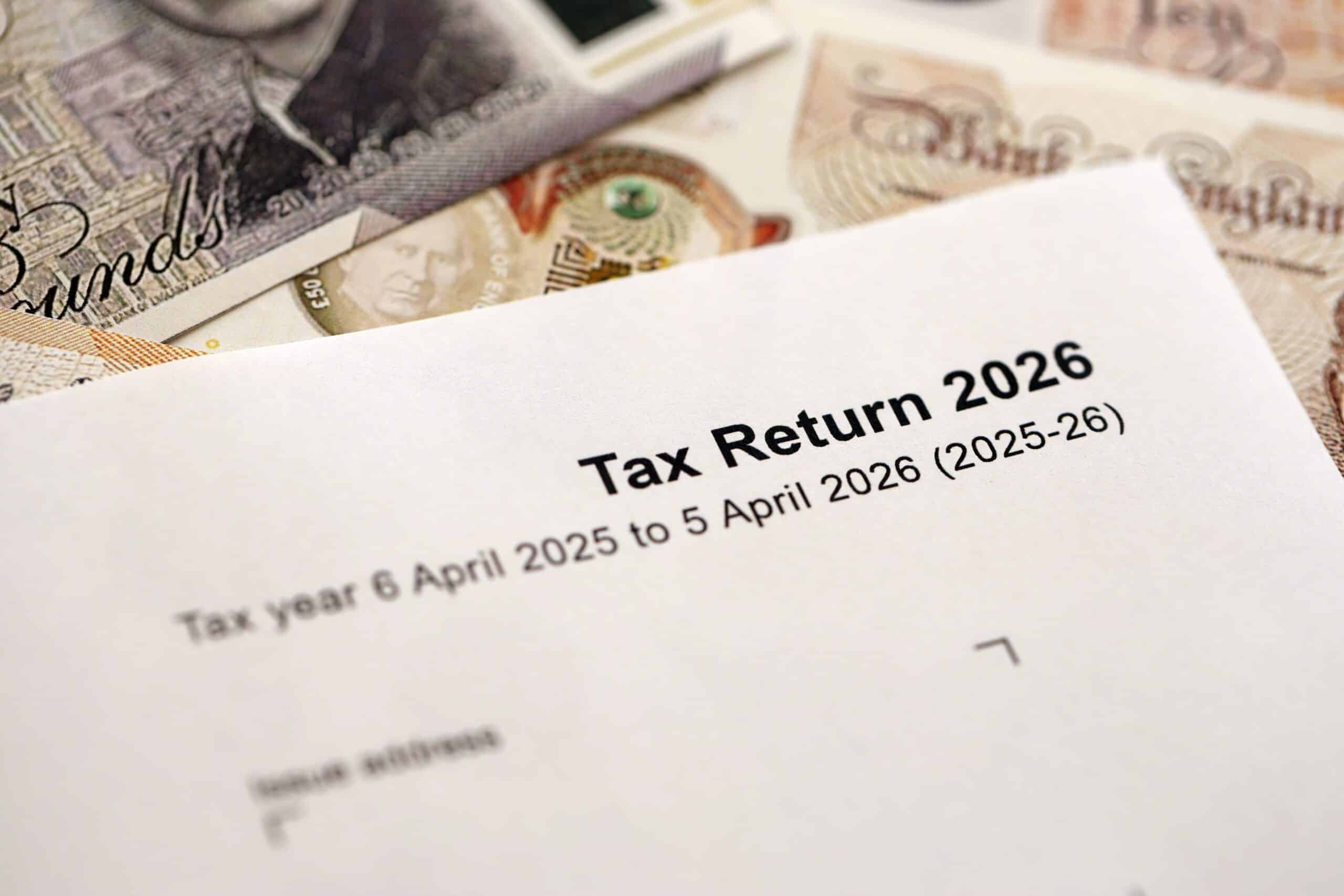
Do you have to register for self assessment as a landlord?
Not every landlord does. Registration only becomes necessary once your gross rents pass £1,000, and HMRC only expects a full return once profits top £2,500 or gross rents top £10,000.
What the £1,000 property allowance covers
The property allowance exempts the first £1,000 of gross property income each tax year. If that is all you receive, HMRC’s guidance on renting out a property confirms you do not have to tell them at all.
Between £1,000 and £2,500 you contact HMRC rather than filing a return, and the tax is usually collected through your PAYE code. Above £2,500 of profit, or £10,000 of gross rent, you register for Self Assessment.
You can also claim the £1,000 instead of your actual expenses if your costs are lower than that. You cannot do both, and it cannot be used alongside Rent a Room relief.
The 5 october deadline new landlords miss
You must tell HMRC by 5 October following the end of the tax year in which the rental income first arose. Rent that starts in June 2026 sits in the 2026-27 tax year, so the registration deadline is 5 October 2027.
Miss it and the charge is not a flat fee. A failure to notify penalty is a percentage of the tax you should have paid, running from 0% to 30% where the failure was not deliberate and up to 100% where HMRC decides it was deliberate and concealed.
Getting your utr and government gateway ready
Register online with your National Insurance number and the date you first received rent. HMRC then posts a Unique Taxpayer Reference, which normally takes around 10 working days.
You also need a Government Gateway account, and the activation code for the Self Assessment service arrives separately in the post. Leave three to four weeks between registering and your first filing attempt.
Which boxes on the sa105 do you fill in?
The SA105 is the property supplement to the SA100, and one set of pages covers every UK property you let. For 2025-26 the furnished holiday letting boxes have gone, so all UK lets now run through the same income and expense boxes.
The income boxes
Box 20 takes total rents and other income from property for the year to 5 April. HMRC’s guidance on working out your rental income confirms that parking, storage charges and payouts for lost rent all belong there too.
Box 20.1 is the property income allowance if you claim it in place of expenses. Box 37 is the Rent a Room exempt amount, currently £7,500, or £3,750 where you share the income.
Short-stay lets now go in the same boxes as an ordinary tenancy. The risk has not converged, so Airbnb insurance is still not interchangeable with a standard let policy.
The expense boxes
Box 24 covers rent, rates, insurance and ground rents. That is where the premium for a landlord policy belongs, including buildings cover and contents.
Ground rent and service charges on a leasehold flat sit in box 24 as well. So does your share of a block of flats policy if you own the freehold of a converted house.
Optional sections are allowable on the same basis, so rent guarantee and legal expenses cover go in box 24 with everything else you insure.
Box 36 is replacement of domestic items relief, for residential lets only. The replacement itself is deductible there, while damage to those items is a contents insurance question rather than a tax one.
Box 44 and the mortgage interest credit
You cannot deduct buy-to-let mortgage interest as an expense. Since 6 April 2020 it has been a basic rate tax reduction instead, entered in box 44 as residential property finance costs.
HMRC gives you 20% of the lower of three figures: your finance costs, your property business profits, and your income above the personal allowance. Anything you cannot use this year carries forward through box 45.
The 2025-26 sa105 box map
| Box | What goes in it | Typical landlord entry |
| 20 | Total rents and other income from property | Rent, parking and storage charges, lost rent payouts |
| 20.1 | Property income allowance | £1,000 claimed instead of actual expenses |
| 24 | Rent, rates, insurance and ground rents | Insurance premium, ground rent, service charge, council tax |
| 25 | Property repairs and maintenance | Repainting, boiler part, damp treatment |
| 26 | Non-residential property finance costs | Interest on a commercial unit loan |
| 27 | Legal, management and other professional fees | Agent commission, referencing, accountancy |
| 28 | Costs of services provided, including wages | Communal cleaning, gardening, caretaker |
| 29 | Other allowable property expenses | Mileage, phone, stationery, advertising |
| 36 | Costs of replacing domestic items | Like-for-like washing machine or carpet |
| 37 | Rent a Room exempt amount | £7,500 for a room in your own home |
| 38 | Adjusted profit for the year | Income less allowable expenses |
| 41 | Adjusted loss for the year | Where expenses exceed income |
| 43 | Loss to carry forward | Loss carried against future rental profits |
| 44 | Residential property finance costs | Buy-to-let mortgage interest for the 20% credit |
| 45 | Unused residential finance costs brought forward | Interest unrelieved in an earlier year |
How do you file the return step by step?
Five steps, and the whole thing takes an evening once your records are in order. Filing online gives you the tax calculation immediately, which paper filing does not.
Step 1: gather the year’s records
Pull together rent statements, agent reports, mortgage interest certificates and every invoice for the year to 5 April. Digital copies count, and a photograph of a paper receipt is acceptable evidence.
Step 2: sign in and open the right tax year
Sign in with your Government Gateway ID and pick the tax year that ended on 5 April. The Self Assessment service on gov.uk opens the 2025-26 return for filing by 31 January 2027.
Answer yes to the question about income from UK property when you tailor your return. That is the answer that adds the SA105 section to your online form.
Step 3: enter the property figures
Put your total rents in box 20, then work down the expense boxes in order. One SA105 covers every UK property you let, so the figures are combined rather than listed property by property.
Landlords running several lets often find a multi-property policy or a portfolio policy easier to reconcile than five separate renewal dates. One premium and one invoice gives you a single figure for box 24.
Step 4: check the calculation before you submit
The system totals your profit and shows the tax due before you commit to anything. Check that the finance cost reduction has appeared, because an empty box 44 is the most expensive omission on the form.
Save the calculation before you submit. A receipt with a reference number appears as soon as the return goes.
Step 5: pay what you owe
Pay by bank transfer, debit card or direct debit through your tax account by 31 January. HMRC does not accept personal credit cards, and a cheque has to clear by the deadline rather than simply be posted by it.
Which dates do you need in the diary?
Register by 5 October, file on paper by 31 October, file online and pay by 31 January. If your bill passes £1,000 you also pick up payments on account on 31 January and 31 July.
The 2025-26 timetable
| Date | What falls due | Who it applies to |
| 5 October 2026 | Tell HMRC you have property income | Landlords who first received rent during 2025-26 |
| 31 October 2026 | Paper SA100 and SA105 must reach HMRC | Anyone filing on paper rather than online |
| 30 December 2026 | Online filing deadline to collect tax through your PAYE code | Employed landlords owing less than £3,000 |
| 31 January 2027 | Online return, balancing payment and first payment on account | Everyone filing online for 2025-26 |
| 31 July 2027 | Second payment on account for 2026-27 | Anyone whose 2025-26 bill topped £1,000 |
| 7 August 2026 | First quarterly update under Making Tax Digital | Landlords mandated into MTD from 6 April 2026 |
How payments on account work
If your 2025-26 bill comes to more than £1,000, HMRC asks for two advance payments towards 2026-27. Each one is half of the 2025-26 liability.
The first lands on 31 January 2027 alongside the balancing payment for 2025-26, which is why a landlord’s first bill often feels like paying one and a half times over. The second falls on 31 July 2027.
You fall outside the system if more than 80% of your tax was already deducted at source through PAYE. You can also apply to reduce the payments where rental profits have dropped.
What are the penalties for filing or paying late?
£100 the moment you miss the filing deadline, whether or not you owe any tax. Late payment is charged separately, with 5% surcharges and interest running at 7.75% a year.
Late filing
The £100 is automatic and applies even to a nil return. From three months late HMRC adds £10 a day for up to 90 days, capped at £900.
At six months you get the greater of £300 or 5% of the tax due, and the same again at twelve months. A year late on a £4,000 bill therefore costs £1,600 in filing penalties before you pay a penny of the tax.
Late payment and interest
Separate 5% surcharges apply to tax still outstanding 30 days, six months and twelve months after the due date. Interest runs from 1 February at the Bank of England base rate plus four percentage points.
That rate has stood at 7.75% since 9 January 2026. Leaving a £5,000 bill until the following January costs roughly £388 in interest on top of £750 in surcharges.
The different rules once you are in mtd
Landlords inside Making Tax Digital move onto a points-based system. One point per missed quarterly update or return, with a £200 penalty once you reach four points.
Late payment is charged at 3% of the tax outstanding at day 15, another 3% at day 30, then a daily charge equivalent to 10% a year from day 31. Nothing is charged at all if you pay within 15 days.
What each delay costs
| How late | Filing penalty | Payment penalty or interest |
| 1 day | £100 automatic, even with no tax to pay | Interest starts accruing at 7.75% a year |
| 15 days | No further filing penalty | 3% of the tax outstanding, MTD landlords only |
| 30 days | No further filing penalty | 5% of the tax unpaid, or a second 3% under MTD |
| 3 months | £10 a day, up to a maximum of £900 | Interest continues to accrue |
| 6 months | £300 or 5% of the tax, whichever is greater | A further 5% of the tax unpaid |
| 12 months | £300 or 5% of the tax again | A further 5% of the tax unpaid |
| 4 missed MTD updates | £200, then £200 for each further miss | Not applicable |
What records do you need and how long do you keep them?
Keep everything behind a figure on the return for at least five years after the 31 January filing deadline. For the 2025-26 return that means holding the paperwork until 31 January 2032.
What hmrc expects to see
Rent records, bank statements, tenancy agreements, agent statements and an invoice behind every expense claimed. Mortgage interest certificates matter most, because box 44 needs the interest figure rather than the total monthly payment.
A shared house adds more paperwork, from licence fees to communal utility bills, and the HMO insurance premium is deductible alongside the rest of box 24.
How long to keep it
A property business is treated like any other business, so the five-year rule applies rather than the 22 months that covers people with only employment income. HMRC can charge up to £3,000 per tax year where records are inadequate.
What do landlords get wrong on the sa105?
Three mistakes account for most corrections: deducting the whole mortgage payment, treating an improvement as a repair, and splitting jointly owned income the wrong way.
Claiming the full mortgage payment
Only the interest counts, and even then it goes in box 44 as a credit rather than box 26 as a deduction. Capital repayment is never allowable.
Ask your lender for the annual interest certificate rather than adding up statements. Fixed-rate deals that switched part way through the year are the usual source of the error.
Repairs against improvements
Replacing a rotten window with the modern equivalent is a repair. Turning it into a larger bay window is an improvement, which counts against capital gains tax when you sell rather than against this year’s rent.
A new kitchen of similar quality is a repair, while an upgrade to a higher specification is not. HMRC asks whether the work restored the property or improved it.
Joint ownership and missed income
Married couples and civil partners are taxed 50/50 on jointly held property unless a Form 17 declaration matches the actual beneficial shares. Unmarried joint owners are taxed on their real shares from the start.
Payouts under loss of rent cover are taxable income and belong in box 20, which catches out landlords who treat a claim cheque as compensation.
A deposit is not income until you keep part of it. The retained amount then goes in box 20 for the year you kept it.
How does making tax digital change this?
From 6 April 2026 landlords whose qualifying income topped £50,000 on their 2024-25 return keep digital records and file four quarterly updates plus a final declaration. The threshold drops to £30,000 in April 2027 and £20,000 in April 2028.
Who is in and when
Qualifying income means turnover before expenses, adding property and self-employment together. HMRC’s Making Tax Digital for Income Tax collection confirms that employment, pension and dividend income is left out of the calculation.
HMRC reviews each year’s return and writes to you once you cross a threshold. Exemptions exist for the digitally excluded, but they have to be applied for.
What you do each quarter
The four update periods run 6 April to 5 July, 6 July to 5 October, 6 October to 5 January and 6 January to 5 April. They are due on 7 August, 7 November, 7 February and 7 May.
Each update is a cumulative summary sent from software, not a tax bill, so nothing becomes payable earlier than it does now. The final declaration still falls on 31 January and the payment dates do not move.
What it costs to get ready
MTD-compatible software runs from roughly £5 to £30 a month. An accountant preparing a landlord return typically charges £150 to £500 a year.
Start recording digitally a year before you are mandated. Retrofitting twelve months of shoebox receipts into software is the expensive way to do it.
Frequently Asked Questions (FAQs)
Yes, if your gross rents were over £10,000 or you are already in Self Assessment. Declaring the loss in box 41 is what lets you carry it forward against future rental profits.
No. One set of UK property pages covers every property you let in the UK, with the income and expenses combined into single figures.
On the SA106 foreign pages, not the SA105. UK and overseas property are treated as two separate businesses for loss relief.
Yes, for revenue costs incurred up to seven years before letting began, provided they would have been allowable during the tenancy. They are treated as incurred on the first day of the business.
Amend the return online within 12 months of the 31 January filing deadline, so by 31 January 2028 for the 2025-26 return. After that you write to HMRC claiming overpayment relief.
Twelve months from the date you filed, if you filed on time. That window stretches to four years for careless behaviour and twenty years where HMRC alleges deliberate error.
Yes, but the deadline is 31 October rather than 31 January. HMRC no longer posts blank forms out automatically, so you download the SA100 and SA105 or ask for them by phone.
Quarterly updates and a final declaration replace the annual return for you, but the 31 January payment date stays the same. Landlords below the threshold carry on with the existing process.
No. This is general information about the Self Assessment process as at September 2026, not tax advice, and your own circumstances should be checked with an accountant or with HMRC.