
What Is Courier Insurance?


Courier insurance is a specialist type of commercial vehicle cover for drivers who deliver goods in exchange for payment. It includes hire and reward cover as a legal minimum and can be extended to protect the goods you carry and your liability to the public.
Standard car or van insurance does not cover delivery work. If you earn money carrying parcels, food, or freight, you need a policy that specifically includes hire and reward cover, otherwise you are driving uninsured from the moment you pick up your first delivery.
Below we explain what courier insurance covers, who needs it, the legal requirements, and how it differs from standard vehicle insurance.
Standard vehicle insurance is void the moment you pick up a paid delivery. You need hire and reward cover, and without it any claim is rejected and you face a £300 fine plus six to eight points.
Check all your delivery platforms are covered when you compare courier insurance quotes.
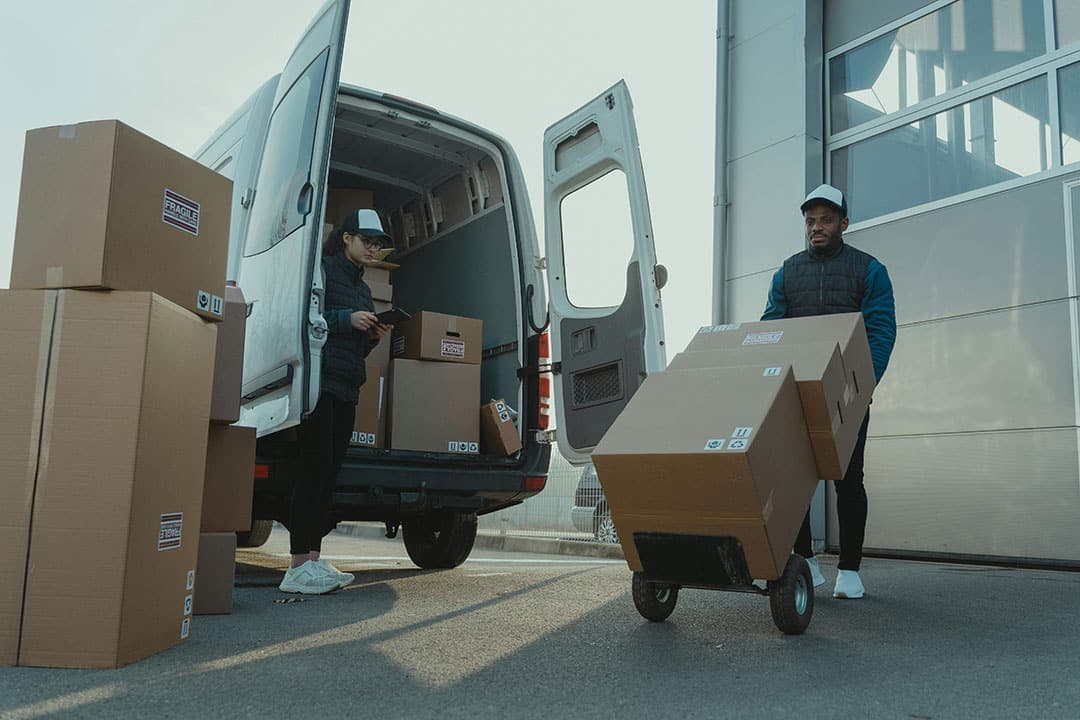
What does courier insurance cover?
A courier insurance policy is built from several layers of cover. Hire and reward is the legal foundation, with goods in transit and liability cover added on top.
What are the main cover types?
| Cover Type | What It Protects | Required? |
|---|---|---|
| Hire and reward | Your right to carry goods for payment; covers your vehicle and third-party liability while delivering | Yes — legal minimum |
| Goods in transit | The parcels, food, or freight you are carrying against loss, theft, or damage | No, but most platforms require it |
| Public liability | Third-party injury or property damage caused while you are working (e.g. dropping a parcel on a customer’s foot) | No, but strongly recommended |
| Employers’ liability | Injuries to employees or subcontractors working for your business | Yes — if you employ anyone |
Most couriers need hire and reward plus goods in transit at a minimum. If you enter customer premises, add public liability, and if you have staff, employers’ liability is a legal requirement.
What level of vehicle cover can you choose?
Like standard motor insurance, courier policies offer three levels: third party only, third party fire and theft, or fully comprehensive. Comprehensive is the most common choice for couriers because the vehicle is a business asset.
Some insurers also offer breakdown cover, replacement vehicle hire, and legal expenses cover as optional add-ons.
Who needs courier insurance?
Anyone who uses a vehicle to deliver goods for payment needs courier insurance, whether they work full-time, part-time, or through a delivery app.
Which types of delivery work require it?
Parcel couriers, food delivery riders, Amazon Flex drivers, multi-drop van operators, and same-day logistics drivers all need hire and reward cover. The requirement applies regardless of vehicle type, whether you use a car, van, scooter, or motorbike.
Do self-employed couriers need their own policy?
Yes, self-employed couriers must arrange their own hire and reward cover. Some delivery platforms offer group schemes, but these often have limited cover or high excesses.
Is courier insurance a legal requirement?
Yes. Delivering goods for payment counts as hire and reward use, and driving without the correct cover is a criminal offence under the Road Traffic Act 1988.
What happens if you drive without it?
Under Section 143 of the Road Traffic Act, driving without valid insurance carries a fixed penalty of £300 and six to eight penalty points. In more serious cases, the court can impose an unlimited fine and disqualify you from driving.
Your vehicle can also be seized on the spot. Our guide on what happens if you’re caught without courier insurance explains the full consequences.
Will standard van insurance cover delivery work?
No, standard van insurance covers business use such as travelling between sites, but not carrying goods for payment. If you claim while delivering on a standard policy, the insurer will reject it and may void the policy entirely.
How is courier insurance different from standard vehicle insurance?
The key difference is the hire and reward element. Standard policies exclude carrying goods for payment, which is exactly what couriers do.
How do they compare?
| Factor | Courier Insurance | Standard Van/Car Insurance |
|---|---|---|
| Hire and reward | Included | Not covered |
| Goods in transit | Available as add-on | Not available |
| Delivery platform use | Covered (Amazon, Evri, DPD, etc.) | Not covered |
| Mileage assumptions | Priced for high mileage (30,000–80,000 miles/year) | Priced for moderate mileage |
| Premium | Higher due to commercial risk | Lower, but useless for delivery work |
For a detailed breakdown of the differences, see our guide on courier insurance vs goods in transit.
If you work for multiple platforms (for example, Amazon Flex in the morning and Evri in the afternoon), your policy needs to cover all the delivery work you do, not just one platform.
How much does courier insurance cost?
Courier insurance typically costs between £1,450 and £2,500 per year for a van, depending on the level of cover, your driving record, and the type of deliveries you do.
What affects the price?
The main cost factors are your vehicle type, annual mileage, claims history, age, and the level of cover you choose. Drivers under 25 and those with recent claims typically pay more.
Food delivery riders on scooters can pay as little as £600–£900 per year, while multi-drop van couriers covering large regions may pay £1,800–£2,400. Our courier insurance cost guide has a full breakdown by vehicle type and cover level.
Can you reduce the cost?
Maintaining a clean driving record, fitting telematics or a dash cam, and paying annually rather than monthly all help reduce your premium.
Choosing a higher voluntary excess can also lower the cost, but make sure the excess is an amount you could afford to pay if you needed to claim.
Frequently Asked Questions (FAQs)
No, personal car insurance does not cover hire and reward use. You need a courier policy that specifically includes delivery work.
Yes. Delivering takeaway food or groceries for payment requires hire and reward cover, even if you only do it part-time or through an app.
Courier insurance (hire and reward) covers your vehicle and your right to deliver for payment, while goods in transit covers the items you are carrying. See our comparison guide for a full breakdown.
Yes. Some insurers offer short-term hire and reward cover for occasional delivery work, typically from one day to 28 days.
Yes, each vehicle used for deliveries must have hire and reward cover. A courier fleet policy can cover all your delivery vehicles under one contract.
Only if you have goods in transit cover included. Hire and reward alone covers your vehicle and third-party liability, not the items you carry.
Not always, as you usually need to add it as a separate element. It is worth including if you enter customer premises during deliveries.