
How Much Does Courier Insurance Cost In The UK?


Van courier insurance costs between £1,450 and £2,150 per year for an experienced driver (35+) with comprehensive cover. A young driver (under 25) in an urban area pays £2,500 to £4,000 annually.
The final price depends on your age, vehicle type, driving history, postcode, and how much cover you need. Younger drivers, high-mileage urban couriers, and first-time claimants all pay more.
This guide covers real pricing data from industry sources, breaks down what affects your premium, and shows you how to cut costs through no-claims discounts, annual payment plans, and vehicle choice.
Courier insurance typically costs £1,450 to £2,150 a year for an experienced driver with comprehensive cover. Standard car or van insurance does not cover courier work, so a specialist hire and reward policy is a legal requirement.
Compare courier insurance quotes to find the right cover for your delivery route.
- How much does courier insurance cost by vehicle type?
- What factors affect your courier insurance premium?
- What are the different levels of courier cover?
- How much do add-ons like public liability and goods in transit cost?
- Is pay-as-you-go courier insurance cheaper than annual?
- How can you reduce the cost of courier insurance?
- What happens if you drive without courier insurance?
- Frequently asked questions (FAQs)
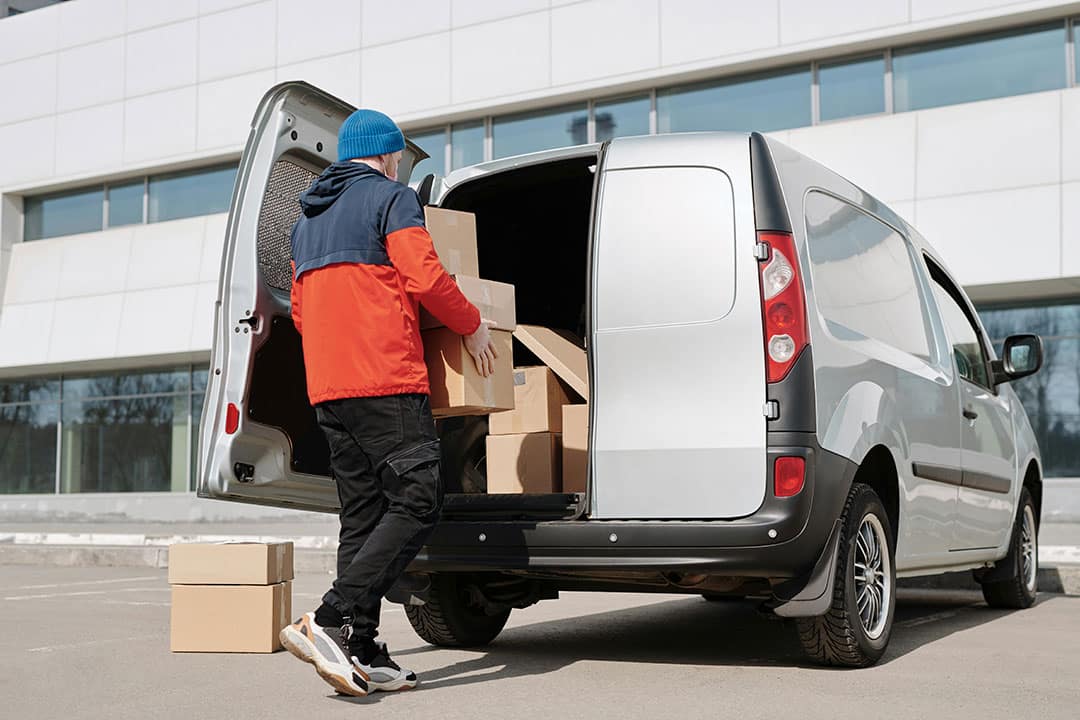
How much does courier insurance cost by vehicle type?
Van courier insurance is cheapest on a per-vehicle basis, but smaller vehicles like scooters have lower upfront costs despite higher per-mile expenses.
| Vehicle type | Driver profile | Annual premium range | Typical use |
| Van (Ford Transit) | Experienced (35+) | £1,450–£2,150 | Full-time courier, high mileage |
| Van (Ford Transit) | Young (<25) | £2,800–£4,200 | Full-time urban delivery |
| Car (saloon/hatchback) | Mid-career (30–50) | £1,800–£3,200 | Part-time car courier |
| Car (saloon/hatchback) | Young (21–24) | £2,900–£4,800 | Part-time urban delivery |
| Scooter/motorbike (125cc) | Experienced (25+) | £900–£2,200 | City centre, short runs |
These ranges reflect 2025–2026 data from insurance brokers and industry motor claims data serving the UK courier sector. Individual quotes vary based on your exact postcode, claims history, and the insurer.
Van courier insurance costs
A comprehensive van insurance policy with hire and reward cover for an experienced driver typically costs between £1,450 and £2,150 per year. This includes liability and accidental damage to the vehicle.
Younger drivers (under 25) pay significantly more because they represent a higher claims risk. A 22-year-old van courier in an urban postcode can expect to pay £2,800 to £4,200 annually for the same level of cover.
If you’re driving a larger vehicle like an HGV or articulated lorry, or managing a courier fleet, insurance costs rise further and may require specialist brokerage quotations.
Car courier insurance costs
Car courier insurance ranges from £1,800 to £3,200 per year for drivers aged 30–50, and £2,900 to £4,800 for younger drivers (21–24).
Standard car insurance does not cover courier work. You need a specialist policy with hire and reward cover, which costs significantly more than a personal car policy.
Scooter and motorbike courier insurance costs
A 125cc scooter courier policy costs £900 to £2,200 annually depending on your age and urban density. City-centre couriers with scooters benefit from lower insurance costs but higher fuel consumption relative to delivery load.
Scooter riders delivering food for platforms like Uber Eats, Deliveroo, or Just Eat need specialist food delivery insurance as a legal minimum.
Related: What is food delivery insurance?
What factors affect your courier insurance premium?
Your age, vehicle type, postcode, annual mileage, and claims history are the primary drivers of premium cost.
Driver age and experience
Drivers under 25 pay 40% to 50% more than drivers aged 35 and above. A 22-year-old van courier might pay £4,000 while a 45-year-old in the same vehicle pays £2,000.
Years of driving experience also matter separately from age. An 18-year-old with only 6 months on the road pays far more than a 35-year-old, and the difference can be several hundred pounds per year.
Vehicle type and insurance group
Every vehicle is assigned an insurance group based on repair costs, engine power, security, and theft risk. Van groups range from 1–20 for older models (pre-2016) and 21–50 for newer models. Lower groups are cheaper to insure.
An older Ford Transit (pre-2016) typically falls in groups 5–9, while a newer Transit Custom can be group 23–35 depending on engine and spec. Choosing a lower-spec model with a smaller engine can save £200 to £400 on your annual premium.
Location and annual mileage
Urban postcodes (London, Birmingham, Manchester) add approximately £400 per year to your premium compared to rural areas. Cities have higher theft and accident rates, so insurers charge accordingly.
Annual mileage is equally important. A courier doing 50,000 miles per year pays more than one doing 15,000 miles in the same vehicle. Higher mileage means greater exposure to accidents.
Claims history and driving record
Each claim on your record adds 20% to 40% to your next premium. A driving conviction (speeding, careless driving, uninsured driving) can double your cost or make you uninsurable for several years.
A clean driving record for 3+ years qualifies you for a no-claims discount, which can reduce your premium by 20% to 30%.
What are the different levels of courier cover?
Every courier needs a policy that includes hire and reward cover as standard. Within that, there are three tiers of protection, each covering different risks.
Third-party only (TPO)
Third-party cover pays for damage or injury you cause to someone else or their vehicle. It does not cover damage to your own vehicle or goods. Combined with a hire and reward cover, TPO is the legal minimum for courier driving on UK roads.
This is the cheapest option, typically £900 to £1,500 annually. However, if your own vehicle is damaged in an accident you are at fault for, you pay for repairs out of pocket.
Third-party, fire and theft (TPFT)
TPFT adds cover for theft, fire, vandalism, and flood. You pay for third-party claims and repairs to your own vehicle from accidents you cause, but theft is covered.
TPFT costs around £200 to £300 more than TPO annually and is a middle-ground option for urban couriers concerned about vehicle theft.
Comprehensive
Comprehensive cover includes everything: third-party liability, accidental damage to your vehicle, theft, fire, vandalism, and personal effects. You pay an excess (typically £300 to £500) for each claim.
Comprehensive costs approximately £400 to £700 more per year than TPO but gives you maximum protection. For professional couriers, the peace of mind and lower excess often justify the extra cost.
| Cover level | Third-party damage | Your vehicle damage | Theft & fire | Price vs TPO |
| Third-party only (TPO) | Covered | Not covered | Not covered | Baseline |
| TPFT | Covered | Not covered* | Covered | +£200–£300 |
| Comprehensive | Covered | Covered | Covered | +£400–£700 |
*TPFT covers third-party damage only, not accidents you cause to your own vehicle. Comprehensive covers accidental damage to your vehicle with an excess.
How much do add-ons like public liability and goods in transit cost?
Additional cover for public liability and goods in transit can be bolted onto your core courier insurance policy for a modest extra cost.
Public liability insurance
Public liability insurance protects you if you injure a customer or member of the public while on a delivery. It pays legal costs and compensation claims. Cover starts from £4.74 per month (£~57 annually) for a £1 million limit.
A £5 million or £10 million limit costs £8 to £15 per month and gives broader protection for couriers who regularly enter commercial premises or handle high-value deliveries. Most courier platforms require at least £1 million public liability as a condition of operation.
Goods in transit insurance
Goods in transit cover protects parcels, packages, and deliverables that are your responsibility. It covers loss, damage, or theft while goods are in your vehicle or on delivery.
Cover typically costs from £200 to £400 per year depending on the value of goods you carry and the nature of deliveries. E-commerce couriers and specialised parcel services often require this.
For self-employed couriers claiming deductions, both public liability and goods in transit premiums are fully tax-deductible.
Is pay-as-you-go courier insurance cheaper than annual?
Pay-as-you-go (PAYG) insurance works as a top-up to a base social, domestic and pleasure (SD&P) policy. The top-up costs £1 to £3.50 per hour and only activates while you are logged in and delivering.
How PAYG pricing works
PAYG courier insurance is not a standalone product. You need a base SD&P car or van policy (typically £500 to £1,000 per year), then add a PAYG hire and reward top-up that charges by the hour while you’re working.
Top-up rates range from £0.80 to £3.50 per hour depending on your age, vehicle, postcode, and provider. Before buying PAYG, check that your SD&P insurer accepts top-up cover — some major insurers do not, and using PAYG without their approval could void your base policy.
When PAYG works out cheaper
PAYG makes financial sense for part-time couriers working fewer than 15 to 20 hours per week. A weekend-only courier doing 300 hours per year pays roughly £800 base SD&P plus £600 in top-up fees, totalling around £1,400.
An annual comprehensive hire and reward policy for the same driver costs £1,500 to £2,500, so PAYG saves money if your hours are low enough.
When annual cover saves money
Once you cross roughly 20 hours per week (1,000+ hours per year), annual cover almost always works out cheaper. A full-time courier doing 1,500 hours per year would pay £800 base plus £3,000 or more in PAYG top-ups, far exceeding a £2,000 to £2,500 annual policy.
| Work pattern | Hours/year | Base SD&P | PAYG top-up (£2/hr) | Total PAYG | Annual H&R policy |
| Part-time (weekends) | 300 | £800 | £600 | £1,400 | £2,000 |
| Part-time (3 days/week) | 750 | £800 | £1,500 | £2,300 | £2,000 |
| Full-time (30 hrs/week) | 1,500 | £800 | £3,000 | £3,800 | £2,200 |
These figures use a mid-range PAYG rate of £2 per hour and a base SD&P policy of £800. Your actual costs depend on your provider, vehicle, and location.
For flexible couriers who want to switch cover on and off by the hour, pay-as-you-go food delivery insurance is available through several UK brokers.
How can you reduce the cost of courier insurance?
Build a no-claims discount, choose a lower insurance group vehicle, pay your annual premium upfront, and increase your excess to lower your premium.
Build your no-claims discount
A no-claims discount (NCD) of 3+ years can cut 20% to 30% off your premium. If you’ve been driving claim-free for 5+ years, you may qualify for maximum discounts with some insurers.
Some insurers backdate NCD if you’ve driven claim-free with other insurers previously, though you’ll need proof of your claims history.
Choose the right vehicle
Vehicles in lower insurance groups are significantly cheaper to insure. A base-spec Ford Transit Custom costs roughly £300 less annually than a higher-spec or premium-brand equivalent like a Mercedes Vito, because repair and parts costs are lower.
Older vehicles with lower list prices fall into lower groups, but consider the reliability and maintenance costs of a 10-year-old van before prioritising low insurance group alone.
Pay annually and increase your excess
Paying your annual premium upfront costs about 8% to 12% less than paying in monthly instalments. On a £2,000 annual policy, that’s a saving of £160 to £240.
Raising your voluntary excess from £300 to £500 or £1,000 can reduce your premium by 5% to 10%, but only if you can afford to pay the excess out of pocket in the event of a claim.
If you’re managing a multi-vehicle courier operation, specialist fleet policies typically cost less per vehicle than individual policies.
Related: How much do Amazon Flex delivery drivers make?
What happens if you drive without courier insurance?
Driving without valid courier insurance is a criminal offence. Penalties include an unlimited court fine, disqualification from driving, vehicle seizure, and civil liability for third-party damages.
Legal penalties
If you’re caught driving without the correct insurance cover, you face a fixed penalty of £300 and 6 penalty points. If the case goes to court, you could get an unlimited fine and be disqualified from driving. The police can also seize and destroy your vehicle. Learn more about uninsured driving penalties on GOV.UK.
Accumulating 12 penalty points in 3 years results in mandatory disqualification from driving. For professional couriers, a ban can end your livelihood for months or years.
Financial consequences beyond the fine
If you cause an accident while uninsured, you personally become liable for all third-party claims. This could mean paying tens of thousands of pounds in compensation for injuries or vehicle damage.
Your own vehicle damages are not covered. You cannot claim on your insurer, and legal action can follow. Insurance companies also blacklist uninsured drivers, making future cover extremely expensive or unavailable.
Frequently Asked Questions (FAQs)
Standard courier insurance does not automatically include goods in transit cover. You need to add it as an optional extra (typically £200–£400/year). This protects packages and deliverables that are lost, damaged, or stolen while in your vehicle.
Yes, but it will be more expensive. A single motoring conviction can add 30%–50% to your premium. Multiple convictions or recent accidents may make you uninsurable with standard insurers, requiring specialist brokers. Waiting 3–5 years after a conviction significantly improves your quotes.
Yes. Amazon Flex requires proof of valid courier or hire and reward insurance. Standard social, domestic, and pleasure cover is not acceptable. You’ll need specialist insurance before you can activate your account.
Hire and reward is the legal minimum required to carry goods for payment on UK roads. Courier insurance is a type of hire and reward cover, specifically designed for gig economy and self-employed delivery work. It differs from taxi insurance, which covers carrying passengers rather than goods.
No. Personal (social, domestic, and pleasure) car insurance explicitly excludes courier work. If you make a claim while delivering, your insurer can reject it and void your policy. You must declare courier use when obtaining a quote.
Your age, postcode, vehicle type, and claims history are the biggest drivers of cost. Urban areas (London, Manchester) cost 20%–40% more than rural areas. Drivers under 25 or with recent claims can see premiums double. Getting quotes from 3–5 brokers is essential, as rates vary widely.
Yes, but only if you have proof of your claims history from your previous insurer. Get a letter stating the number of years claim-free before switching providers. Some insurers offer continuity discounts or will accept your NCD backdated.
The excess is the amount you pay towards a claim. Most policies have a compulsory excess (typically £300–£500) and allow you to raise it voluntarily to reduce your premium. A £1,000 voluntary excess might cut your premium by 8%–10% but leaves you at risk if you cannot afford to pay it.
No. Increasing your declared mileage will raise your premium, not lower it, because you’re exposing yourself to more risk. However, if you’re currently underinsured because you declared lower mileage than you actually drive, correcting this protects you.
Yes. Any insurance premium directly related to your courier business (motor insurance, public liability, goods in transit) is a deductible business expense when calculating your taxable profit. When filing your self-assessment tax return, keep receipts and invoice copies for audit purposes.
If standard insurers reject you or quotes are unaffordable, contact a specialist courier insurance broker who works with high-risk providers. Alternatively, consider switching to a lower insurance group vehicle, raising your excess, or paying annually upfront to reduce costs. Waiting 3–5 years after a claim or conviction will significantly improve your options.