
What Is Food Delivery Insurance?


Food delivery insurance is a type of hire and reward motor cover that legally protects you when you drive or ride for payment, delivering takeaways for platforms like Uber Eats, Deliveroo and Just Eat.
Standard social, domestic and pleasure car insurance does not cover paid delivery work, so driving for a takeaway platform without the right policy means your insurance is invalid the moment you accept a job.
This guide walks through what food delivery insurance covers, when you need it, the policy durations available, the cost you can expect to pay, and the documents required to buy a policy.
Standard car insurance is invalid the moment you accept a paid delivery. Food delivery insurance is a hire and reward policy that legally covers you for platforms like Uber Eats, Deliveroo, and Just Eat, and driving without it risks a £300 fine, six points, and your vehicle being seized.
Get a food delivery insurance quote matched to your hours to see what cover actually costs.
- How does food delivery insurance work?
- Why do you need food delivery insurance in the UK?
- What types of food delivery insurance cover are available?
- Which food delivery insurance policy duration should you choose?
- What do you need to buy food delivery insurance?
- How much does food delivery insurance cost in the UK?
- Which food delivery platforms does this insurance cover?
- How do you buy food delivery insurance quickly?
- How can you get cheaper food delivery insurance?
- Frequently asked questions (FAQs)
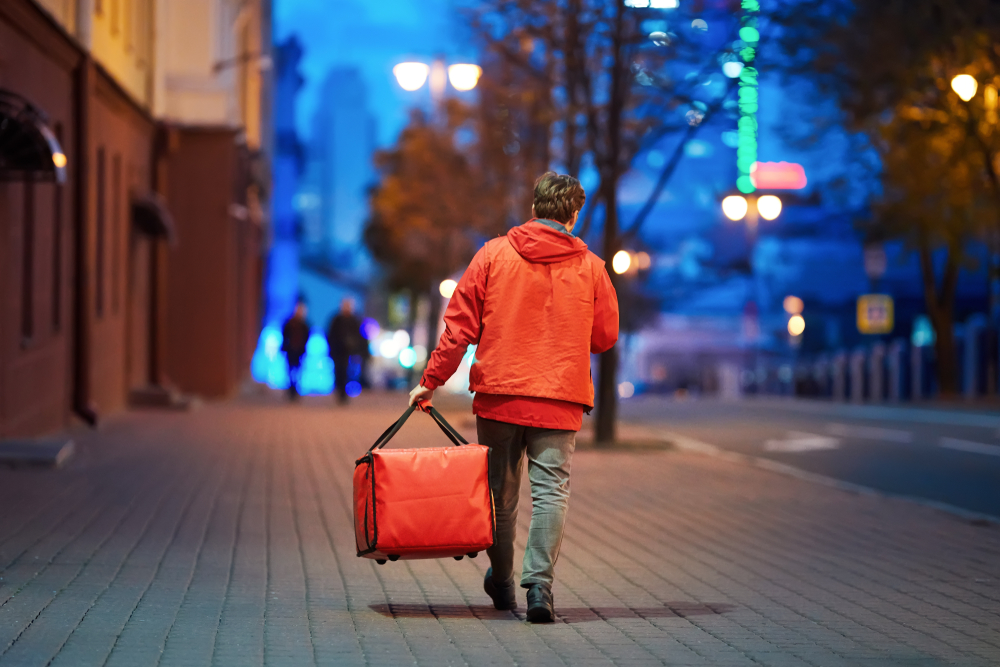
How does food delivery insurance work?
Food delivery insurance works by extending your motor cover to include paid food deliveries, sitting alongside or replacing your standard private car or bike policy.
Insurers treat paid deliveries as a business use, which is why it is sold as hire and reward insurance. The moment you accept a paid delivery, your cover must reflect that you are being paid to transport goods.
You can buy a standalone delivery policy that replaces your existing car insurance, or an add-on that sits on top of it for the hours you are working.
What does a food delivery policy typically cover?
A food delivery policy covers you against third-party injury and damage claims while you are working, plus damage to your own vehicle depending on the level of cover you choose.
Most policies also include public liability cover, protecting you if food or drink damages someone else’s property during delivery.
What does it not cover?
Standard food delivery cover does not include passengers for hire, goods in transit beyond small parcels, or driving abroad for more than a few days a year.
It also will not pay out if you work outside the hours your pay-as-you-go app shows you as active, so always switch the app on before you accept a job.
Why do you need food delivery insurance in the UK?
You need food delivery insurance because UK law requires every vehicle driven on public roads to be insured for the specific purpose it is being used, and paid deliveries are a legally defined business use.
Under Section 143 of the Road Traffic Act 1988, driving without valid insurance is a criminal offence.
The Association of British Insurers is clear that a standard private car policy does not extend to paid work, which is why delivery drivers need a specific policy.
What happens if you deliver food without the right cover?
If you are caught delivering without hire and reward cover, the penalties include a fixed penalty of £300 and six licence points, with unlimited fines and driving bans available at court.
Police can also seize and destroy your vehicle, and any claim you make will be refused, leaving you personally liable for accident costs that can run into tens of thousands of pounds.
What types of food delivery insurance cover are available?
There are three levels of food delivery insurance cover in the UK: third party only, third party fire and theft, and fully comprehensive.
The right level depends on how much your vehicle is worth, how often you ride or drive, and how much financial risk you can absorb if something goes wrong.
Third party only
Third party only is the minimum level of cover legally required to deliver food, paying out for injury or damage you cause to other people, their vehicles or their property.
It does not pay for repairs to your own bike or car, or for theft, making it the cheapest option but the weakest in terms of personal protection.
Third party, fire and theft
Third party fire and theft adds protection if your vehicle is stolen or damaged by fire, while still covering claims against you from other road users.
It suits riders using older scooters or bikes where the bike is worth replacing if stolen but not worth insuring for crash damage.
Fully comprehensive
Fully comprehensive is the broadest level of cover, paying out for damage to your own vehicle even when you are at fault, plus windscreen cover and personal belongings in most policies.
It is usually the best value for full-time drivers, because a single at-fault accident can cost more than the annual premium difference between comprehensive and third party only.
| Cover level | Damage to others | Fire and theft of your vehicle | Damage to your own vehicle |
| Third party only | Yes | No | No |
| Third party, fire and theft | Yes | Yes | No |
| Fully comprehensive | Yes | Yes | Yes |
Which food delivery insurance policy duration should you choose?
UK insurers sell food delivery cover as pay-as-you-go, 30-day monthly or annual policies, and the right one depends on how many hours a week you spend delivering.
Policy duration is the single biggest factor in cost after vehicle type, so picking the wrong one is the easiest way to overpay. The certificate you need to show the platforms is the same regardless of which duration you choose.
Pay-as-you-go
Pay-as-you-go cover switches on and off through an app when you start and finish work, so you only pay for the hours you are actually delivering. You can compare live pay-as-you-go food delivery insurance quotes if your hours change from week to week.
It suits occasional riders delivering five hours a week or less, and drivers testing whether food delivery is worth doing longer term.
30-day monthly policies
A 30-day policy covers you round the clock for a rolling month, letting you start and stop without tying into a twelve-month contract.
It suits students, seasonal workers and anyone juggling delivery with another job, and you can cancel any month you do not plan to work.
Annual policies
Annual policies spread the cost of a full year of cover into one premium or monthly direct debits, usually working out cheapest per hour for full-time riders and drivers.
They also build up a no-claims discount that transfers to future policies, which the shorter durations do not do.
What do you need to buy food delivery insurance?
To buy food delivery insurance in the UK, you need a valid driving licence or CBT, a vehicle registered in your name, a UK address and a recent claims history clean enough for insurers to accept.
Driving licence requirements
For cars and vans you need a full UK or EU driving licence. For a moped or 125cc scooter, you can ride on L-plates with a valid CBT certificate, and most insurers want the CBT to have been issued within the last two years.
Older certificates may still be accepted but often carry a higher premium, and some insurers will only cover full bike licence holders.
Vehicle and eligibility criteria
Most insurers ask that the vehicle is owned by or registered to the rider, that you live and work in England, Scotland or Wales, and that you have no more than two claims in the past three years.
Age limits vary by insurer, with many pay-as-you-go providers setting a minimum of 21 or 23 and an upper limit around 65 to 75. Always check the individual policy before you apply.
| Vehicle type | Licence needed | Typical age range | Max engine size |
| Car | Full UK or EU licence | 21 to 75 typical | No set limit |
| Van | Full UK or EU licence | 21 to 75 typical | Up to 3.5 tonnes |
| Motorbike | Full A1, A2 or A licence | 21 to 65 typical | No set limit |
| Moped or scooter | CBT plus provisional | 21 to 65 typical | 125cc |
How much does food delivery insurance cost in the UK?
Indicative food delivery insurance prices from specialists like Zego start at around £0.70 per hour on pay-as-you-go, from £50 for a 30-day policy, and from £890 a year on annual cover.
Actual quotes vary widely because insurers weight vehicle type, rider age, postcode and claims history differently.
A 23-year-old rider on a 125cc scooter in a small town will usually pay far less than a 22-year-old car driver in central London.
| Vehicle | Pay-as-you-go | 30-day | Annual |
| Scooter or moped | From around £0.70/hr | From around £50 | From around £890 |
| Car | From around £0.80/hr | From around £90 | From around £930 |
| Van | Price on application | From around £110 | From around £1,010 |
These figures are indicative averages from insurers including Zego and Quotax, published as starting prices. Your own quote may be higher depending on the factors above.
What factors push the price up?
Younger drivers, powerful vehicles, recent claims or motoring convictions, and city-centre postcodes all push premiums up, sometimes doubling the figures in the table above.
The amount you earn also matters, because high-mileage full-time delivery work costs more to insure than weekend side-gig hours. Use our cheap food delivery insurance quote comparison to see live prices for your exact circumstances.
Which food delivery platforms does this insurance cover?
Food delivery insurance covers you for paid work with any UK takeaway or app-based delivery platform, including Uber Eats, Deliveroo and Just Eat, plus local restaurants and courier apps.
The three major platforms all require you to upload a valid hire and reward insurance certificate before you can accept your first order.
Uber Eats, Deliveroo and Just Eat
Whether you are signing up as an Uber Eats driver or Just Eat courier, the policy wording must show that you are covered for hire and reward or food delivery use, not just social, domestic and pleasure.
Earnings vary by city and shift pattern, and we cover realistic numbers in our guide to how much Uber Eats drivers make in the UK.
Does it cover parcel courier work too?
Most food delivery policies also cover small parcel courier jobs, which helps if you run Amazon Flex or Evri shifts alongside food work. Our guide to whether food delivery insurance covers private hire work explains where the line is drawn, because passengers always require a separate private hire policy.
How do you buy food delivery insurance quickly?
You can buy food delivery insurance online in about ten minutes by comparing quotes, picking a duration and level of cover, and uploading your licence and vehicle details.
Our step-by-step guide to getting food delivery insurance walks through the exact documents you need to have ready. Most pay-as-you-go and 30-day policies issue cover within minutes of payment.
What do you need to hand before you start?
Have your driving licence or CBT, vehicle registration, date you want cover to start, and an estimate of the hours you work each week.
Annual policies may also ask for proof of address and no-claims history, so dig out any previous policy documents before you apply.
How can you get cheaper food delivery insurance?
You can cut the cost of food delivery insurance by matching the policy duration to how much you actually work, raising your voluntary excess, and shopping around every renewal rather than auto-renewing.
The biggest single saving usually comes from picking the right duration, because paying annual rates for five hours a week of weekend deliveries wastes hundreds of pounds.
Practical ways to bring your premium down
- Match duration to hours: pay-as-you-go below five hours a week, monthly for part-time work, annual for full-time.
- Raise your voluntary excess by £100 to £250 if you can afford to pay it after a claim.
- Use a less powerful scooter or moped rather than a larger motorbike.
- Pay the premium in one lump sum instead of monthly instalments to avoid finance charges.
- Build a no-claims discount by staying claim-free on your annual policy.
- Compare quotes at every renewal rather than letting the insurer auto-renew.
Watch out for these hidden costs
Cancellation fees, mid-term adjustment fees and monthly payment interest can add 15 to 25 per cent to the sticker price over a year.
Read the policy summary carefully, because a cheaper quote with high fees often works out more expensive than a slightly pricier quote with none.
Frequently asked questions (FAQs)
Food delivery insurance is a type of hire and reward policy, but hire and reward is a broader category that also covers parcel couriers and private hire drivers. Every food delivery policy is hire and reward, but not every hire and reward policy is set up for food delivery.
No, a standard car insurance policy will not cover paid food deliveries. You must add hire and reward use to your policy or buy a dedicated food delivery policy before you start work.
Pedal bikes and most e-bikes do not legally require motor insurance to deliver food. Many riders still buy public liability cover, which some platforms recommend, and our full guide to what insurance is needed to deliver food goes into more detail.
Pay-as-you-go and 30-day policies usually activate within minutes of payment, and most insurers send digital certificates by email. Annual policies may take a little longer if additional checks are needed.
Standard policies cover the vehicle but not the goods in transit or the delivery bag. Some insurers offer optional goods-in-transit add-ons, and specialist couriers will often want this cover.
Claims made on a food delivery policy can affect your private car insurance at renewal, because insurers look at your full driving record. A no-claims discount earned on a hire and reward policy is usually separate from your private car NCB.
No, most food delivery insurance is sold to sole traders who work through their own name and pay tax as self-employed individuals. A limited company is not required to buy cover.
Food delivery cover does not extend to carrying fare-paying passengers. You need a private hire taxi policy for that work, and you can read more in our guide to whether food delivery insurance covers private hire.