
Does Landlord Insurance Cover Mould and Damp?


Not usually. A landlord policy excludes damp, rot and mould that build up slowly, but it will pay where damp follows a sudden insured event such as an escape of water, a storm or a flood.
The line insurers draw is between an accident and a maintenance failure. Landlord insurance is written for sudden, unforeseen damage, and creeping damp is neither.
That leaves you carrying the repair bill and the legal risk together. Damp and mould are now the quickest route from a tenant complaint to a council enforcement notice.
A landlord policy pays for damp that follows a sudden insured event such as an escape of water, a storm or a flood, and excludes damp, rot and mould that build up slowly. Gradual damp is therefore a maintenance job and a legal risk rather than a claim, and a tenant complaint can reach a council enforcement notice quickly. Fix the source, keep dated records of what you did and when, and do not rest your case on tenant lifestyle.
Compare landlord buildings insurance quotes before your next renewal comes round.
- Why do insurers treat damp as a maintenance problem?
- When will a landlord policy pay for water damage?
- Which type of damp are you dealing with?
- Does awaab's law apply to private landlords yet?
- What are your legal duties on damp and mould today?
- What if your tenant is causing the condensation?
- How do you stop damp becoming a claim or a case?
- Frequently asked questions (FAQs)
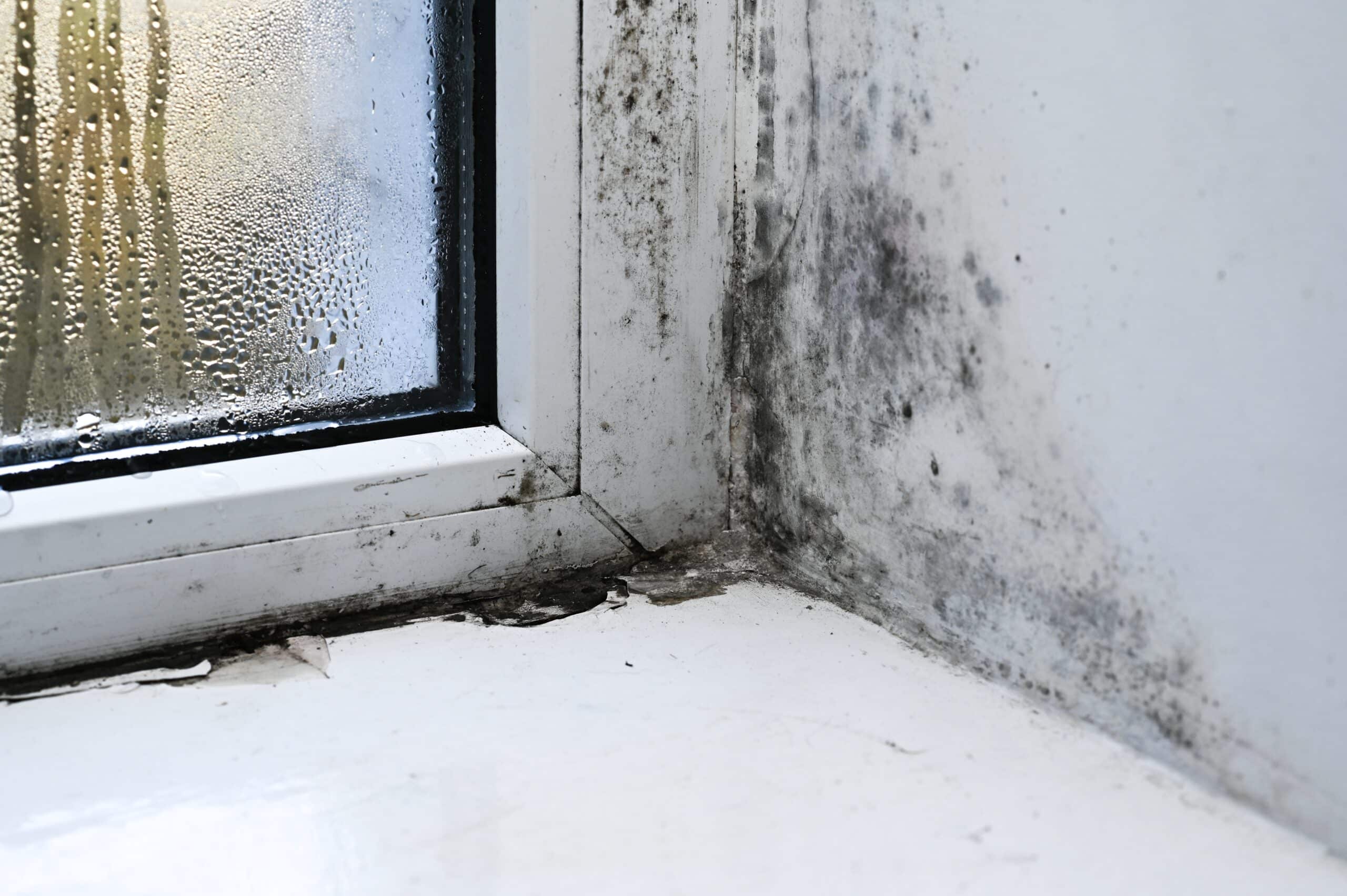
Why do insurers treat damp as a maintenance problem?
Because damp is gradual, foreseeable and preventable, and insurance pays for the sudden and the unexpected. Every mainstream landlord wording carries a general exclusion for wear and tear, rot, fungus and gradual deterioration.
The test every claim has to pass
Cover on a landlord buildings policy responds to named perils: fire, storm, flood, escape of water, impact and subsidence. Damp is not a peril, it is a symptom, so the claim turns entirely on what caused it.
A slate blown off in a January gale that lets rain into a bedroom is an insured event. The same slate slipping quietly over three winters is a repair you should have picked up.
What comes out of your own pocket
- A damp survey from a qualified surveyor, typically £150 to £400.
- Fixing the source: a failed damp-proof course, a leaking roof or ground levels bridging the brickwork.
- Treating and removing the mould, then replastering and redecorating.
- Improving ventilation with extractor fans, trickle vents or a positive input unit.
Items you supplied are treated the same way. Landlord contents cover will replace a sofa soaked by a burst pipe, but not a mattress ruined by months of condensation.
Covered or not: eight common damp scenarios
| What happened | Covered? | Why |
| Burst pipe soaks a ceiling | Yes | Escape of water is a named insured peril |
| Storm strips tiles and rain gets in | Yes | Storm damage, subject to the insurer’s wind speed test |
| Flood water enters the ground floor | Yes | Flood is standard on residential buildings cover |
| Slow leak under a bath found months later | Partly | Trace and access may pay; the resulting rot rarely does |
| Mould appearing weeks after a covered leak | Usually not | Reclassified as gradual damage once damp has set in |
| Black mould on bedroom walls and windows | No | Condensation is a heating and ventilation issue |
| Rising damp through a failed damp-proof course | No | Deterioration of the building over time |
| Blocked gutters soaking an external wall | No | Preventable by routine maintenance |
When will a landlord policy pay for water damage?
When the water arrives suddenly and from an insured cause. Escape of water and storm damage are the two claims that most often begin life as a damp patch on a wall.
Escape of water claims
Escape of water is the most frequent claim on landlord buildings insurance, covering everything from a split pipe under a floor to a failed washing machine hose.
Get a plumber to the property the day it is reported and keep the invoice, because the date you acted decides whether the insurer calls it sudden or gradual.
Budget for an excess of £250 to £500, and check whether your policy excess is higher for escape of water than for other perils. Many insurers load it.
Storm damage and the roof
Insurers apply three tests to a storm claim: was there a storm, was the building in reasonable repair, and did the storm cause the damage. A roofer’s report dated within days of the weather event settles all three.
Photograph the roof after every named storm. An insurer that sees moss-choked valleys and perished flashing will decline on the second test.
Where the claim stops
The insurer will dry the structure, strip the damaged plaster and redecorate the affected area. It will not fund mould treatment weeks later, and it will never pay to upgrade your ventilation.
If the property cannot be let while drying kit runs, loss of rent cover usually pays up to 20% of the buildings sum insured. Check that limit before you need it, not after.
Which type of damp are you dealing with?
Rising damp, penetrating damp and condensation look almost identical on a wall and need completely different fixes. Condensation causes most of the black mould in UK rentals and is the cheapest of the three to solve.
Telling the three apart
| Type | Cause | Signs | Typical cost to fix |
| Rising damp | Ground moisture rising through walls where the damp-proof course has failed or is absent | Tide marks up to a metre on ground-floor walls, crumbling plaster, musty smell | £1,000 to £3,000 for a treated wall plus replastering |
| Penetrating damp | Water entering through a defective roof, wall, window or blocked gutter | Patches that darken after rain, staining around windows and ceilings | £200 for a gutter clear to £6,000 plus for a roof section |
| Condensation | Warm moist air meeting cold surfaces in an under-ventilated room | Black spot mould on window reveals, behind furniture, in bathrooms | £150 to £500 for extractor fans, £1,500 plus for positive input ventilation |
Why condensation ends in complaints
Occupancy drives moisture, which is why shared houses suffer worst. An HMO with five tenants produces several times the water vapour of the same house let to a couple.
Extractor fans venting into a loft, painted-over trickle vents and a boiler the tenant cannot afford to run all end in the same place. None of it is an insured peril.
Damp in a flat you do not own the roof of
If you let a leasehold flat, the freeholder insures the structure through a block of flats policy and recharges you through the service charge. Ask the managing agent for the schedule and the excess.
A leak from the flat above is claimed on that block policy, not yours. You still handle the mould inside your flat, and your tenant still complains to you.
Does awaab’s law apply to private landlords yet?
No. As at September 2026 Awaab’s Law is in force in the social rented sector in England only, and the government has not set a date for extending it to private landlords.
What social landlords already have to do
The law is named after Awaab Ishak, the two-year-old who died in 2020 after prolonged mould exposure in social housing. Phase 1 came into force on 27 October 2025 and covers emergency hazards plus significant damp and mould.
Phase 2 follows on 30 November 2026, adding excess cold and heat, falls, structural collapse, fire, electrical and hygiene hazards. Phase 3 will pick up the remaining rated hazards apart from overcrowding.
| Awaab’s Law phase 1 duty (social sector) | Deadline |
| Investigate a reported significant damp or mould hazard | 10 working days |
| Give the tenant a written summary of the findings | 3 working days after the investigation ends |
| Carry out the relevant safety work | 5 working days |
| Begin further preventative work | 5 working days, completed within 12 weeks |
| Investigate and make safe an emergency hazard | 24 hours |
| Rehouse the household where a deadline cannot be met | At the landlord’s expense |
Where the private rented sector stands
Section 60 of the Renters’ Rights Act 2025 gives ministers the power to apply the same style of hazard timescales to private tenancies. The government’s implementation roadmap still lists that date as subject to consultation.
Nothing in Awaab’s Law binds a private landlord today. Working to the social sector clock anyway is the cheapest insurance you will ever buy.
What are your legal duties on damp and mould today?
Three sets of rules already bite: section 11 of the Landlord and Tenant Act 1985, the Homes (Fitness for Human Habitation) Act 2018, and your council’s hazard enforcement powers.
Repair and fitness for habitation
Section 11 of the Landlord and Tenant Act 1985 makes you responsible for the structure and exterior, including the roof, walls, gutters and downpipes. Damp entering through any of those is your repair.
The Homes (Fitness for Human Habitation) Act 2018 lets a tenant take you to court directly where damp or mould makes the property unfit to live in. The remedies are an order to do the work and damages, with no council involvement needed.
HHSRS category 1 hazards
Damp and mould growth is the first hazard listed in the Housing Health and Safety Rating System, which councils use to score conditions in rented homes.
Where the score reaches category 1, the council has a duty to act rather than a choice. Enforcement runs from an improvement notice to a prohibition order and emergency remedial action, with a civil penalty or prosecution if you ignore it.
What the health guidance expects of you
The government’s guidance on the health risks of damp and mould, updated in April 2026, tells landlords not to assume tenant lifestyle is the cause. It is written for private landlords as well as social ones.
It names the people most at risk: babies and young children, older tenants, and anyone with asthma or a weakened immune system. That is the framing a council officer or a judge will use.
What if your tenant is causing the condensation?
You still have to provide a property that can be heated and ventilated properly. Tenant behaviour can be part of the picture, but on its own it is rarely a defence.
Why the lifestyle argument falls over
With no extractor fan in the bathroom, sealed trickle vents and single glazing, condensation was coming whoever lived there. A court looks at whether the building is adequate before it looks at drying laundry.
Tenants should not withhold rent over disrepair, and doing so simply puts them in arrears. If it happens, rent guarantee cover keeps the income coming while the dispute is resolved, subject to the policy conditions.
The paper trail that defends you
- A dated ventilation and heating note in the tenancy pack, signed at check-in.
- A written reply to every damp report, recording the date you inspected.
- Photographs at check-in, at each inspection and at check-out.
- Contractor invoices kept for the whole life of the tenancy.
That file is what wins a disrepair claim. Legal expenses cover funds the solicitor defending it, but it cannot invent evidence you never created.
How do you stop damp becoming a claim or a case?
Fix water ingress within days, keep the property warm and ventilated between tenancies, and buy the policy sections that respond when water does arrive suddenly.
The maintenance that pays for itself
- Clear gutters and downpipes twice a year, and after every storm.
- Check the roof, pointing and window seals once a year from ground level.
- Test every extractor fan at each inspection, including where it vents to.
- Keep soil and paving at least 150mm below the damp-proof course.
- Service the boiler annually so tenants can afford to heat the property.
Void periods are when damp wins
An empty, unheated house grows mould faster than an occupied one. Most landlord policies restrict cover once a property has stood empty for 30 to 45 days, and longer voids need unoccupied property cover.
Leave the heating on a low frost setting, or drain the system down if you cannot. Insurers treat weekly inspections as a condition of cover rather than a suggestion.
The add-ons worth the premium
- Home emergency cover gets a contractor out overnight when a pipe fails, which is when damp damage is cheapest to stop.
- Accidental damage picks up the one-off tenant mishap, such as an overflowing bath, that named perils miss.
Trace and access cover, usually £5,000 to £10,000, pays to lift floors and chase a hidden leak. Check it on every landlord insurance quote, because damp wording varies far more between insurers than price does.
Frequently Asked Questions (FAQs)
Only where the mould came from a covered event such as a burst pipe or storm damage, and even then insurers often pay for the water damage but not the mould treatment.
No. A failed or absent damp-proof course is treated as deterioration of the building, which sits outside every mainstream landlord wording.
You are, wherever it stems from a building defect or from inadequate heating and ventilation. Tenant behaviour only shifts the balance if the property itself is already adequate.
There is no fixed statutory clock in the private sector yet, only a duty to act within a reasonable time. Investigating within 10 working days and replying in writing matches the social sector standard.
They should not, and doing so puts them in arrears. The proper routes are a court claim for repairs and damages, or a complaint to the council’s environmental health team.
Yes. Under the Homes (Fitness for Human Habitation) Act 2018 a tenant can go straight to court for an order to do the work plus damages for the period the home was unfit.
A gutter clear might be £200 and better extraction £500, while a new damp-proof course and replastering runs £1,000 to £3,000 per wall. Roof repairs behind penetrating damp can reach five figures.
Escape of water claims usually do, often by 10% to 30% at renewal, and some insurers apply a higher excess afterwards. Claims-free years are worth protecting on small losses.
No. Rot, fungus and woodworm sit under the gradual deterioration exclusion, even where the moisture that started them came from an insured leak.
Only if the property becomes unfit to live in. Where the damage came from an insured event, the alternative accommodation section of a landlord policy usually funds it.