
What Repairs Are Landlords Responsible For?


You are responsible for the structure and exterior of the property, and for the installations that supply water, gas, electricity, sanitation, space heating and hot water. Section 11 of the Landlord and Tenant Act 1985 puts those duties on you, and no tenancy agreement can move them onto your tenant.
Your tenant picks up day to day upkeep, minor consumables and any damage they or their guests cause. Everything structural, everything piped and everything wired stays with you.
The enforcement side grew teeth on 1 May 2026. Councils can now fine you up to £40,000 for ignoring an improvement notice, a tribunal can order you to repay up to two years of rent, and a landlord policy pays for far less of the repair bill than most landlords assume.
The structure and exterior are yours, along with the installations supplying water, gas, electricity, sanitation, space heating and hot water, and no clause in a tenancy agreement can shift that onto your tenant. Day to day upkeep, consumables and damage caused by the tenant or their guests sit on the other side of the line. Respond in a reasonable time and keep a dated record of every report and repair, because that trail is what protects you from a council notice, a disrepair claim or a rent repayment order. Insurance pays for sudden insured damage, not for wear and tear you have let build up.
Compare landlord insurance quotes so a sudden repair does not land on you alone.
- What does section 11 of the landlord and tenant act 1985 cover?
- Which repairs fall to you and which fall to the tenant?
- What does the homes (fitness for human habitation) act 2018 add?
- How quickly do you have to carry out a repair?
- Does awaab's law apply to private landlords yet?
- What can the council do if you do not repair?
- What does a disrepair claim or a rent repayment order cost you?
- What will landlord insurance pay towards a repair?
- Frequently asked questions (FAQs)
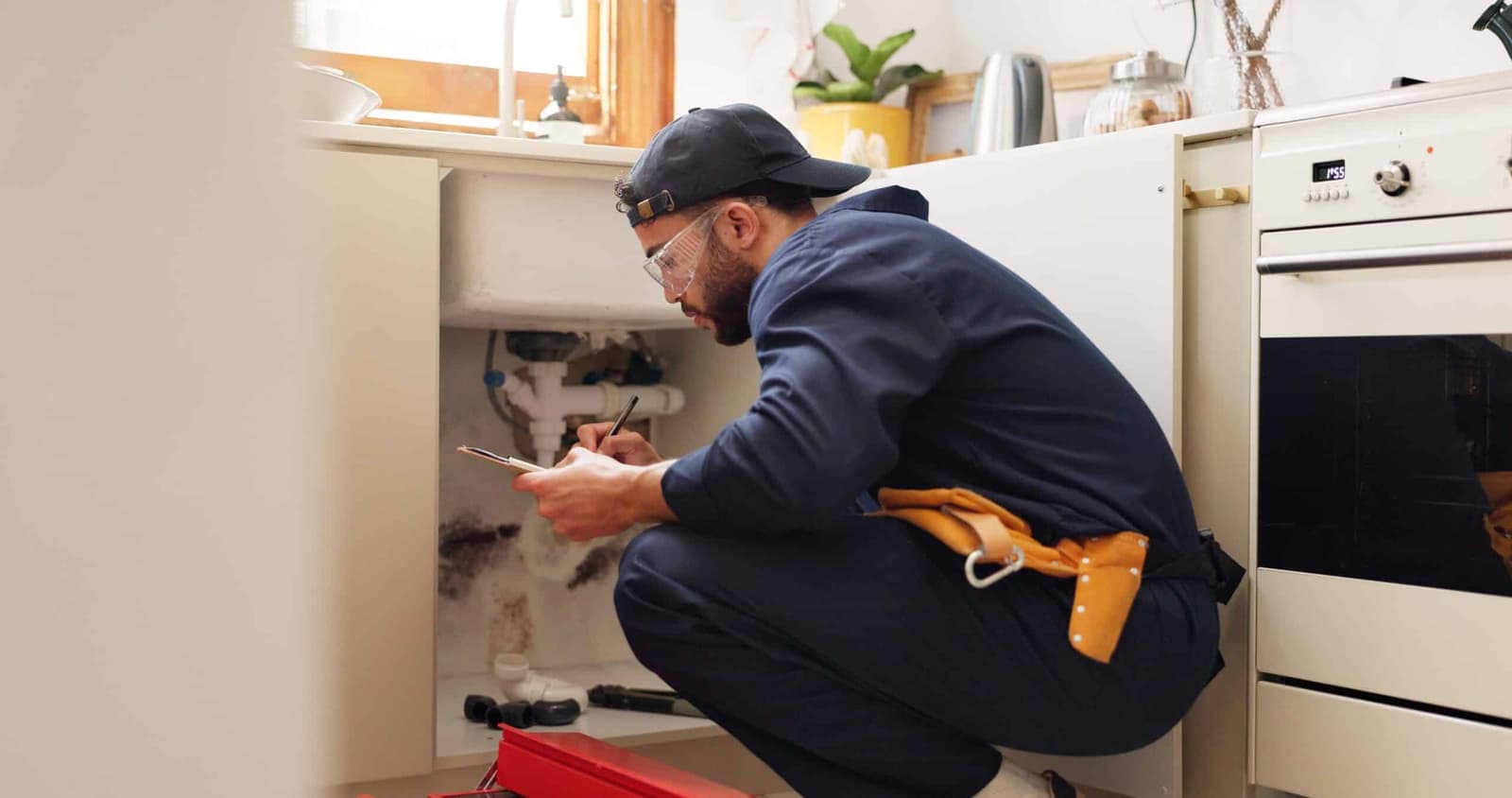
What does section 11 of the landlord and tenant act 1985 cover?
Section 11 makes you keep the structure and exterior in repair, and keep the installations for water, gas, electricity, sanitation and heating in repair and proper working order. It is implied into almost every tenancy granted for under seven years and cannot be contracted out of.
The three limbs of the repairing covenant
The wording of Section 11 of the Landlord and Tenant Act 1985 splits your duty into three parts. Each one is a repairing duty, so it bites when something breaks rather than requiring you to improve the property.
- Structure and exterior, including the roof, walls, windows, external doors, foundations, drains, gutters and external pipes.
- Installations for water, gas, electricity and sanitation, which covers pipework, wiring, sockets, basins, sinks, baths and toilets.
- Installations for space heating and heating water, which is your boiler, radiators, immersion heater and hot water cylinder.
Section 11(1A) stretches the same duty to the rest of the building where you own or control it. In a converted house that catches the shared hallway, the roof void and the rising main.
The seven year rule and who sits outside it
Section 11 is implied into leases granted for a term of less than seven years. Longer leases, licences and lodger arrangements sit outside it, although other duties still apply.
A periodic assured tenancy counts as a short lease, so every private tenancy created since the Renters’ Rights Act took effect is caught. Long leaseholders repair their own flats under the terms of their lease instead.
What section 11 does not ask of you
Section 11(2) carves out damage the tenant caused, destruction by fire, storm or flood, and anything the tenant is entitled to remove. Rebuilding after a fire is an insurance question rather than a repairing covenant question.
Section 11(3A) gives you a defence where the work needs a superior landlord’s consent you cannot obtain, provided you used all reasonable endeavours to get it. In practice that means chasing the freeholder in writing and keeping every reply.
Which repairs fall to you and which fall to the tenant?
You take the fabric, the pipes, the wiring and the heating. Your tenant takes light bulbs, plug fuses, routine cleanliness and any damage they or their visitors cause.
The responsibility split at a glance
| Item | Your job | Your tenant’s job | Where the duty comes from |
|---|---|---|---|
| Roof, walls, windows, foundations | Repair and keep in repair | Report damage promptly | Section 11(1)(a) |
| Drains, gutters, external pipes | Clear and repair | Keep gullies free of leaves if the agreement says so | Section 11(1)(a) |
| Boiler, radiators, hot water | Repair, service and replace | Bleed radiators, set the timer | Section 11(1)(c) |
| Gas pipework, flues, appliances you supply | Repair plus an annual Gas Safe check | Allow access for the check | Section 11(1)(b), Gas Safety Regulations 1998 |
| Fixed wiring, sockets, consumer unit | Repair and five yearly inspection | Replace bulbs and plug fuses | Section 11(1)(b), Electrical Safety Regulations 2020 |
| Bath, sink, toilet, waste pipes | Repair and replace | Clear blockages they caused | Section 11(1)(b) |
| Smoke and carbon monoxide alarms | Fit and check on day one | Test monthly and change batteries | Smoke and CO Alarm Regulations 2015 |
| Internal decoration | Fair wear and tear | Damage beyond fair wear and tear | Common law |
| Garden, trees, boundary walls | Structural items and dangerous trees | Routine tidying if the agreement says so | Tenancy agreement |
| Tenant’s own furniture and belongings | Nothing | Repair or replace their own items | Tenant’s contents policy |
| Communal halls, stairs and lighting | Repair where you own or control them | Report faults | Section 11(1A) |
Where the line gets argued
Your tenant’s duty is to use the property in a tenant-like manner, which the courts describe as doing the small jobs a sensible occupier would do. Unblocking their own sink and turning off the stopcock in a freeze both sit on that side of the line.
Anything needing a Gas Safe engineer, a qualified electrician or a plumber is yours by default. Charging your tenant for that work breaches Section 11 even where the agreement appears to allow it.
Communal areas in flats and HMOs
Shared halls, stairs and lighting belong to whoever owns them, which is you in a converted house and the freeholder in a purpose built block. A block of flats policy normally covers the communal structure while your own cover starts at the flat door.
Licensed houses in multiple occupation carry management duties on top of Section 11, including the condition of shared kitchens and fire doors. HMO insurance is written around that higher claims frequency.
What does the homes (fitness for human habitation) act 2018 add?
It implies a second covenant that the property must be fit for human habitation at the start of the tenancy and stay fit throughout. Unlike Section 11, it lets your tenant go straight to court without involving the council first.
The tenant’s direct route to court
The Homes (Fitness for Human Habitation) Act 2018 inserted sections 9A to 9C into the Landlord and Tenant Act 1985. Your tenant can sue for damages and for an order forcing the work, with no inspection or notice from environmental health needed.
Section 9A(5) lets the court order specific performance, so the outcome is the repair itself rather than a payment in place of it. Any clause trying to limit the covenant is void under section 9A(4).
The covenant applied to tenancies granted from 20 March 2019 and to existing periodic tenancies from 20 March 2020. Every private tenancy running today falls inside it.
What counts as unfit
Fitness is judged against the same hazard list councils use, so damp, mould, excess cold, poor ventilation, unsafe stairs and inadequate natural light all qualify. A property can satisfy Section 11 and still fail the fitness test.
Damp is the most common complaint, and condensation caused by a cold, badly ventilated building is your problem rather than your tenant’s lifestyle. Fit extractor fans that run on a humidistat and record the date you did it.
How quickly do you have to carry out a repair?
The law asks for a reasonable time and sets no fixed deadline, so severity drives the clock. Emergencies need making safe within 24 hours, urgent faults within a week and routine jobs within a month.
Reasonable timescales by severity
| Severity | Typical faults | Target response | What you risk by missing it |
|---|---|---|---|
| Emergency | Gas leak, no heating in winter, major water leak, exposed live wiring, insecure front door | Make safe within 24 hours | Emergency remedial action under section 40 of the Housing Act 2004, recharged to you |
| Urgent | Partial heating loss, no hot water, roof leak, failed extractor with spreading mould | Repair within 3 to 7 days | Category 1 hazard rating and an improvement notice |
| Routine | Dripping tap, faulty socket, broken door handle, loose floor tile | Repair within 14 to 28 days | Disrepair claim if it drags on across months |
| Cosmetic | Fence panel, shed door, hairline plaster cracks, tired decoration | Schedule with the next void or planned works | Little enforcement risk on its own |
Why the clock starts when you are told
Your Section 11 duty on the dwelling bites once you have notice of the defect, so a fault nobody reported is not a breach. Ask tenants to report in writing, then log the date and reply the same week.
Parts of the building you can inspect yourself work differently, including the roof, the exterior and communal areas. Inspect twice a year, photograph what you find and act on it.
Does awaab’s law apply to private landlords yet?
Not yet. As at September 2026 Awaab’s Law binds social landlords only, because section 60 of the Renters’ Rights Act 2025 has not been commenced for the private rented sector.
Where the law stands in september 2026
Awaab’s Law lives in section 10A of the Landlord and Tenant Act 1985, which currently reaches relevant social housing leases alone. Section 60 of the Renters’ Rights Act 2025 rewrites it to catch leases of under seven years, and that amendment is still marked prospective on the statute book.
So the fixed statutory clocks do not apply to a private landlord today. Section 11 and the fitness covenant do, and both are judged on a reasonableness test that is drifting towards the same timescales.
What the timescales will look like when it lands
- Investigate a reported hazard and give the tenant a written finding inside a short fixed window.
- Start the work quickly where the hazard poses a significant risk to health or safety.
- Make emergency hazards safe within 24 hours of becoming aware of them.
- Offer suitable alternative accommodation if the home cannot be made safe in time.
Build the process before the regulations land rather than after. A written repair log, a triage rule and a standing list of contractors is most of the compliance work done.
What can the council do if you do not repair?
Environmental health can inspect under the Housing Health and Safety Rating System, serve an improvement notice and fine you up to £40,000 for ignoring it. A category 1 hazard leaves the council with a duty to act rather than a choice.
HHSRS and category 1 hazards
Inspectors score the property against 29 hazards covering damp, excess cold, falls, fire and electrical safety, as the government’s guidance for landlords explains. Anything scored category 1 triggers a duty under section 5 of the Housing Act 2004 to take the most appropriate enforcement action.
Category 2 hazards are discretionary, but councils act on them where a household includes children, older people or anyone with a health condition. The choices run from a hazard awareness notice up to a prohibition order closing the property.
Improvement notices and civil penalties
An improvement notice specifies the works and the deadline, and it is registered as a local land charge against the property. Ignore it and the council can do the work itself and recover the cost, prosecute you, or fine you instead.
The civil penalty ceiling in section 249A of the Housing Act 2004 rose from £30,000 to £40,000 on 1 May 2026. It covers failure to comply with an improvement notice as well as licensing and HMO management offences.
What does a disrepair claim or a rent repayment order cost you?
A disrepair claim usually means general damages of 25% to 50% of the rent for the period the property was defective, plus the repair and both sides’ legal costs. A rent repayment order can now take up to two years of rent off you.
Damages and legal costs
Courts award general damages as a proportion of rent, scaled to how much of the home was unusable and for how long. Special damages cover ruined belongings, extra heating bills and treatment costs.
On a £1,200 a month tenancy, eighteen months of serious damp assessed at 35% comes to roughly £7,560 before costs. The extractor fan and pointing work that would have prevented it rarely passes £1,500.
Rent repayment orders of up to two years
Failing to comply with an improvement notice is one of the offences that lets a tenant apply to the First-tier Tribunal for a rent repayment order. Section 44 of the Housing and Planning Act 2016 caps the award at the rent actually paid, and the relevant window stretched from 12 months to two years on 1 May 2026.
The tribunal weighs your conduct, your finances and any previous penalties or orders against you. A landlord who fixed the problem late but did fix it lands well below the cap.
Neither the damages nor the order is insurable, but legal expenses cover funds the defence and usually adds £30 to £100 a year to the premium.
What will landlord insurance pay towards a repair?
It pays for damage caused by a sudden insured event such as fire, storm, flood or escape of water. It pays nothing towards wear and tear, ageing installations or a repair you put off.
The line insurers draw
Landlord buildings insurance is priced on rebuild cost and responds to named perils, not to maintenance. A slate lifted off by a 70mph gust is a claim.
The same slate working loose across five winters of neglect is a repair bill. Insurers read the difference from the damage pattern and the age of the roof, so the paperwork matters.
| Repair situation | Does the policy pay? | Why |
|---|---|---|
| Storm strips tiles off the roof | Yes, less the excess | Sudden insured peril |
| Burst pipe floods two floors | Yes, including drying and making good | Escape of water, the most common landlord claim |
| Boiler stops working at 12 years old | No on buildings cover | Breakdown from age needs home emergency or a service contract |
| Slow leak that rotted a floor over two years | Usually declined | Gradual damage is excluded on nearly every policy |
| Rising damp from a failed damp course | No | Maintenance, not an insured event |
| Kitchen fire started by a chip pan | Yes | Insured peril, tenant negligence included |
| Tenant cannot live there while you repair | Yes, if the damage was insured | Alternative accommodation and loss of rent sections |
| Repainting between tenancies | No | Fair wear and tear is a running cost |
The add-ons that pay in repair situations
- Home emergency cover funds out of hours call-outs for boilers, leaks and lockouts, usually with a £500 to £1,000 limit per claim.
- Accidental damage picks up one-off mishaps such as a foot through a ceiling or a drill through a pipe.
- Loss of rent and alternative accommodation keeps the income coming and rehouses your tenant while insured damage is put right.
- Rent guarantee covers arrears rather than repairs, and will not respond to a tenant withholding rent over disrepair.
Insurers price for a maintained building and decline claims that trace back to neglect. Keep dated inspection photographs, service records and contractor invoices, because that file is what turns a disputed claim into a paid one.
Frequently Asked Questions (FAQs)
No. Section 11 duties are implied by statute and any clause pushing them onto the tenant is void, so refusing simply moves the argument to a court or the council.
The tenant does, for damage beyond fair wear and tear. Invoice them or deduct the evidenced cost from the deposit at the end of the tenancy.
Treat a total heating failure between October and April as a 24 hour emergency. Supply temporary heaters the same day if the engineer cannot get there.
It applies to leases granted for less than seven years, which covers every periodic assured tenancy. Long leases, licences and lodger agreements sit outside it.
Not lawfully in most cases, and arrears can support a possession claim. Tenants who do it properly follow the repair and deduct route with written quotes and notice.
Yes, if they gave you written notice, allowed a reasonable time, obtained quotes and sent you the invoice. The deduction is then limited to what they actually paid.
You own the structural items such as boundary walls, paths, dangerous trees and sheds. Routine mowing and weeding fall to the tenant where the agreement says so.
The freeholder repairs the structure and communal parts under the lease, recharged through the service charge. You remain liable to your tenant for everything inside the flat.
No. Your policy insures the building and any contents you supplied, so tenants need their own contents insurance for their furniture, electronics and clothing.
No. Section 21 was abolished on 1 May 2026, so possession needs a Section 8 ground, and a documented repair request is strong evidence against a retaliatory claim.
There is no legal duty to redecorate, only to keep the property fit and in repair. Most landlords touch up every tenancy and repaint fully every four to six years.
No, although buy-to-let lenders make buildings cover a condition of the loan. Without it you fund every fire, flood and storm repair from your own pocket.