
What Are the Gas Safety Requirements for Landlords?


Every gas appliance, flue and pipe you provide must be kept in a safe condition and checked every 12 months by a Gas Safe registered engineer. You then have 28 days to give the record to a sitting tenant, and it must reach a new tenant before they move in.
The duty sits in the Gas Safety (Installation and Use) Regulations 1998, which apply to every residential landlord in England, Scotland and Wales. Breaching them is a criminal offence, not a civil one.
Every gas appliance, flue and pipe you provide has to be kept safe and checked every 12 months by a Gas Safe registered engineer. A sitting tenant must get the record within 28 days and a new tenant must have it before they move in. You can book the check in the run-up to the anniversary without losing your original date, which stops the deadline drifting. If a tenant blocks access, keep a written record of every attempt, because breaching the regulations is a criminal offence rather than a civil one.
Compare landlord insurance quotes and keep your gas certificate to hand when you do.
- How far does your legal duty extend?
- What is a cp12 and what has to be on it?
- When must the record reach your tenant?
- Can you book the check early without losing the date?
- How do you check an engineer is Gas Safe registered?
- How much does a Gas Safety check cost in 2026?
- What happens if you miss a check?
- What can you do if the tenant will not let the engineer in?
- Do you need a carbon monoxide alarm as well?
- Frequently asked questions (FAQs)
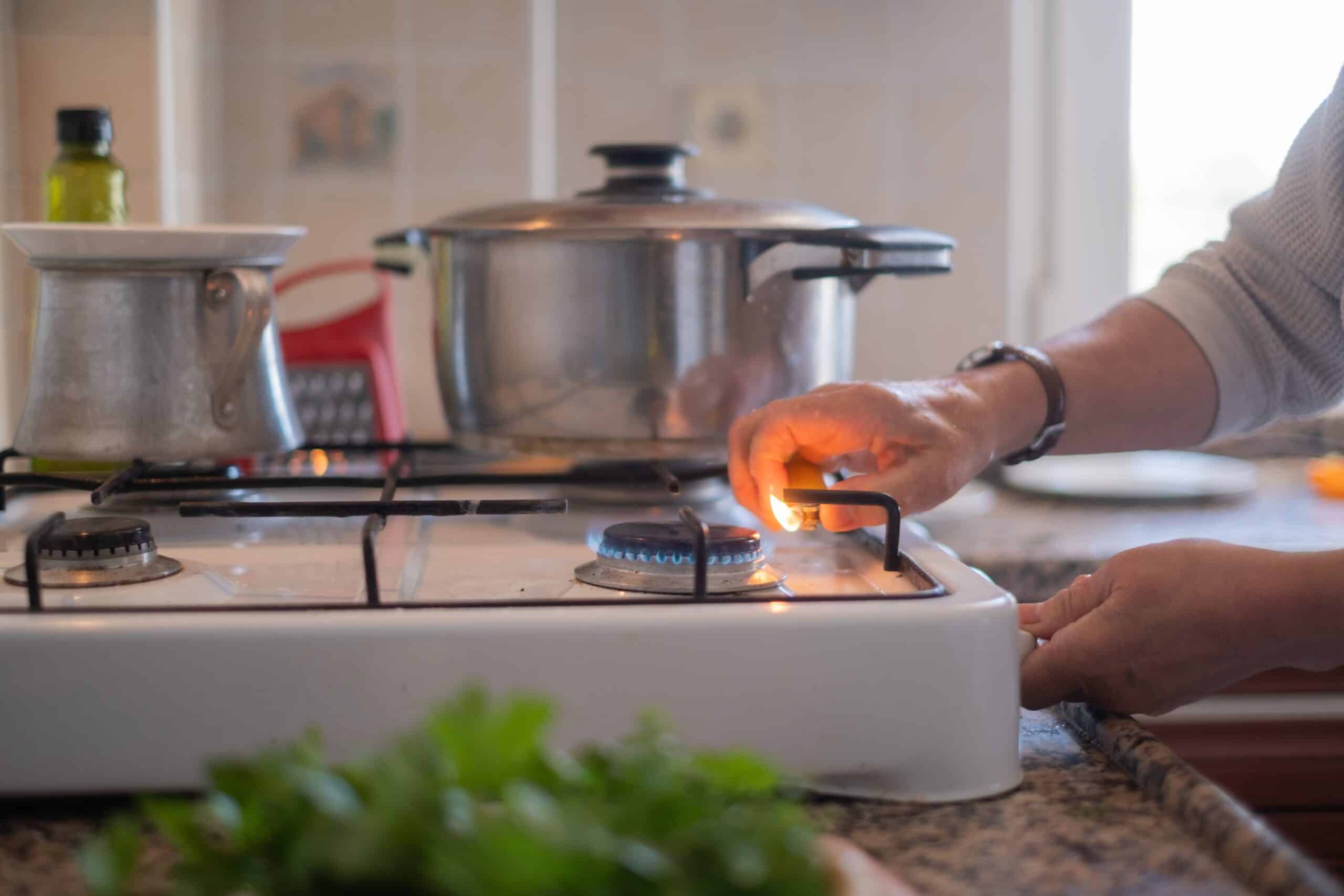
How far does your legal duty extend?
It covers the appliances, flues and pipework you own and provide for your tenant’s use. Anything the tenant brings with them is outside your check, with one important exception.
The appliances and pipework you are responsible for
Boilers, gas fires, gas cookers, hobs and water heaters all count, and the Health and Safety Executive confirms the duty covers portable gas appliances you supply as well as fixed ones.
Flues, chimneys and the installation pipework running from the meter to each appliance are all inside the duty. The meter itself belongs to your gas supplier.
Where your duty stops and the tenant’s begins
A cooker the tenant bought and installed is theirs to maintain, so it falls outside your annual check. The flue or chimney serving that appliance is still yours.
That split catches landlords out in older houses with a tenant’s own gas fire. Have the engineer check and record the flue even when the appliance is not yours.
Which landlords are caught by the rules
The regulations reach further than a standard buy-to-let tenancy. HSE treats you as a landlord if you take rent from a lodger, let a flat above a shop, or run a bed and breakfast.
Shared houses need the same check as a single let, so an HMO with six tenants gets one record covering the whole property. Short-stay holiday and Airbnb lets are caught too.
Mixed-use buildings sit in both camps: the residential flats need a gas safety record and the trading premises below sit under commercial property cover and workplace gas rules.
What is a cp12 and what has to be on it?
A CP12 is the Landlord Gas Safety Record: the engineer’s written confirmation that every appliance and flue was tested and found safe. The name is a leftover from CORGI, which Gas Safe Register replaced on 1 April 2009.
The nine things the record must show
- The date of the check and the address of the property.
- Your name and address, or your letting agent‘s.
- A description and the location of every appliance and flue checked.
- Any defect found, and the remedial action taken or advised.
- Confirmation that the check meets regulation 36(3)(a).
- The engineer’s name, signature and Gas Safe registration number.
A record missing the registration number or the engineer’s signature is not a valid record. Digital copies are fine provided you can print one on request.
What the engineer tests
The visit runs 30 to 60 minutes for a typical two-appliance property. The engineer checks the flue flow, gas pressure, ventilation, safety devices and the tightness of the pipework.
A safety check is not a service. It confirms the appliance is safe today, while a service cleans and adjusts it to keep it that way.
How defects are classified
| Code | What it means | What happens next |
|---|---|---|
| ID | Immediately Dangerous: a present risk to life | Appliance is turned off and capped with your permission, or reported to the gas emergency service if you refuse |
| AR | At Risk: one or more faults that could become dangerous | Appliance is turned off with permission and must not be used until repaired |
| NCS | Not to Current Standards: safe, but installed to an older standard | Noted on the record with an upgrade recommendation, no legal obligation to act |
An ID or AR result does not fail your compliance, provided you fix it. The record showing the defect and your invoice showing the repair are what protect you.
When must the record reach your tenant?
Within 28 days of the check for anyone already living there, and before they take occupation for a new tenant. Both deadlines come from regulation 36(6) and neither is negotiable.
The deadlines in one place
| Obligation | Deadline | Source |
|---|---|---|
| Gas safety check on every appliance and flue | Within 12 months of installation, then at least every 12 months | Reg 36(3)(a) |
| Give the record to an existing tenant | Within 28 days of the check date | Reg 36(6)(a) |
| Give the record to a new tenant | Before they occupy the property | Reg 36(6)(b) |
| Lets of 28 days or less | Display a copy prominently inside the property | Reg 36(6)(b) |
| Keep the record | At least two years from the date of the check | Reg 36(3)(c) |
How to prove you delivered it
Email with a read receipt, or hand it over and get a signature on a copy. A record sitting in your file proves the check happened, not that the tenant received it.
Government guidance on landlord responsibilities treats the certificate as part of the paperwork bundle you hand over at the start of a tenancy. Attach it to the tenancy pack rather than sending it separately.
Can you book the check early without losing the date?
Yes. Since April 2018 you can have the check done up to two months before it is due and keep your original anniversary date, in the same way an MOT works.
How the two-month rule works
If your check falls due on 1 September, an inspection any time from 1 July still leaves the next one due by 1 September the following year. Book it in June and you reset the anniversary to June instead.
The rule exists so a tenant who cancels twice does not push you into breach. Use the whole window, not the last fortnight of it.
The retention trap nobody mentions
Take advantage of the early window and HSE expects you to keep that record until two further checks have been carried out, which is longer than the two-year minimum. That is how an inspector reconstructs your 12-month intervals.
Landlords running a portfolio should hold every gas safety record for a rolling three years rather than sorting by property. One spreadsheet of due dates beats a folder per house.
How do you check an engineer is Gas Safe registered?
Ask for the Gas Safe ID card and check both sides, then verify the licence number on the Gas Safe Register website or by calling 0800 408 5500.
What the id card tells you
The front carries the engineer’s photo, licence number and an expiry date. The back lists the specific work they are qualified for, such as domestic boilers, gas fires or LPG.
An engineer qualified on boilers is not automatically qualified on a gas fire. Match the card to the appliances you actually have before the visit.
Why an unregistered engineer voids everything
A certificate from someone outside the register is worthless, and the work itself is a criminal offence. Any competent gas engineer will show the card without being asked.
Your insurer will treat unregistered work as a breach of policy conditions, which sits alongside the other things that invalidate a property policy.
How much does a Gas Safety check cost in 2026?
Around £80 for a typical property, with most landlords paying between £60 and £90. Each additional appliance adds roughly £10 to £15.
What you should expect to pay
| Property | Typical 2026 price | Notes |
|---|---|---|
| Flat, boiler only | £60 to £75 | Cheapest single-appliance job |
| House, boiler and gas hob | £70 to £90 | The most common quote |
| House, boiler, hob and gas fire | £85 to £110 | Three appliances |
| London and the South East, three appliances | £100 to £130 | Engineers set their own rates |
| Check bundled with an annual boiler service | £120 to £180 | Usually cheaper than booking twice |
| Suspected gas leak | Free | Call the National Gas Emergency Service on 0800 111 999 |
Claiming the cost against your rental income
The check is a revenue expense, so it comes off your rental profit in the year you pay it. So does any repair the engineer carries out to keep an existing appliance safe.
Replacing a condemned boiler with a better one is capital spending rather than a repair, so it is treated differently. Budget for it alongside your annual insurance premium rather than treating it as a surprise.
What happens if you miss a check?
Prosecution is the headline risk, but the two that hit most landlords are a declined insurance claim and a weakened position in court. All three run from the same missing piece of paper.
The criminal penalties
Gas safety offences are prosecuted under the Health and Safety at Work etc. Act 1974, and they are triable either way. Since 12 March 2015 the fine is unlimited in the magistrates’ court as well as the Crown Court.
- Magistrates’ court: an unlimited fine and up to six months in prison.
- Crown Court: an unlimited fine and up to two years in prison.
- Where a tenant dies, a charge of gross negligence manslaughter is possible.
The old £20,000 magistrates’ cap is often still quoted online and it is out of date. Treat the ceiling as whatever the court thinks your turnover can bear.
How a missing cp12 affects an insurance claim
Most landlord policies carry a condition requiring you to meet your statutory safety obligations. A fire or explosion traced back to an unchecked appliance is exactly where that condition gets tested.
Insurers also ask at quote stage whether gas safety is up to date, and the Consumer Insurance (Disclosure and Representations) Act 2012 lets them void the policy from inception for a deliberate or reckless answer. That takes your buildings, contents and liability cover with it.
A carbon monoxide injury claim lands on the property owners’ liability section, and without a record there is very little to defend it with. Check what your policy demands in our guide to what landlord insurance covers.
What it means for possession now section 21 has gone
Before May 2026, serving a Section 21 notice was blocked outright if you had never given the tenant a gas safety record. Section 21 was abolished by the Renters’ Rights Act 2025, so that particular trap has gone with it.
The exposure moved rather than disappeared. A tenant defending a Section 8 arrears claim can counterclaim for breach of your repairing obligations, and a set-off can swallow the arrears your rent guarantee cover was meant to recover.
A council can also serve an improvement notice for a category 1 gas hazard, and failing to comply is a separate offence that supports a rent repayment order. Legal expenses cover funds the defence, but it will not manufacture a certificate you never had.
What can you do if the tenant will not let the engineer in?
Keep trying, and write everything down. HSE judges you on whether you took all reasonable steps, and you are not allowed to force entry.
The steps HSE expects to see
- Give at least 24 hours’ written notice of each appointment.
- Leave a card after a missed visit with your number on it.
- Write explaining that the check is a legal duty and is for their safety.
- Offer alternative dates, including one outside working hours.
- Escalate to recorded delivery, then involve your local authority.
HSE inspectors look for repeated attempts, not a single letter. Three documented approaches over six weeks reads very differently from one email in August.
Where you stand if access is still refused
You must not break in, change locks or send an engineer to force a door. Doing so risks a harassment or unlawful eviction claim on top of the gas problem.
Persistent refusal is a breach of the tenancy in most agreements, which gives you a route through the courts rather than through the front door. Extended voids while that runs are where loss of rent cover earns its keep.
Do you need a carbon monoxide alarm as well?
Yes, in every room used as living accommodation that contains a fixed combustion appliance, with gas cookers the only exception. The alarm duty is separate from the gas safety check and carries its own penalty.
Which rooms need an alarm
The Smoke and Carbon Monoxide Alarm (England) Regulations 2015, as amended in October 2022, put an alarm in any living room, bedroom, kitchen, bathroom or hallway holding a boiler, gas fire, wood burner or oil heater.
A gas cooker or hob does not trigger the duty, though fitting an alarm anyway costs under £20. Bathrooms and lavatories count as living accommodation for this purpose.
Every alarm must be tested and working on the day a tenancy starts, and repaired or replaced as soon as reasonably practicable once a tenant reports a fault. A council can charge up to £5,000 for getting it wrong.
Why the alarm and the check do different jobs
The annual check confirms an appliance was burning safely on one day. The alarm covers the other 364, which is why a boiler that fails mid-tenancy is still a live carbon monoxide risk.
Carbon monoxide has no colour, taste or smell, and headaches and nausea get mistaken for flu every winter. Damage from a resulting fire or explosion is a claim on your landlord buildings cover, assuming your certificate is current.
Frequently Asked Questions (FAQs)
Twelve months from the date of the check. Book the next one inside the two-month early window and you keep the same anniversary date.
No. If there are no gas appliances, flues or pipework the 1998 regulations do not apply, but any dead pipework should be capped and certified by a Gas Safe engineer.
No, even if you are a qualified plumber. Only an engineer on the Gas Safe Register, holding the right qualification for that appliance type, can sign the record.
A CP12 confirms the appliance is safe on the day it is tested. A service strips, cleans and adjusts the boiler, and it is not a legal requirement.
The appliance is theirs, so it sits outside your check. The flue or chimney serving it is still your responsibility and should be inspected.
The agent can arrange and hold the paperwork, but the criminal liability stays with you. Ask for a copy of every record on the day it is issued.
The appliance is turned off and labelled, and it must not be used until repaired. You are still on the hook for providing heating and hot water while that happens.
The 1998 regulations run across England, Scotland and Wales, and Northern Ireland has its own near-identical version. The alarm rules are the part that varies by nation.
Yes, to HSE or the local authority environmental health team, and either can investigate. A complaint from a tenant is a common starting point for a prosecution.