
How Much Does Fleet Insurance Cost In The UK?


Fleet insurance typically costs between £300 and £600 per vehicle per year for a small fleet of cars or light vans, or roughly £25 to £50 per vehicle per month. Larger fleets, mixed vehicle types, and younger drivers push that figure higher.
There is no standard rate card for fleet insurance. Insurers base every quote on your specific vehicles, drivers, claims record, and how the fleet is used, so two businesses with the same number of vehicles can receive very different premiums.
Bundling vehicles under one policy almost always works out cheaper than insuring them individually.
This guide breaks down real-world pricing by vehicle type and fleet size, explains what drives your premium up or down, and covers practical ways to reduce your costs at renewal.
Fleet insurance typically costs £500–£1,200 per vehicle annually, but businesses can significantly reduce premiums through telematics, driver training, and working with a specialist broker to find the best deal.
Compare fleet insurance quotes to see what your business would pay.
- How much does fleet insurance cost per vehicle?
- What factors affect fleet insurance premiums?
- Is fleet insurance cheaper than insuring vehicles separately?
- What cover levels are available for fleets?
- How can you reduce your fleet insurance premiums?
- Do you get a no-claims bonus on fleet insurance?
- How does fleet size affect the price?
- Frequently asked questions (FAQs)
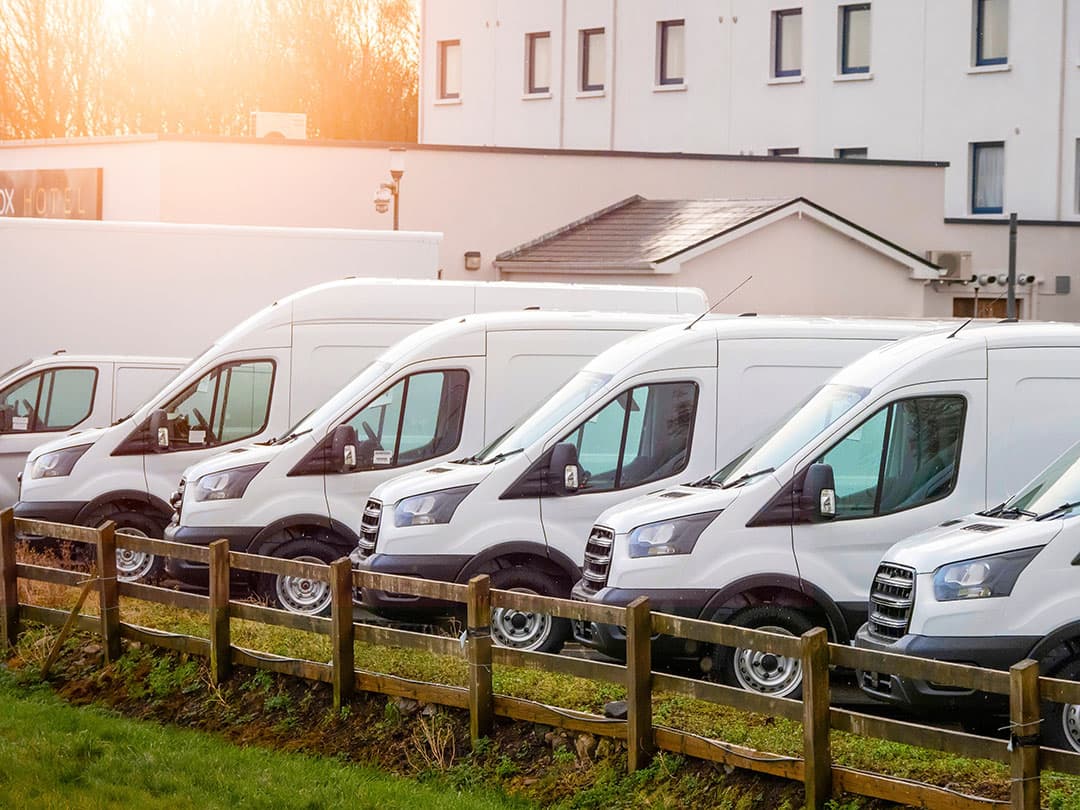
How much does fleet insurance cost per vehicle?
Most businesses pay between £250 and £600 per vehicle per year for a fleet of standard cars or vans. HGVs, taxis, and specialist vehicles cost significantly more because they carry higher risk and repair costs.
Cars and small vans
A fleet of 3 to 5 cars or small vans with drivers over 25 and no recent claims typically costs £300 to £600 per vehicle. Businesses with only 2 or 3 vehicles often qualify for mini fleet insurance, which is designed specifically for smaller operations.
Adding younger or newly qualified drivers to the policy increases the per-vehicle cost because insurers treat inexperience as a higher claims risk.
Large vans and commercial vehicles
Large panel vans, box vans, and pickup trucks used for deliveries or trade work typically cost £500 to £1,000 per vehicle. Mileage and load type affect the premium because heavier vehicles cause more damage in collisions.
Courier and logistics businesses often face higher quotes because their vehicles spend more hours on the road. Businesses with a mix of owned and customer vehicles may need a separate car insurance structure for the non-fleet portion.
HGVs, taxis, and specialist vehicles
HGV fleet insurance ranges from £1,500 to £5,000 or more per vehicle depending on the gross weight, cargo type, and routes driven. Specialist HGV fleet cover is underwritten separately because the claims costs are much higher.
Taxi fleets typically fall between £1,500 and £3,000 per vehicle because they carry passengers for hire and cover high daily mileages. Coach and minibus fleets sit at the upper end of the scale for the same reasons.
| Vehicle Type | 2–5 Vehicles | 6–20 Vehicles | 50+ Vehicles |
| Cars / small vans | £300–£600 | £250–£500 | £180–£350 |
| Large vans / pickups | £500–£1,000 | £450–£850 | £350–£700 |
| HGVs (7.5t+) | £1,500–£5,000 | £1,200–£4,000 | £1,000–£3,500 |
| Taxis / private hire | £1,500–£3,000 | £1,200–£2,500 | £1,000–£2,200 |
| Coaches / minibuses | £2,000–£4,500 | £1,800–£4,000 | £1,500–£3,500 |
Source: Association of British Insurers, UK motor insurance claims data 2024
What does fleet insurance cost per month?
Most insurers quote fleet insurance as an annual premium, but many offer monthly payment options with interest added. Spreading the cost typically adds 8 to 15 per cent to the total annual price.
For a small fleet of cars or vans, expect to pay roughly £25 to £50 per vehicle per month on a pay-monthly plan. Larger vans and commercial vehicles sit closer to £45 to £90, while HGVs and taxis can reach £130 to £420 per vehicle per month.
| Vehicle Type | Monthly (Per Vehicle) | Annual Equivalent | Interest Cost |
| Cars / small vans | £25–£50 | £300–£600 | 8–12% |
| Large vans / pickups | £45–£90 | £500–£1,000 | 8–15% |
| HGVs (7.5t+) | £130–£420 | £1,500–£5,000 | 10–15% |
| Taxis / private hire | £130–£260 | £1,500–£3,000 | 10–15% |
Paying annually is always cheaper if your cash flow allows it. If you do pay monthly, check whether the insurer charges a flat fee or compound interest, as the difference over 12 months can be significant.
What factors affect fleet insurance premiums?
Your claims history is the single biggest factor. Insurers look at how many claims your fleet has made over the past three to five years and use that to predict future losses.
Claims history and loss ratio
Insurers calculate a loss ratio by dividing the total value of your claims by the total premium paid. A loss ratio above 60 to 70 per cent signals a high-risk fleet and will push your renewal premium up sharply.
Even a single large at-fault claim can overshadow several years of clean history. Keeping detailed records of every incident, including near-misses, shows underwriters that you take risk management seriously.
Driver ages and experience
Fleets with drivers under 25 pay more because younger drivers are statistically more likely to be involved in accidents. Family fleet policies that cover household vehicles with mixed-age drivers face similar loadings.
Named-driver policies are cheaper than any-driver policies because the insurer knows exactly who is behind the wheel. The trade-off is less operational flexibility.
Vehicle type, age, and overnight location
Higher-value and heavier vehicles cost more to insure because repair bills and third-party damage are larger. Keeping your vehicles in a secure compound or locked garage overnight can reduce premiums. Older vehicles with a current MOT certificate and full service history are viewed more favourably than neglected ones.
Businesses that run a dedicated fleet van operation often get better rates than mixed fleets because the insurer can assess a uniform risk profile.
Is fleet insurance cheaper than insuring vehicles separately?
In most cases, yes. Bundling three or more vehicles under one fleet policy is cheaper than buying individual policies because insurers offer a volume discount and you avoid paying separate administration fees on each vehicle.
When fleet cover saves money
The savings are most obvious when all your drivers have clean records and your vehicles are the same type. A plumber running three vans, a taxi firm with five saloons, or a car dealership with a forecourt full of stock vehicles will all see a meaningful discount.
A fleet of 5 vehicles individually insured at £1,000 each would cost £5,000 per year. The same 5 vehicles on a fleet policy with a 20 per cent fleet discount would cost £4,000, saving £1,000 annually.
When individual policies might be better
If one driver in your fleet has a poor record or is very young, their risk profile can drag the entire fleet premium up. In that situation, insuring them separately under a standard multi-car policy while keeping the rest on the fleet may work out cheaper.
The same applies to families with a mix of experienced and learner drivers. Running the numbers both ways before committing is always worth the time.
| Scenario | Individual Policies | Fleet Policy | Annual Saving |
| 3 vans, experienced drivers | £3,000 (£1,000 each) | £2,400 (20% discount) | £600 |
| 5 cars, mixed ages | £5,500 (£1,100 avg) | £4,125 (25% discount) | £1,375 |
| 10 vans, clean record | £9,000 (£900 each) | £6,300 (30% discount) | £2,700 |
| 20 HGVs, specialist | £60,000 (£3,000 each) | £42,000 (30% discount) | £18,000 |
What cover levels are available for fleets?
Fleet insurance offers the same three tiers as standard motor insurance: third-party only, third-party fire and theft, and fully comprehensive. The right level depends on the value of your vehicles and how much risk your business can absorb.
Third-party only
Third-party only is the legal minimum. It covers damage you cause to other people and their property but nothing on your own vehicles. It is the cheapest option but leaves you exposed if a vehicle is written off.
This level makes sense for very old or low-value vehicles where the cost of comprehensive cover would exceed the vehicle’s worth.
Third-party, fire and theft
This adds protection if your vehicles are stolen or damaged by fire. It is a popular middle ground for fleets parked in secure yards overnight where the theft risk is managed but not eliminated.
Businesses that transport high-value goods may find this level insufficient because it still does not cover accidental damage to your own vehicles.
Comprehensive cover
Comprehensive cover protects your vehicles against accidental damage, theft, fire, vandalism, and windscreen damage regardless of fault. Most fleet insurers actually require comprehensive as their minimum, particularly for courier fleet operations where vehicles are on the road for extended hours.
The premium is higher, but for any fleet where vehicle downtime directly hits your revenue, comprehensive cover pays for itself the first time you make a claim.
How can you reduce your fleet insurance premiums?
The most effective way to cut your fleet insurance costs is to reduce the number and severity of claims. Insurers reward fleets that can demonstrate a proactive approach to risk management with lower premiums at renewal.
Telematics and dashcams
Fitting telematics devices to your vehicles lets you monitor speed, braking, cornering, and idling in real time. Many insurers offer a direct discount of 5 to 15 per cent for fleets with telematics fitted. The Fleet Operator Recognition Scheme recommends telematics as a core component of any fleet safety programme.
Dashcams serve a different purpose. They do not reduce your premium directly, but they speed up claims resolution by providing clear evidence of what happened, which protects your claims record over time.
Driver training programmes
Investing in driver training reduces accident rates and demonstrates to underwriters that you manage risk actively. RoSPA’s fleet safety guidance recommends regular refresher training, not just a one-off induction.
Some insurers will reduce your premium by 5 to 10 per cent if you can show that all drivers have completed an accredited training course within the past 12 months.
Fleet risk management policies
A written fleet risk management policy covering vehicle maintenance schedules, driver licence checks, and incident reporting procedures shows insurers that your business takes safety seriously. The Health and Safety Executive publishes guidance on managing work-related road risk that is worth following.
Securing your vehicles overnight in a locked compound, fitting immobilisers, and joining an industry body such as the BVRLA can all contribute to a lower premium. Every measure you can evidence at renewal strengthens your negotiating position.
Do you get a no-claims bonus on fleet insurance?
Fleet insurance does not work on a traditional no-claims bonus the way personal car insurance does. Instead, insurers use an experience rating based on your entire fleet’s claims history over the previous three to five years.
Fleet experience rating explained
Experience rating looks at the total number of claims, the total value paid out, and the overall loss ratio for the fleet as a whole. A clean record across the entire fleet earns a lower premium in much the same way that a no-claims bonus works on a personal policy.
The key difference is that one bad year can wipe out several good ones. A single large liability claim on a minibus fleet carrying passengers, for example, could significantly increase the following year’s premium for every vehicle on the policy.
What happens to individual NCDs when joining a fleet?
When a vehicle moves from an individual policy to a fleet policy, the personal no-claims bonus for that vehicle is effectively frozen. It does not continue to build while the vehicle is on the fleet.
If the vehicle later leaves the fleet and returns to an individual policy, most insurers will recognise the NCD that was in place before the switch, provided the driver can produce proof. This is worth checking with your broker before making the move.
How does fleet size affect the price?
Larger fleets almost always get a lower per-vehicle cost because the insurer can spread their risk across more vehicles and the administrative overhead per policy drops. The minimum number of vehicles needed varies by insurer, but most will cover as few as two or three.
Mini fleets: 2 to 5 vehicles
Mini fleets are the most common entry point. You can expect a discount of 10 to 20 per cent compared with insuring the same vehicles individually, assuming clean records and experienced drivers.
Most providers will insure a fleet of just 2 vehicles, although some require a minimum of 3 or 5. At this size, you are unlikely to get a dedicated account manager, but you will still benefit from a single renewal date and one point of contact. Businesses running coach or passenger fleets at this scale should look for specialist providers.
Medium fleets: 6 to 20 vehicles
At this size, fleet discounts typically reach 20 to 30 per cent. You will start to see dedicated account management, more flexible payment terms, and the option to add or remove vehicles mid-term without rewriting the entire policy.
Telematics becomes more cost-effective at this scale because the per-unit hardware cost drops and the data gives your insurer a clearer picture of fleet-wide risk.
Large fleets: 50 or more vehicles
Large fleets receive bespoke underwriting. Discounts of 30 to 40 per cent are common, and some insurers will negotiate a self-insured retention where you cover the first portion of each claim in exchange for a lower premium.
At this size, your employer’s liability insurance requirements also become more complex. Businesses operating large haulage fleets should consider working with a specialist haulage fleet insurer that understands the specific regulatory requirements.
| Fleet Size | Avg Per-Vehicle Cost | Typical Discount | Total Annual Premium | Saving vs Individual |
| 3 vans (mini) | £480 | 20% | £1,440 | £360 |
| 10 vans (medium) | £420 | 30% | £4,200 | £1,800 |
| 25 vans (mid-large) | £370 | 35% | £9,250 | £5,000 approx |
| 50 vans (large) | £330 | 40% | £16,500 | £11,000 approx |
Frequently Asked Questions (FAQs)
A fleet of 5 standard cars or light vans with experienced drivers and a clean claims history typically costs between £1,500 and £3,000 per year, or £300 to £600 per vehicle. HGVs and specialist vehicles will be higher.
In most cases, yes. Fleet insurance usually works out 10 to 30 per cent cheaper than buying separate policies for each vehicle because insurers offer volume discounts and you pay only one administration fee.
Most insurers will cover a fleet of 2 or more vehicles. Some require a minimum of 3 or 5 before they classify it as a fleet. Check with your provider to confirm their minimum requirement.
Yes. Family fleet insurance covers multiple vehicles in the same household under one policy. It is particularly useful when several family members each have their own car and want to simplify renewals and save money.
Not in the traditional sense. Fleet insurers use experience rating based on your overall claims history rather than a per-vehicle no-claims bonus. A clean record still earns you lower premiums at renewal.
Most fleet policies cover cars, vans, pickups, HGVs, taxis, minibuses, coaches, and even motorcycles. Some specialist providers also cover plant machinery and agricultural vehicles.
Some policies offer any-driver cover, meaning any employee with a valid licence can drive any vehicle on the fleet. This costs more than a named-driver policy but gives you much greater operational flexibility.
Yes. Most fleet policies allow you to add new vehicles or remove existing ones mid-term. The premium is adjusted pro rata, so you only pay for the cover you actually use.
One driver with a poor record can increase the premium for the whole fleet. In some cases, it may be cheaper to insure that driver separately on a standard policy and keep the rest of the fleet on a clean-record fleet policy.
Telematics devices track driving behaviour in real time. Insurers offer discounts of 5 to 15 per cent for fleets with telematics because the data helps identify risky drivers before they cause a claim.